
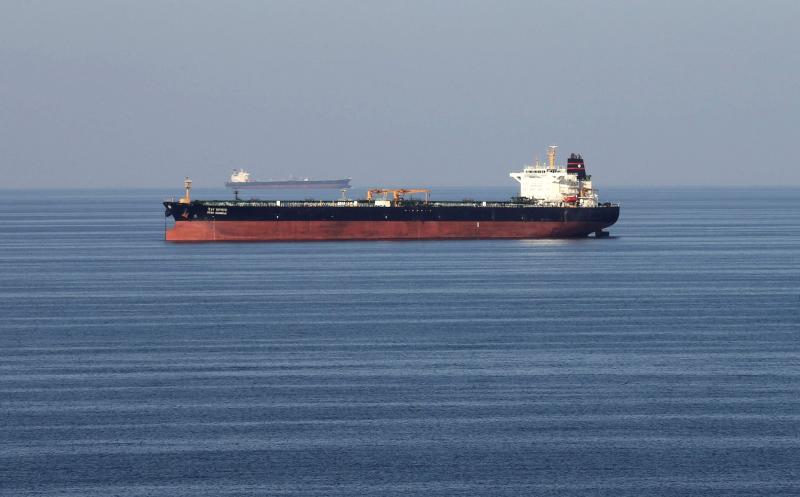
The Strait of Hormuz is experiencing its most dangerous situation in years after a series of missile and drone attacks impacted five commercial vessels in the Gulf of Oman and UAE waters. With ports halting operations, insurers reevaluating war-risk policies, and data showing a drop in maritime traffic, the security situation has escalated from heightened tension to a full-blown crisis.
As of Sunday, the Joint Maritime Information Center (JMIC) has raised the maritime threat level to CRITICAL, following confirmed attacks on several commercial ships in the Gulf of Oman, as well as in the Musandam approaches and UAE coastal waters — indicating that another attack is almost certain.
In just a single day, five vessels were either struck or targeted, marking one of the most intense series of attacks in the region in recent years.
Casualties from Multiple Incidents
The most severe incident occurred about 44 nautical miles northwest of Muscat, Oman, where the crude tanker MKD VYOM was hit above the waterline. The impact led to an explosion and a fire in the engine room, resulting in one crew member's death. As of March 2, the fire was reported under control, and the vessel remained afloat as it awaited towing to a safe port.
Earlier, the tanker SKYLIGHT, anchored five nautical miles north of Khasab, Oman, caught fire after an attack. Four out of the 20 crew members — 15 Indians and five Iranians — were injured. The entire crew was later evacuated.
The U.S.-flagged chemical/products tanker STENA IMPERATIVE was hit by multiple projectiles while docked at Salman Industrial City in the Port of Bahrain early on March 2. One shipyard worker was killed by debris, and two others suffered serious injuries. It is believed that Iranian drones or missiles were involved.
The oil tanker HERCULES STAR was struck approximately 17 nautical miles northwest of Mina Saqr, UAE. A fire broke out on board but was extinguished without any reported injuries, and the vessel continued on its own.
Additionally, the Panamax bulk carrier OCEAN ELECTRA experienced a near-miss around 35 nautical miles west of Sharjah, UAE, sustaining no damage.
“All Vessels at Risk”
According to JMIC, there is “no clear operational or political link” between the targeted vessels.
“All merchant vessels, regardless of their flag or nationality, are at risk,” the advisory emphasized.
Missile and drone threats are still active throughout the Strait of Hormuz and the Gulf of Oman. Currently, there have been no confirmed reports of sea mine activity.
Port and Energy Facilities Targeted
Regional infrastructure has also faced attacks:
- Jebel Ali briefly stopped operations after an aerial interception caused a fire but resumed limited activities afterwards.
- Duqm Port in Oman is still operational following two UAV strikes that injured one worker.
- Ras Tanura Refinery in Saudi Arabia reportedly shut down after a drone strike resulted in a fire.
- Bahrain temporarily halted port operations and pilotage services.
- Qatar’s Ras Laffan and Mesaieed ports experienced significant GPS signal degradation.
There are reports of major GNSS/GPS interference in the approaches to the Strait, which adds to navigational risks amid heavy traffic and increased aerial threats.
Hormuz Traffic Drops Significantly
AIS tracking shows that the number of vessels transiting through the Strait has dipped to just 28 in a 24-hour span — marking an 80% decline from the historical daily average of around 138 vessels.
Cargo transits fell from 98 combined eastbound and westbound movements on February 28 to just 18 on March 1. The decline in tanker movements was even steeper, from 50 transits down to just three.
JMIC noted that this drop may be a short-term pause rather than a permanent halt, but it is clear that insurers and operators are reevaluating risk levels.
Insurance Becoming a Major Factor
Several protection and indemnity clubs are reportedly reviewing or issuing cancellation notices for war-risk coverage in Gulf waters as reinsurers reduce their capacity.
“Insurance availability may now act as a key factor for transit decisions, regardless of any official navigational closures,” JMIC stated.
Even without a formal blockade, the mixture of aerial threats, port operations halts, and insurance withdrawals is significantly restricting commercial movement.
Tanker Markets Prepare for a Shockwave
The conflict, which has severely hampered maritime traffic through the Strait of Hormuz, may trigger a historic upheaval in the crude tanker market. This crucial waterway connects crude oil exporters in the Persian Gulf with global markets, handling about 15 million barrels of oil per day — nearly one-third of the world’s seaborne crude trade.
With vessels rerouting to avoid attacks and insurers pulling out of war-risk coverage, the disruption has already affected over 11 million barrels per day of crude supply.
Brent Crude futures rose from $73.15 per barrel on February 27 to $79.11 per barrel by March 2, following retaliatory strikes in the Gulf, as noted by Drewry Maritime Research.
Limited Alternatives Increase Supply Crisis
This crisis is heightened because there are very few alternatives to bypass the Strait. Major Middle Eastern OPEC producers—Saudi Arabia, Iran, the UAE, Kuwait, and Iraq—heavily rely on this route for crude exports. Although Saudi Arabia, the UAE, and Iraq have pipelines that provide some overland export options, their combined spare capacity is estimated to be only about 4 million barrels per day.
“A sustained blockade of crude flow through the Strait of Hormuz would have serious consequences for global oil supply and energy security,” according to Drewry’s report, which warns of “a sharp spike in oil prices, increased market volatility, and significant downstream impacts on inflation and economic growth worldwide.”
Tanker Rates Head for a Historic Surge
This disruption is expected to lead to a dramatic increase in crude tanker freight rates, particularly for Very Large Crude Carriers. “A sudden decrease in Middle Eastern crude flows would not only push oil prices up sharply but would also result in a significant surge in tanker freight rates,” reported Drewry.
As importers diversify their sourcing strategies, long-distance trade routes—like those from the US Gulf/West Africa to Asia—would expand, increasing ton-mile demand and requiring rapid repositioning of vessels, which would temporarily tighten the available fleet.
VLCC rates, already high due to limited fleet availability, “could reach new peaks,” the report noted. “The combination of increased risk premiums, longer travel distances, and short-term logistical challenges would strongly boost spot earnings across crude tanker segments.”
Asian Markets Face Significant Risks
While around 88% of crude passing through the Strait of Hormuz goes to Asian markets—with China, India, and Japan being the largest importers—the ongoing disruptions will tighten global oil supply. This constrained supply through such a critical chokepoint will create an imbalance in the global oil market and heighten competition for alternative cargoes.
Bunker Costs Expected to Increase
The ripple effects extend beyond crude oil markets. A sustained increase in crude prices would directly raise bunker fuel prices since marine fuels are linked to crude benchmarks. Higher feedstock costs will lead to elevated bunker prices across major bunkering hubs, significantly raising voyage costs and operational expenses across shipping sectors.
If supply tightness continues, refiners may need to cut back production due to limited crude availability or margin issues, further limiting bunker supply and keeping prices high.
Duration Remains a Key Factor
Drewry analysts emphasized that how long any disruption lasts is critical to the overall market outcome. Initially, there will be chaos as buyers rush to secure alternative barrels from West Africa, Latin America, and North America.
However, OPEC+ has only announced a production increase of 206,000 barrels per day for April—modest additions that “would provide little relief if the Strait remains closed,” according to Drewry. There is limited spare production capacity outside the Middle East, meaning replacement volumes will not be enough to counter a significant disruption of Gulf exports.
Prolonged Closure Could Reverse Gains
While the initial market response may favor tanker owners, a prolonged disruption presents a more complicated scenario. With limited spare capacity outside the Middle East, any lasting closure of the Strait of Hormuz could push oil prices to unprecedented levels, reducing demand and leading economies to look for alternative energy sources, such as coal.
In the case of a lengthy supply disruption, refineries would initially deplete commercial crude inventories, and governments would likely release oil from their Strategic Petroleum Reserves to stabilize local markets. However, as per the latest data from the International Energy Agency, OECD commercial oil inventories currently cover roughly 62 days of forward demand—meaning that even assuming a 20% global supply shortfall, these inventories would only offer a brief buffer.
“Thus, while crude tanker markets may initially see a sharp rise in rates, an extended disruption would eventually shift the focus from expanding ton-miles to minimizing demand and trade contraction—which could lead to a more complicated and potentially weaker freight environment in the medium term,” concludes Drewry.
The global economy remains heavily reliant on Middle Eastern crude supply, with limited inventories and insufficient temporary buffers to sustain prolonged disruptions. For now, tanker owners face what could be a historic, albeit potentially short-lived, opportunity, with the final outcome hinging on geopolitical developments in the upcoming days and weeks.