
The International Maritime Organization (IMO) consistently demonstrates a unique form of institutional irony.
In London, the meeting MEPC 84 concluded at the end of April after five days of negotiations, leaving participants feeling cautiously optimistic. The Net Zero Framework, which was agreed upon at MEPC 83 last year, is back on track. Analysts from University College London noted a welcome shift in momentum. The next extraordinary session is scheduled for December, indicating that progress is being made.
However, in the Arctic, developments are occurring much faster than anticipated.
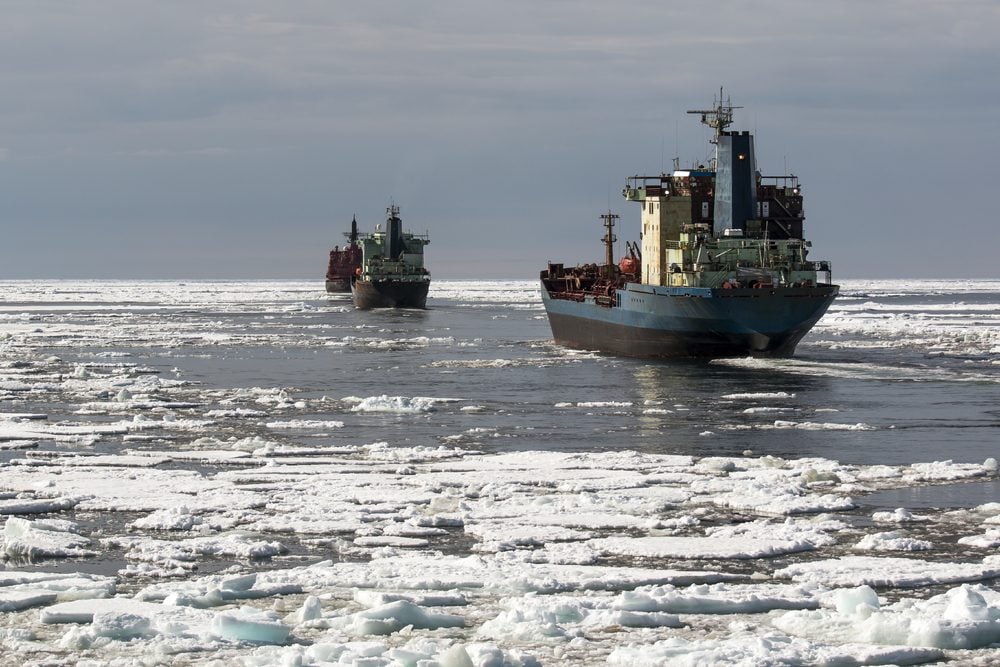
Recent data from the Clean Arctic Alliance covering the years 2019 to 2024 reveals that black carbon emissions from shipping in the Polar Code area nearly tripled during this period, increasing from 259 to 759 metric tons. In the broader AMAP area, emissions rose by about 46%. These figures are not predictions.
They reflect actual emissions from ships currently operating in polar waters, which are now burning residual fuels in regions previously inaccessible to commercial shipping.
This information is crucial for reasons beyond just atmospheric effects. Black carbon isn't just another item on an emissions list. When soot particles settle on Arctic ice and snow, they darken reflective surfaces, causing increased heat absorption. This feedback loop leads to warming that is disproportionate to the amount emitted. For every unit of black carbon, the warming potential is estimated to be up to 1,500 times that of carbon dioxide. In the already stressed Arctic climate, unchecked combustion pollution is not a future concern; it is happening now, in parallel with increasing shipping activity.
The commercial factors behind this are clear. Arctic sea ice is retreating, leading to new shipping routes. The Northern Sea Route is becoming more attractive for bulk carriers and tankers looking for shorter passages between Asia and Europe, while cruise tourism expands into areas once reserved for icebreakers and research vessels.
Between 2013 and 2024, the number of ships entering the Arctic grew by 37%, and the overall distance traveled in these waters more than doubled. More vessels, using more residual fuel, are navigating warming and increasingly accessible waters. This feedback loop is real and pressing.
Despite these challenges, MEPC 84 did yield one significant outcome: the approval of a new North-East Atlantic Emission Control Area (ECA). This new zone will cover waters up to 200 nautical miles from the coasts of Greenland, Iceland, the Faroe Islands, Ireland, the UK, France, Spain, and Portugal. Starting in 2027, ships operating in this area will have to comply with the same 0.10% sulfur limit already enforced in the North Sea and Baltic ECAs, alongside stricter nitrogen oxide requirements for newer engines. This regulatory development is noteworthy, and the IMO should be commended for it.
The new rules will significantly reduce sulfur oxide emissions and related pollution in some of the world's busiest and most environmentally sensitive shipping corridors.
However, it’s important to note that black carbon is not solely a sulfur issue; it's a combustion issue. This differentiation is crucial, and the IMO has consistently struggled to act on it with sufficient urgency.
Heavy fuel oil produces black carbon, while cleaner distillate fuels generate much less. Transitioning the entire Arctic fleet to cleaner fuels would help, but existing data paints a sobering picture of how much it would actually benefit. According to the Clean Arctic Alliance and research from the International Council on Clean Transportation, enforcing the existing heavy fuel oil ban and requiring a switch to distillates could reduce black carbon emissions by only 2% to 5%. This figure should be a focal point in every communication within the IMO.
The reason for this low percentage goes back to the fundamentals of engineering that the policy discussion has largely skipped. Black carbon forms from incomplete combustion. While fuel type is significant, it's not the only factor. Engine condition, injector wear, atomization quality, turbocharger efficiency, combustion temperatures, lubrication strategies, and load profiles all affect particulate formation.
A poorly maintained engine using cleaner fuel will still emit considerable soot under the wrong conditions, while a well-maintained engine using residual fuel can produce much less than its worst-case estimates. Combustion quality depends on the entire engineering system and the investment, attention, and skill of the operator.
This reality is uncomfortable for an industry that has largely focused its decarbonization narrative on the fuel transition. Future fuels are undeniably important, and the eventual shift to ammonia, methanol, hydrogen-derived fuels, and advanced biofuels will significantly impact the future of greenhouse gas emissions in shipping.
However, most of the global merchant fleet will continue to rely on internal combustion engines for decades. There is currently no realistic pathway for the over 60,000 ocean-going vessels to switch to zero-emission propulsion before the middle of this century, at the very earliest. Each year until then, the quality of combustion will dictate how much avoidable pollution is released into the atmosphere.
The recent MSC Opera trial, conducted by MSC Cruises and Eni’s Enilive subsidiary, showcased what can be achieved immediately. One engine on the cruise ship operated for about 2,000 hours using 100% hydrotreated vegetable oil, without any modifications to existing machinery. Independent verification from Bureau Veritas, with technical support from Wärtsilä, showed a 16% reduction in nitrogen oxide emissions, lower particulate output, and approximately 80% lower lifecycle greenhouse gas emissions compared to typical marine fuel. The HVO was sourced from waste materials, mainly used cooking oils and animal fats, processed at Enilive's biorefineries in Venice and Gela.
While HVO isn't a perfect solution, challenges such as feedstock availability at the required volumes for shipping, pricing competitiveness, land-use competition, and supply-chain sustainability must be considered. However, the results from the MSC Opera trial highlighted something even more significant than the prospects of any single fuel: cleaner-burning transitional fuels, combined with properly maintained combustion systems, can deliver measurable reductions in particulate emissions right now, using existing engines, without substantial modifications.
This engineering reality is a critical, albeit inconvenient, truth at the heart of the Arctic black carbon issue. The IMO will continue its negotiations, and the Net Zero Framework will advance through the upcoming December session and beyond. Regulatory pressure for fuel transitions will grow as FuelEU Maritime rules tighten and carbon pricing spreads. While these efforts are vital and largely positive, the Arctic cannot afford to wait for diplomatic timelines, and the atmosphere is not taking note of agreements reached.
Every percentage of incomplete combustion represents wasted fuel energy, unnecessary emissions, and avoidable pollution. Unlike other long-term fuel transition initiatives, improvements in combustion quality can be implemented immediately across the existing fleet at a fraction of the cost of new propulsion systems. This requires investment in engine maintenance, injector care, combustion efficiency, turbocharger performance, and fuel conditioning. It necessitates the engineering diligence that the industry historically viewed as fundamental to good seamanship.
The establishment of the North-East Atlantic ECA demonstrates that the IMO can act when political will is present. However, the increase in Arctic black carbon emissions shows that political motivations have not yet matched the urgency of the challenge. The MSC Opera trial proves that real, immediate progress is possible if the industry is willing to pursue it.