
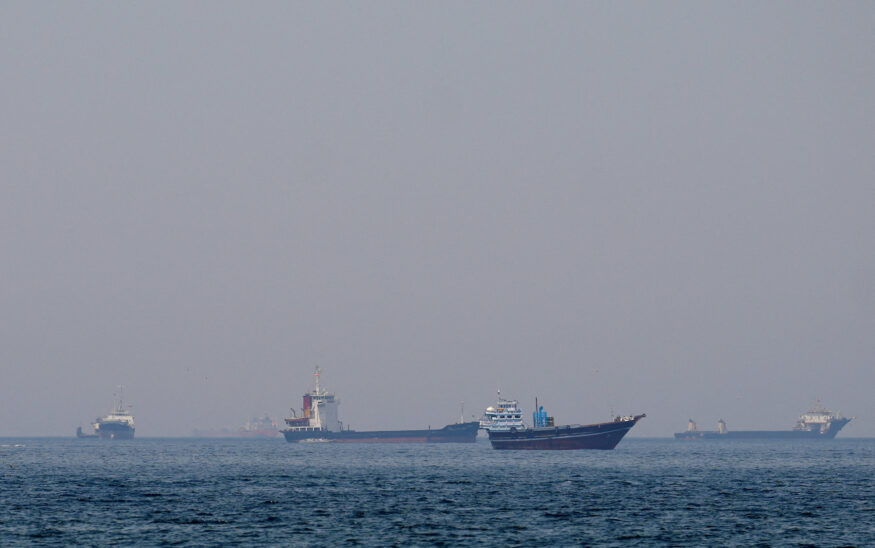
LONDON, April 21 (Reuters) — Shipping traffic through the Strait of Hormuz has come to a near standstill, with only three vessels passing through in the last 24 hours, according to shipping data.
A U.S. blockade of Iranian ports has angered Tehran, which has responded by intensifying its own restrictions in the strait, a critical passage that usually sees about one-fifth of the world’s oil and liquefied natural gas flow through it.
On Tuesday, the Ean Spir tanker—currently without known flag or ownership—navigated through Hormuz after making a stop at an Iraqi port, as per data from the MarineTraffic tracking platform.
Another vessel, the Lian Star cargo ship, also passed through the strait coming from an Iranian port, according to the same data.
Additionally, the Meda LPG tanker, which had previously been to a port in the United Arab Emirates, crossed the strait on Monday. This was its second attempt to exit the Gulf after it had to turn back on its first try, based on satellite analysis from data experts at SynMax.
This is a stark contrast to the average of 140 ships that typically transit through the strait daily prior to the start of the U.S. and Israel's military actions against Iran on February 28.
After Iran temporarily announced the strait was open on Friday, more than a dozen tankers were able to pass through. However, by Saturday, Tehran reversed its decision and closed it again while firing upon vessels.
According to shipbroker BRS, “Even vessels that seem to meet all known criteria for transit through the blockades may still find themselves at risk and unable to pass.”
The ceasefire between the U.S. and Iran seems to be at risk now, with Tehran not agreeing to new peace talks and the U.S. military confirming the seizure of a tanker associated with Iran in international waters.
SEAFARERS' LIVES AT RISK
Currently, hundreds of ships and around 20,000 seafarers are stranded in the Gulf, unable to set sail.
“We cannot put the lives of seafarers at risk,” stated Arsenio Dominguez, the secretary-general of the UN’s shipping agency, during a press conference at Singapore’s maritime week on Tuesday.
“Last weekend’s events showed the danger: on Friday some ships were allowed to sail, but then an announcement came that the strait was closed, and some vessels were targeted. Fortunately, there were no casualties or damage.”
According to Iran’s army, an Iranian tanker successfully entered its territorial waters from the Arabian Sea on Monday, aided by the Iranian Navy, despite repeated warnings from the U.S. naval task force.
Shipbroker BRS estimates that currently, 61 supertankers not related to Iran are stuck inside the Gulf, with 50 of those carrying up to 2 million barrels of cargo each.
“At a time when global demand for crude oil is high, an extra 2 million barrels leaving the Middle East Gulf would be a welcome relief,” BRS commented.