
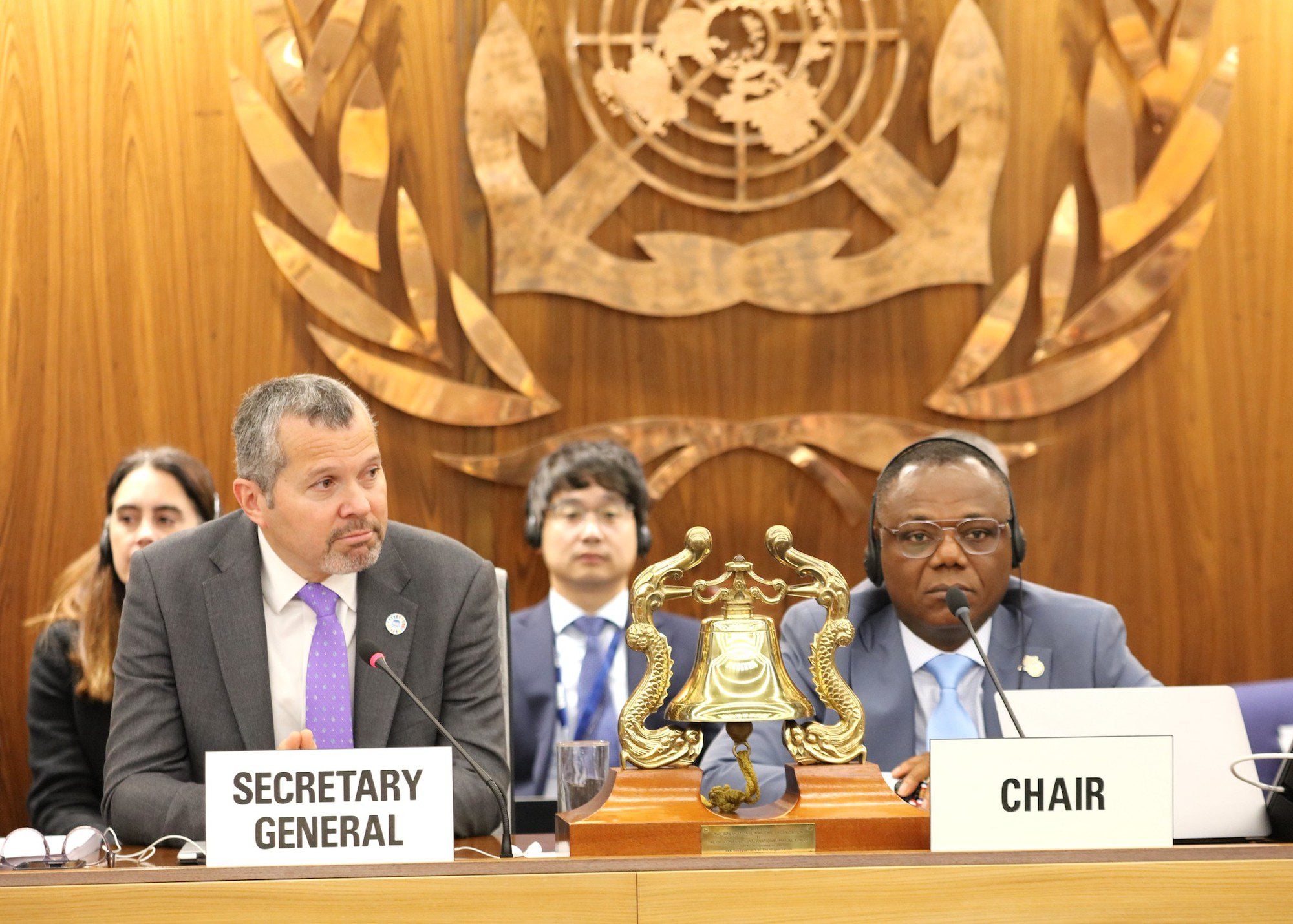
The International Maritime Organization (IMO) is at a critical point next week as global shipping organizations come together in support of the regulator ahead of important climate talks at Marine Environment Protection Committee 84 in London.
Only six months after governments failed to agree on a significant carbon pricing plan, the shipping industry is making a strong statement: a global agreement is necessary, or the rules governing international shipping will become fragmented.
In a joint statement before the meeting, notable trade organizations, including BIMCO, the International Chamber of Shipping, and the World Shipping Council, expressed their support for the IMO as the only effective global regulator for shipping emissions.
According to the statement, “The industry stands united in its belief in the value and effectiveness of the IMO as the global regulator for international shipping and is dedicated to achieving the goals set out in the 2023 IMO Strategy on Reduction of GHG Emissions from Ships.”
This push comes at a crucial time. In October 2025, a widely supported Net-Zero Framework fell apart after a coalition of oil-producing nations, led by the U.S. and Saudi Arabia, delayed it by one year, preventing the establishment of the first global carbon pricing system for shipping.
The industry is now facing increasing uncertainty as shipowners invest billions in alternative fuels and new technologies.
The focus has shifted from whether a deal is possible to what happens if there isn’t one.
Without a global framework, regional regulations might emerge, leading to overlapping carbon rules, extra penalties, and a compliance situation that becomes harder to manage. This is precisely what shipping groups want to prevent.
Their unified message ahead of MEPC 84 is clear: global rules should stay global.
Discussions will move forward under Agenda Item 7, featuring numerous submissions and a new working group focused on developing mid-term greenhouse gas measures consistent with the IMO’s 2023 strategy, which aims for net-zero emissions by around 2050.
However, the same disagreements that caused the deal to collapse last year still persist, particularly concerning carbon pricing, how revenues are shared, and enforcement.
It's still uncertain if negotiators will manage to overcome these differences this time.
In addition to emissions, the meeting will also address various environmental regulations, including changes to MARPOL Annex VI, new emissions monitoring guidelines, and updated rules on plastics, ballast water, and underwater noise.
Nonetheless, the outcome of the Net-Zero Framework will be the highlight of the meeting.
After the breakdown in October, MEPC 84 is shaping up to be more than just a technical gathering; it will be a test of whether the IMO can still achieve consensus-based global regulation in a world that is becoming increasingly divided politically.