
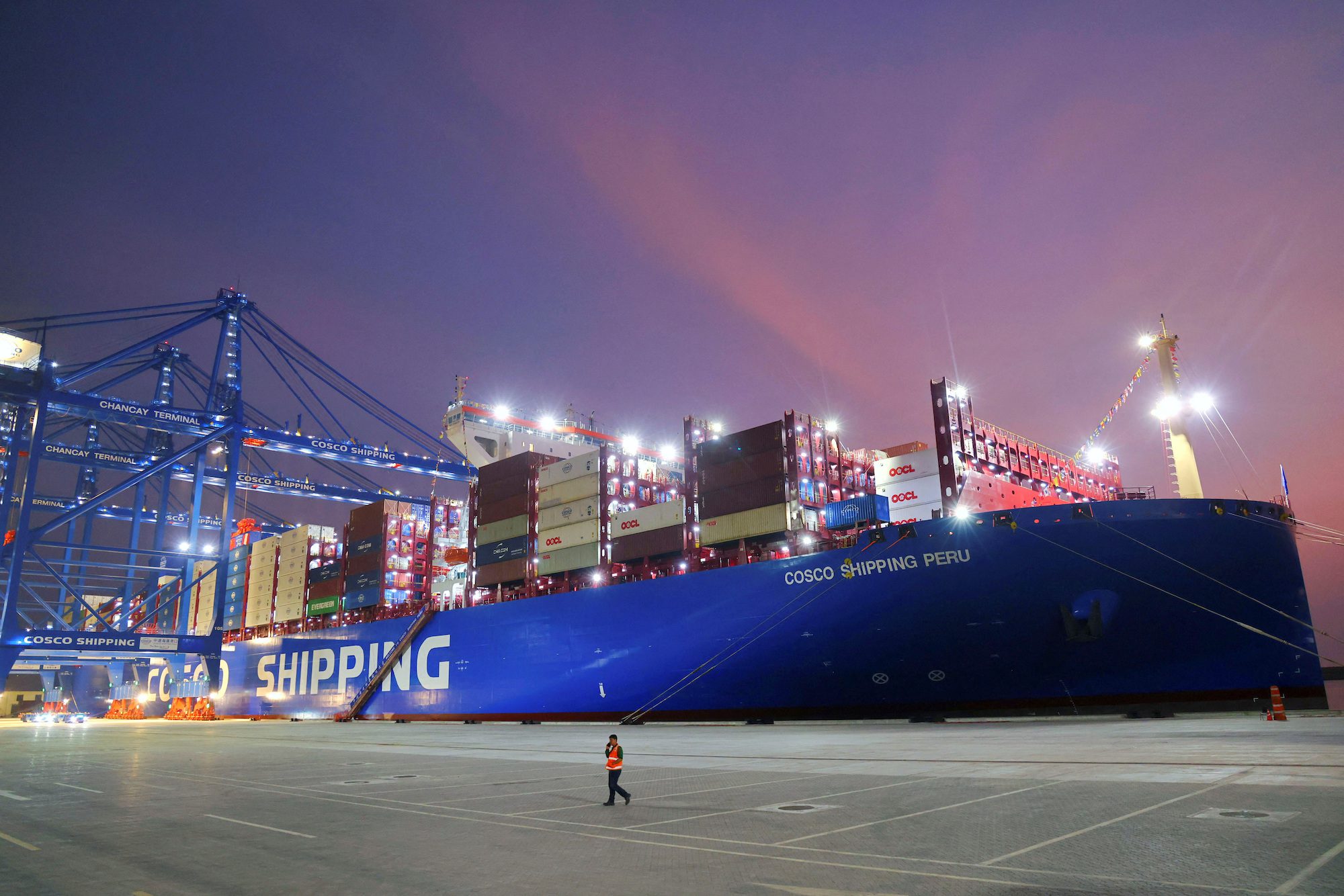
Competition to boost maritime trade between China and Peru is intensifying with the opening of a new Chinese-owned port on Peru's Pacific coast.
MSC Mediterranean Shipping is starting a weekly direct service to transport goods from Ningbo, China, to Callao, near Lima, Peru's capital. Last year, COSCO Shipping finished its $1.3 billion port in Chancay, which enabled them to set up a similar direct shipping line to Shanghai that also operates weekly.
MSC is the top container shipping company in the world, while COSCO ranks fourth. The two shipping routes serve different purposes for now: one to China in 21 days, and the other to Peru in 23 days. These developments highlight the growing significance of trade between China and Peru, even though it raises concerns in Washington. China is Peru's largest trading partner, and the main buyer of its top export, copper. Meanwhile, Peru imports various goods from China, including textiles, electronics, and cars.
“Previously, goods from China typically arrived in Peru after stopping at major markets like Mexico, then traveling down to Central America, Panama, Colombia, and finally arriving after 40 to 45 days,” explained Fernando Fauche, chief commercial officer at APM Terminals Callao, which manages part of the Peruvian port.
Reducing transit times between China and Peru was a key advantage of the Chancay port, which was inaugurated by President Xi Jinping during the Asia-Pacific Economic Cooperation summit in Lima last year. However, MSC's new route indicates that Chancay's influence extends further, pushing other ports to develop faster links between the two nations — a challenge that has long been viewed as unfeasible due to Peru's smaller market size.
The ports of Callao and Chancay are approximately 50 miles apart, or just a few hours by truck, both being near Lima.
“MSC saw the right moment to establish a direct service from Asia,” noted Gonzalo Santillana, MSC’s managing director in Peru, mentioning that they have deployed 14 ships. “We believe that the market will react positively, as we are seeing strong demand and full ships.”
Currently, the vessels unload in Callao and then head to Chile to collect cherries for shipment to Asia, as it is the harvest season for the next few weeks. However, Santillana hopes that once this season ends, MSC will initiate a direct route from Callao to assist Peruvian exporters, especially fruit producers who can benefit from improved shipping times.
“This is just the start of something huge,” Fauche stated. “Peru is set to become the logistical hub of South America, and we will see many more direct services to Asia.”