
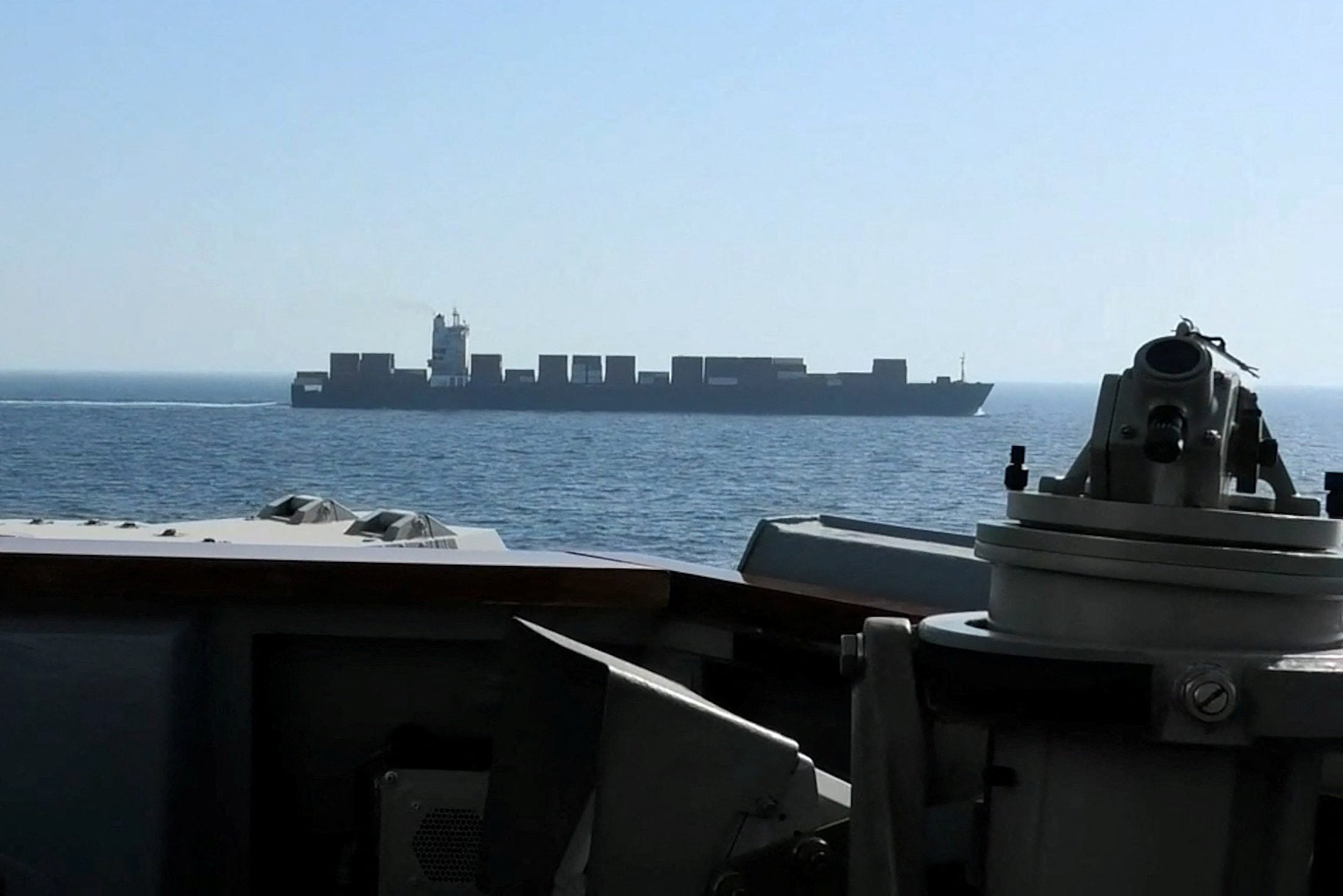
Iran's reported capture of two merchant ships in the Strait of Hormuz on Wednesday could signal a major change in the ongoing crisis at this crucial shipping route. This suggests a shift from merely implied control over commercial traffic to more direct enforcement actions.
This escalation occurred just hours after President Donald Trump extended a conditional ceasefire with Iran while keeping a U.S. naval blockade in place, highlighting the rapid conflict between the pressure tactics of Washington and Tehran at sea.
The United Kingdom Maritime Trade Operations (UKMTO) reported two separate attacks on merchant ships within hours in and around the Strait.
In one incident, the captain of an outgoing cargo ship about eight nautical miles west of Iran reported being fired upon and forced to stop. Fortunately, the crew was safe, and there were no immediate reports of damage.
In a more serious incident, a container ship traveling approximately 15 nautical miles northeast of Oman reported being approached by an IRGC gunboat that fired without any radio warning, causing significant damage to the bridge. Thankfully, all crew members were safe.
Iran’s semi-official Tasnim news agency later stated that the Islamic Revolutionary Guard Corps had seized two vessels — the Panama-flagged MSC Francesca and the Liberia-flagged Epaminondas. They claimed these ships were operating without the necessary permits and interfering with navigation systems. The IRGC warned that any disruptions to “order and safety” in the Strait would be viewed as a “red line.”
If confirmed, these seizures would be the first by Iran since the conflict started.
A third vessel reportedly came under fire but managed to continue sailing.
These incidents may indicate a hardening of Iran’s visible control over transit routes through Hormuz. In recent weeks, commercial activity has already been operating under what many shipping experts describe as a de facto permission system requiring routing controls, coordination, and transit approvals via Tehran-designated routes.
Wednesday’s reported seizures imply that this system might be shifting from managed control to direct enforcement, potentially affecting commercial shipping significantly.
This development also coincides with a rise in U.S. maritime pressure, which is contributing to what is becoming a two-sided blockade. At least two confirmed U.S. interventions have occurred since the conflict began, including the seizure of an Iranian-flagged cargo ship reportedly heading to Bandar Abbas and the boarding of the sanctioned tanker Tifani in the Bay of Bengal. Together with numerous redirections and challenges involving Iranian-linked vessels, these actions reveal that commercial shipping is caught between pressures from both Washington and Tehran.
For weeks, the gap between political claims that Hormuz is "open" and the actual situation at sea has been widening. Limited traffic, selective passage, U.S. interventions, and Iranian oversight have turned the waterway into a contested area instead of a typical commercial route.
At the same time, recent data is clarifying the extent and limitations of enforcement. TankerTrackers reports that six tankers have been intercepted, redirected, or boarded by U.S. naval or Coast Guard forces related to sanctions enforcement, while the Financial Times, citing Vortexa, noted that at least 34 tankers linked to Iran have evaded the U.S. blockade since it started.
In a further escalation, Iranian media connected to the IRGC warned of the strategic vulnerability of seven major underwater internet cables crossing the Strait of Hormuz, referring to them as “pressure points” in addition to ports, shipping routes, and energy infrastructure.
A credible threat to those cables could escalate the conflict into a broader crisis, putting crucial communications and financial infrastructure at risk across the Gulf.
For shipping markets, the immediate concern is whether Wednesday’s incidents represent an isolated escalation or indicate a more formalized Iranian enforcement stance in Hormuz. If it is the latter, the crisis may be entering a new phase.