
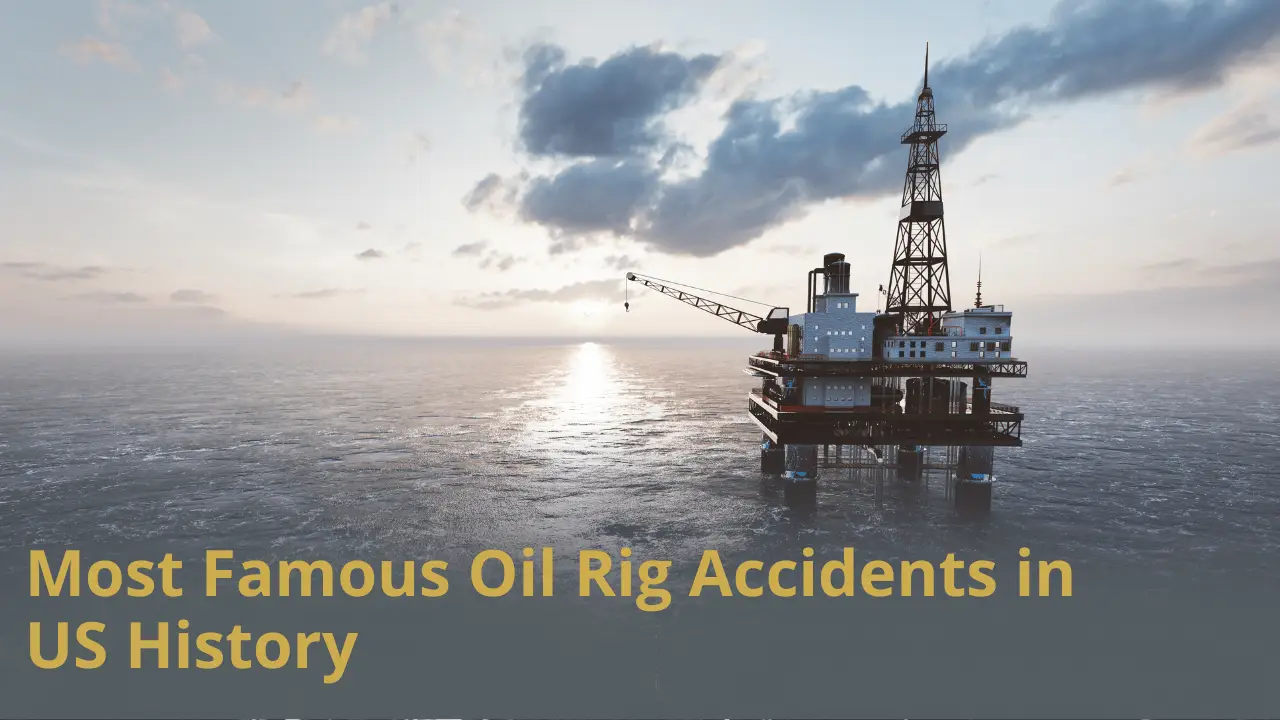
On a mild November morning, a fire erupted on an oil platform located about 12 miles from the Louisiana coast, producing a thick column of black smoke. Just moments before, a team was welding pipes near the production deck when hydrocarbon vapors from nearby tanks ignited, causing a series of explosions.
Sadly, three crew members lost their lives, and several others sustained serious injuries.
This incident was not a random event; it stemmed from poorly managed "hot work." The Occupational Safety and Health Administration (OSHA) defines hot work as any task involving burning, welding, cutting, or any activity that could create a source of ignition. Hot work must be conducted following strict safety standards to protect everyone nearby.
An investigation by the Bureau of Safety and Environmental Enforcement (BSEE) revealed several severe failures, including the lack of a pre-work inspection, failure to assign a fire watch, and not obtaining a proper hot work permit.
This tragic incident occurred in 2012, but the risks associated with hot work are long-standing and remain a pressing concern.
What Is Hot Work Offshore?
Hot work is a daily requirement on offshore oil and gas facilities. Welders and pipefitters are responsible for cutting and joining metals to build and repair the infrastructure of rigs and platforms. They can be found welding equipment on drilling rigs, cutting pipes on production platforms, or grinding steel in shipyards where offshore modules are constructed. These skilled workers are essential for maintaining oil and gas facilities through pipeline fabrication, repairing damaged beams, and performing vessel maintenance. It's a challenging and high-risk job in an already dangerous environment.
Even with training and safety gear, welders and pipefitters face significant dangers. Welding is often regarded as the most hazardous profession in the construction sector, which itself has high fatality rates. One analysis by Industrial Safety & Hygiene News found that about 1 in 250 construction workers is at risk of dying from a welding-related accident.
In offshore settings, the risks are even higher as crews work near volatile fuel sources and heavy machinery. Although oil rigs are surrounded by water, fire remains a constant threat due to onboard fuels and gases. A single spark can lead to devastating outcomes, and help can often be far away.
Invisible Hazards: Vapors, Fumes & Confined Spaces
Many dangers of offshore hot work are not visible. Welding and cutting produce intense heat that can ignite any nearby flammable vapor, which is often undetectable. On oil rigs and production platforms, flammable gases can escape from tanks and piping without clear warnings. In the November 2012 explosion, leaked hydrocarbon vapors caught fire from the welding activities.
The U.S. Chemical Safety Board (CSB) has investigated many incidents where workers were unaware they were in a flammable environment until it was too late. In one case, three workers died at a paper mill in Wisconsin while welding above a tank that unknowingly contained combustible hydrogen gas. Similarly, an explosion at a gasoline storage facility in Arkansas claimed three lives, and in Ohio, two contractors were killed when their hot work ignited flammable gas.
“Hot work in the presence of flammable gas or vapor is one of the most frequent causes of worker fatalities,” said a CSB board member. “Tragically, many of these accidents are easily preventable with better hazard assessments, proper gas monitoring, and other simple safety measures.”
Out of nearly all hot work accidents, the root cause is typically the presence of flammable gases or vapors that remain undetected until an ignition occurs.
Confined spaces pose another significant and often hidden risk. Tanks and compartments can trap flammable vapors, exposing workers to toxic fumes or low oxygen levels. Welding in confined spaces can worsen conditions by concentrating hazardous gases. The heat from welding can also release vapors while the process emits fumes that workers can't escape in tight settings.
A small spark in an inadequately ventilated area can cause a fuel-air explosion as powerful as a bomb. Even without explosions, welders in confined spaces risk suffocation or poisoning without proper ventilation and gas checks. The CSB has noted that “most accidents stem from failing to identify all possible locations where flammable atmospheres exist. The presence of flammable materials must be confirmed before and during any hot work.”
Ongoing air monitoring is crucial, particularly in confined areas, to identify dangerous gases or reduced oxygen levels. If not implemented, welders effectively work blind to a threat that could end their lives in seconds.
Hot Work Permits, Fire Watches & Other Safeguards
To ensure hot work is as safe as possible, offshore industry regulations have stringent requirements. In U.S. waters, the BSEE requires a comprehensive hot work program for offshore facilities. Title 30 CFR 250.113 specifies detailed procedures that must be followed when conducting welding or cutting on a platform.
Before starting any hot work, a supervisor or designated person must:
- Inspect the job site;
- Test for hazards; and
- Issue a written hot work permit stating the area is safe.
The work area and any areas below it must be free of flammable materials. Equipment that previously contained oil or gas must be drained, purged, or rendered inert before welding can start. While hot work is in progress, regulations require constant monitoring for combustible gases, and any nearby wells or production should be shut down.
A dedicated fire watch must be present, consisting of one or more workers whose only responsibility is to observe for sparks or fires during the hot work. Fire watch staff should be equipped with firefighting tools and remain vigilant throughout the job and for at least 30 minutes after work concludes to ensure no smoldering fires ignite.
These safety measures are well-known and have been standard practice in the industry for years. Ideally, they should prevent almost all hot work accidents, yet past incidents show that the reality often differs from expectations.
Where Things Go Wrong
Hot work safety protocols are effective only when actively implemented, which is where many systems falter:
Hot work permits may become a mere formality rather than a genuine safety measure. In the November 2012 explosion, investigators found that the person in charge had stopped conducting daily safety meetings and had largely delegated the permitting process. On the day of the incident, there was no fire watch, and safety checks were not confirmed. The hot work permit failed to list the welding site as safe.
Gas testing may be overlooked or inadequately done. Although portable gas monitors are inexpensive and easily accessible, there is no federal OSHA requirement mandating their use at every hot work site. Crews may begin welding without confirming the area is free of vapors.
Fire watch requirements might be minimized or ignored altogether. Regulations dictate that fire watch personnel should have no other responsibilities and must focus solely on watching for fires, yet a 2023 BSEE review found cases where the same individual was listed as both the welder and fire watcher—a dangerous conflict. In some cases, no fire watch was present at all.
Basic safety precautions may be disregarded. Standard safety measures like ensuring flammable materials are removed can be overlooked when crews feel pressured. In the 2023 review, BSEE inspectors found multiple instances of hot work occurring within 35 feet of operational hydrocarbon equipment, with flammable clutter nearby. They even documented a case where hot slag from a cutting torch burned through a barrier, igniting a wooden floor in the crew quarters and causing a fire that spread through the facility.
These oversights put everyone on offshore rigs at risk.
By the Numbers: Hot Work Accidents & Offshore Injuries
Working offshore in oil and gas is already risky, and hot work incidents significantly contribute to that danger. According to BSEE data (which may be underreported), there were 4,474 reported offshore incidents in U.S. waters from 2012 to 2020, resulting in 1,654 injuries and 23 worker fatalities. More than 93% of these incidents occurred in the Gulf, the busiest offshore region in the country.
Hot work accidents—including fires and explosions from welding or cutting—can cause catastrophic harm. A single explosion can take numerous lives on an offshore platform or rig.
On land, hot work hazards are a leading cause of industrial fires. The National Fire Protection Association (NFPA) found that U.S. fire departments responded to an average of 3,396 structure fires caused by hot work annually from 2017 to 2021, leading to 19 civilian deaths and 120 civilian injuries each year. According to the Bureau of Labor Statistics (BLS), welding accidents result in over 500,000 worker injuries each year, and a 2010 CSB study identified over 60 fatalities since 1990 due to explosions and fires ignited by hot work on tanks and similar equipment.
These statistics reveal that the risks associated with hot work are neither uncommon nor limited to one industry. They persist across oil platforms, refineries, shipyards, factories, and beyond. Particularly along the Gulf Coast, which hosts numerous oil and industrial facilities, workers face some of the highest risks related to hot work.
Spotlight on Underwater Welding
In the offshore industry, not all hot work is done above water. A vital subset of welders works underwater—beneath drilling rigs or on subsea pipelines and structures. Underwater welding combines the inherent risks of welding with the hazards of deep-sea diving, making it one of the most dangerous jobs globally. In fact, underwater welding has been labeled as the deadliest job on Earth.
Underwater welders, who are also commercial divers, might repair the legs of an offshore platform, cut damaged sections of underwater pipelines, or maintain a ship's hull. They operate in a hostile environment with limited visibility, extreme water pressure, and often cold or turbulent seas, relying solely on their diving gear and tether to their diving bell for survival. Any emergency can quickly become deadly due to the challenging rescue conditions.
Offshore Crews Deserve Better
Welders, pipefitters, electricians, engineers, and others involved in hot work on offshore platforms deserve respect and assurance that their employers and industry leaders prioritize their safety. Every hot work project should be overseen by a safety system that considers every spark as potentially dangerous—because it is. From the Gulf to port cities nationwide, we owe it to these essential workers to demand accountability and improvement in safety measures.
In practice, this means companies must cultivate a safety-first culture throughout their organization, where cutting corners is unacceptable. It also means providing the right training and equipment, and empowering workers to voice safety concerns without fear of retaliation.
Offshore crews already operate in some of the harshest conditions on Earth—they should not have to risk their lives due to rushed or poorly managed hot work.