
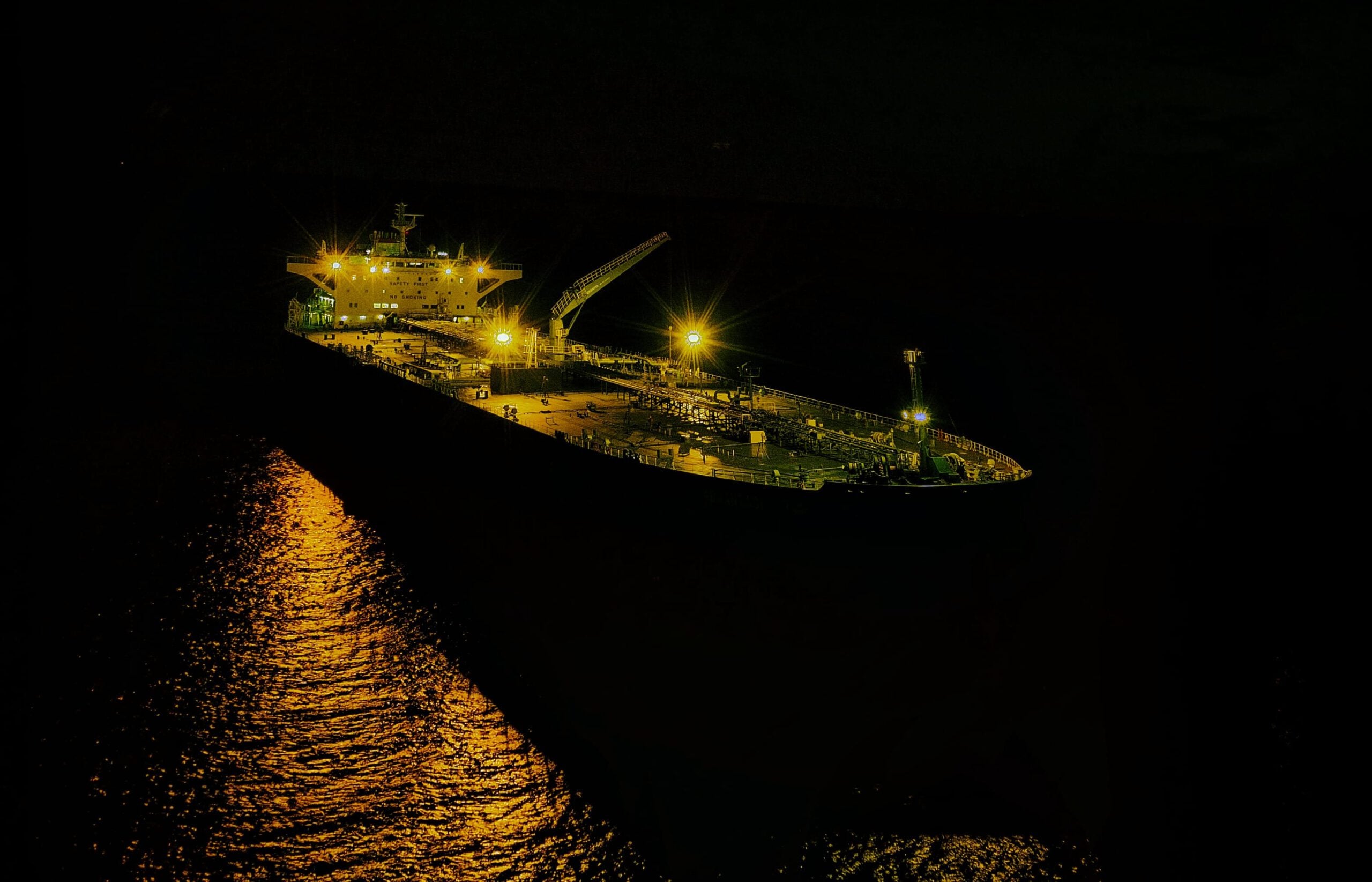
Three ships carrying Iranian oil that is under sanctions were hit in the first 24 hours of Operation Epic Fury. The affected vessels are the oil tankers Skylight, MKD Vyom, and Hercules Star, with reports confirming a crew member lost their life during the MKD Vyom incident.
In late January, President Trump launched a maximum pressure campaign against Iran, introducing new sanctions and identifying 14 vessels involved in transporting the sanctioned oil.
Data from Kpler indicates that Iran increased its crude shipments in the days leading up to the strikes. “Iran really ramped up its exports a week before last,” noted Smith. “Thirteen vessels exported about 26 million barrels of crude, whereas they usually send out 5 to 6 vessels carrying 10 to 20 million barrels weekly.”
Analysts predict that in 2025, Iran will earn around $30 billion from its sanctioned oil. According to Kpler, 251 vessels were loaded with sanctioned Iranian oil in 2025, with 217 of those (86%) being sanctioned. The remaining 34 vessels belong to a shadow fleet, where the majority (96%) transported the oil through unreported ship-to-ship transfers, 77% masked their positions, and 72% turned off their location signals for extended periods.
China and India are the main buyers of this low-cost crude. With both illegal and legal tanker movements halted through the Strait of Hormuz, there is growing concern about India facing a potential crude shortage. “India recently reduced its intake of Russian crude, while China has been acquiring most of it,” Smith explained. “Unlike China, which has inventory buffers, India, which imports about 5 million barrels daily, only has roughly 100 million barrels in stock, translating to just around 20 days' worth of supplies. They are particularly vulnerable.”
South Korea also has limited crude reserves with an approximate supply lasting for 30 days. “South Korea provides 90 percent of the jet fuel for the U.S. West Coast,” Smith added.
Smith warned that if the strikes continue for several weeks, it could lead to significant problems. As of now, Lloyd’s List tanker tracking reports that only 7 tankers have crossed the Strait of Hormuz since 18:00 UTC (1 PM EST).
Moreover, depending on how long the strikes last, Europe may also start feeling the impact on energy supplies. “Jet fuel imports from the Middle East are vital for Europe, with a large portion coming from the UAE,” Smith stated.