
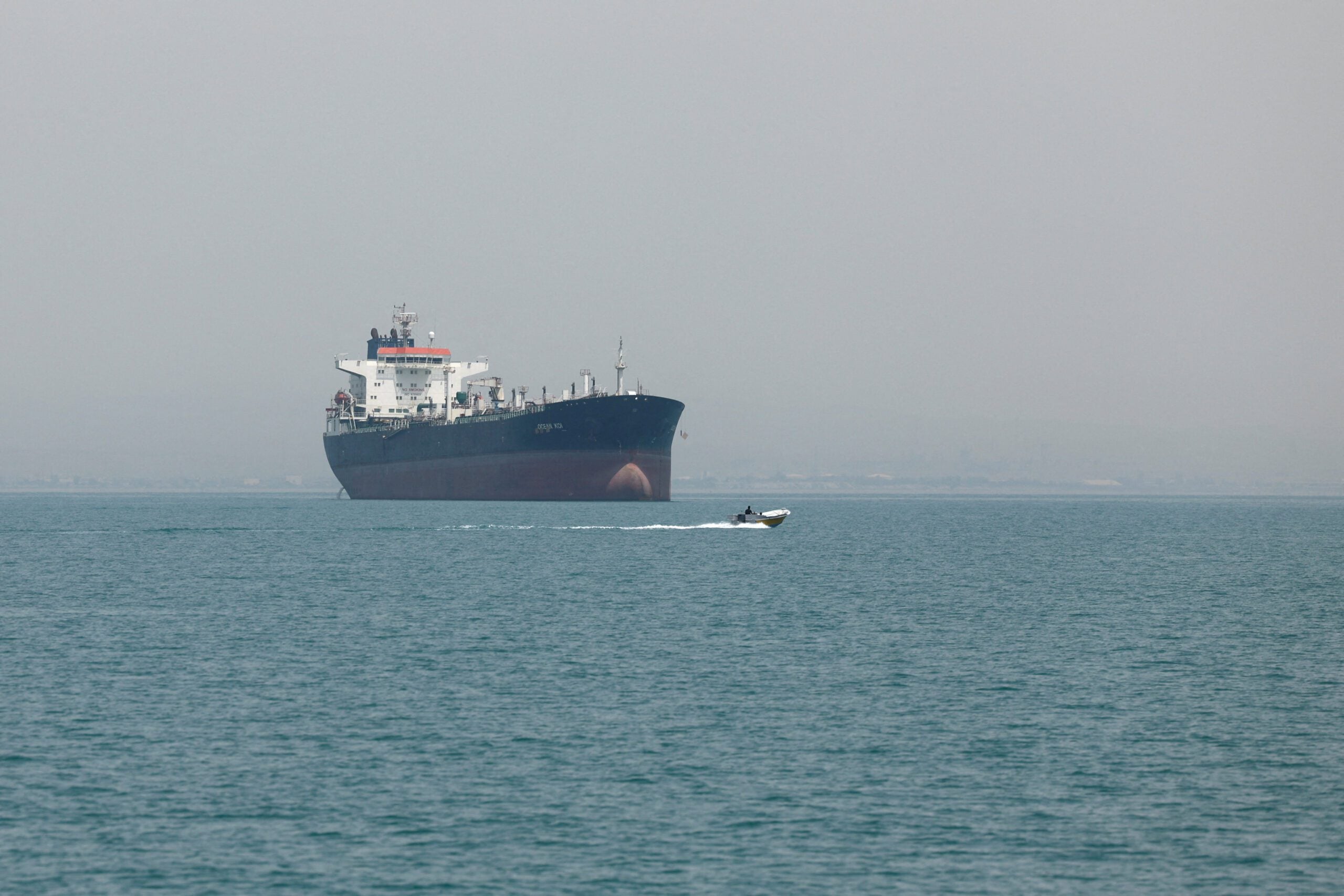
A second merchant ship has been hit while passing through the Strait of Hormuz, highlighting the worsening security situation in the area despite efforts to ensure safe passage for commercial vessels.
On Saturday, the United Kingdom Maritime Trade Operations (UKMTO) reported that the captain of a tanker indicated it was struck by an unknown projectile in the Strait of Hormuz. The ship was damaged but all crew members are safe, and there was no reported pollution. Authorities are currently investigating the incident.
Martin Kelly, Head of Advisory at EOS Risk Group, identified the affected vessel as the Panama-flagged VLCC KIKU, which was transporting crude oil from Qatar Energy. He noted that this was the second ship hit since Iran stated that unauthorized transits through the Strait would not be protected by the PGSA.
This latest attack follows a strike the day before on the Singapore-flagged container ship Ever Lovely, which U.S. officials said was hit by an Iranian one-way attack drone as it exited the Strait near the Omani coast.
In response, the U.S. carried out strikes on Iranian missile and drone storage sites, as well as coastal radar facilities, according to U.S. Central Command (CENTCOM).
“CENTCOM forces conducted strikes against Iran as a strong response to yesterday’s attack on a commercial ship in the Strait of Hormuz,” the command stated, adding that the attack on Ever Lovely violated a ceasefire agreement and threatened freedom of navigation. CENTCOM emphasized that U.S. forces continue to work to ensure safe passage for commercial shipping in the Strait.
Iran pushed back against the U.S. actions on Saturday, claiming they violated the Islamabad Memorandum of Understanding which had halted hostilities earlier this month. In a statement from the Iranian Embassy in Japan on X, Tehran stated that the U.S. attacks on facilities in southern Iran broke the agreement's requirement for “immediate and permanent termination of military operations.”
Iran also accused the U.S. of trying to reinterpret the agreement by linking future military actions to attacks on commercial shipping. Referring to Paragraph 5 of the MOU, Tehran argued that the agreement tasked Iran with making “best efforts” to ensure safe passage through the Strait of Hormuz, allowing up to 30 days to remove military obstacles and complete demining before normal traffic resumes.
The return of violence comes as Iran has reasserted its control over shipping in the Strait of Hormuz, declaring that vessels must comply with its Persian Gulf Strait Authority (PGSA). Meanwhile, the U.S. and its allies continue to promote a southern transit corridor managed through naval forces.
In light of the increased threats, the Joint Maritime Information Center (JMIC) raised the regional maritime security threat level in the Strait of Hormuz to SUBSTANTIAL due to attacks on merchant vessels. The advisory warned mariners about ongoing mine hazards and the potential for naval mine-clearance operations, along with congestion in the waterway.
At the same time, JMIC announced that the southern transit corridor has been expanded to accommodate both incoming and outgoing traffic simultaneously, replacing the previous single-lane setup that limited vessel movements. The advisory also stated that while ships are encouraged to coordinate with U.S. Naval Forces Central Command’s Naval Cooperation and Guidance for Shipping (NCAGS), such coordination is not mandatory, allowing vessels to use the southern route freely.
The most recent tanker strike is likely to heighten concerns among shipowners, charterers, and insurers about the vulnerability of commercial traffic in the Strait, despite the interim U.S.-Iran agreement reached earlier this month.
Even though vessel movements had begun to recover after months of disruptions, the attacks on Ever Lovely and now another tanker highlight the fragile security situation and the conflicting authorities trying to manage one of the world’s key maritime routes.
Security analysts warned that the situation might worsen following the U.S. strikes, predicting more Iranian military actions targeting shipping or regional sites.
Commercial operators face mixed guidance as Iran insists that vessels must obtain its authorization, while U.S.-led maritime security forces assert that ships can transit the southern corridor without Iranian approval.
The recent attacks demonstrate that navigating these conflicting claims remains one of the major risks for shipping in the Strait of Hormuz.