
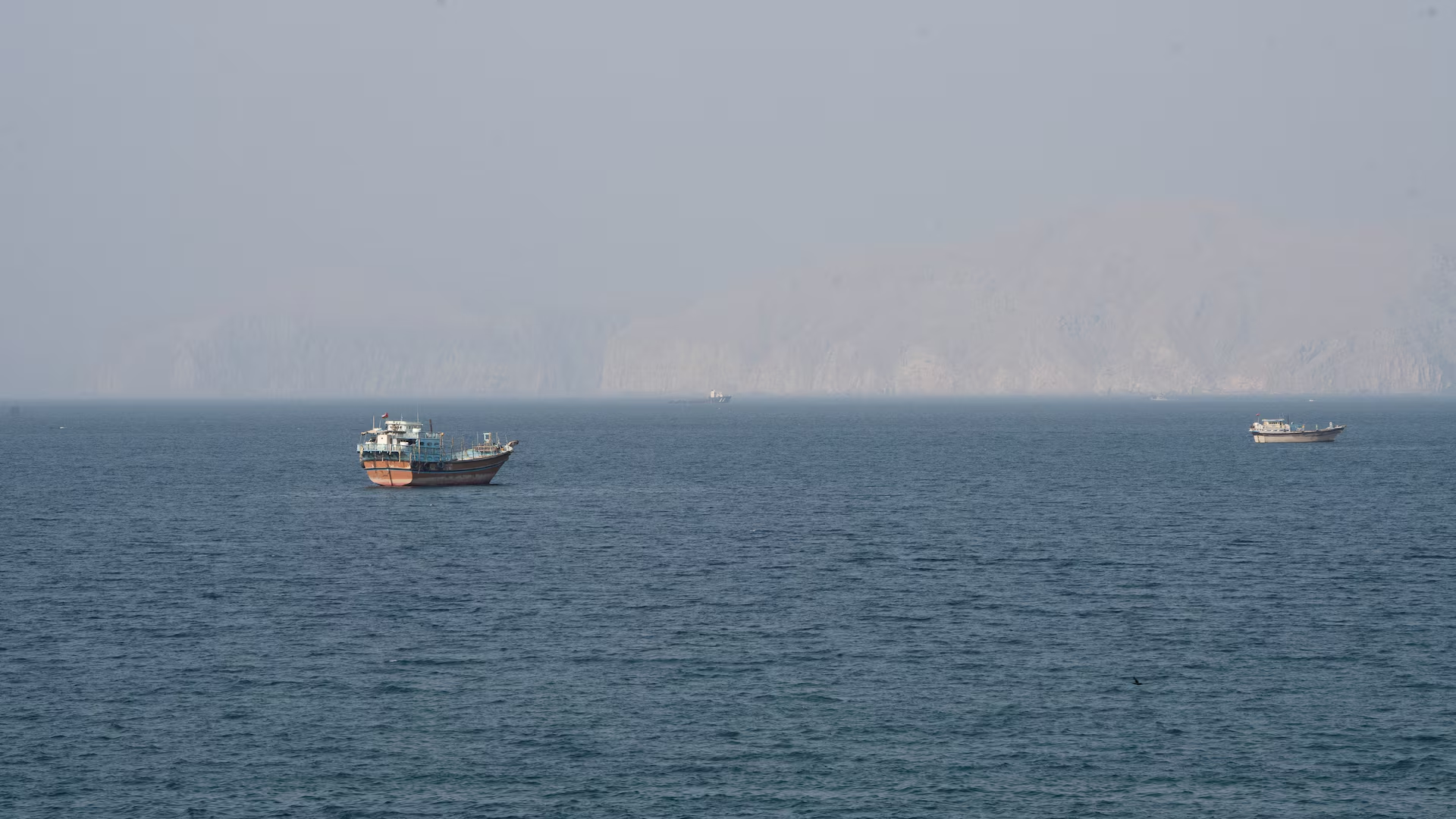
SINGAPORE, Aug 18 – Saudi Aramco has started loading oil again from the Strait of Hormuz after a pause last week, with more tankers waiting to load. This is part of their effort to sell spot heavy crude cargoes, as reported by shipping data and trade sources.
On Monday, the largest oil exporter in the world offered Arab Medium and Arab Heavy crude cargoes to some Asian refiners. These cargoes will be loaded via ship-to-ship (STS) transfers off Fujairah in the UAE this month.
This change comes after a few weeks of halted sales due to attacks on their tankers in the Strait of Hormuz, linked to rising tensions in the U.S.-Iran conflict last month.
The resumption of exports from Saudi Arabia might help relieve the tight supply of heavier oil grades, which are used to produce more residue fuel for ships or can be processed further to create higher quality fuels like gasoline and diesel.
Recently, three very large crude carriers (VLCCs) – Malaysia Prosperity, Algeria Prosperity, and Singapore Prosperity – each loaded 2 million barrels of crude from the Juaymah and Ras Tanura terminals between August 12 and August 16.
According to shiptrackers Vortexa and Kpler, there was a three-week gap since the last loading at these ports, and it's unclear what specific grades the tankers were carrying.
Both Saudi Aramco and Sinokor, the owner of the tankers, have not responded to requests for comments.
Data from Kpler indicates that another six VLCCs may load Saudi oil later this month.
Traders suggest that Saudi Aramco might use its own tankers for the Hormuz transit in addition to those from Sinokor.
Currently, seven VLCCs operated by Saudi-based Bahri are positioned off the UAE and Oman, with two more on their way to Fujairah, according to shipping data from LSEG.
SIDI KERIR EXPORTS
Despite the restart, Saudi oil exports are still limited due to a blockade by the Yemeni Houthis in the Red Sea. Earlier in the conflict, Aramco had redirected its exports to the port of Yanbu.
As an alternative, the company has also provided extra crude cargoes for loading from Egypt’s Mediterranean port of Sidi Kerir, but this volume is much lower than the 4 million barrels per day that were typically exported from Yanbu before the blockade. High shipping costs and longer travel times are making it hard to attract buyers.
Kpler data predicts about 670,000 barrels per day of Middle Eastern crude will be loaded at the Sidi Kerir port for Asia this month, a significant increase from zero in the last three months.
“The Sidi Kerir offering to Asia isn't working well, especially for Chinese customers who dislike the long journeys and high freight costs,” commented Emma Li, a market analyst for Vortexa in China.