
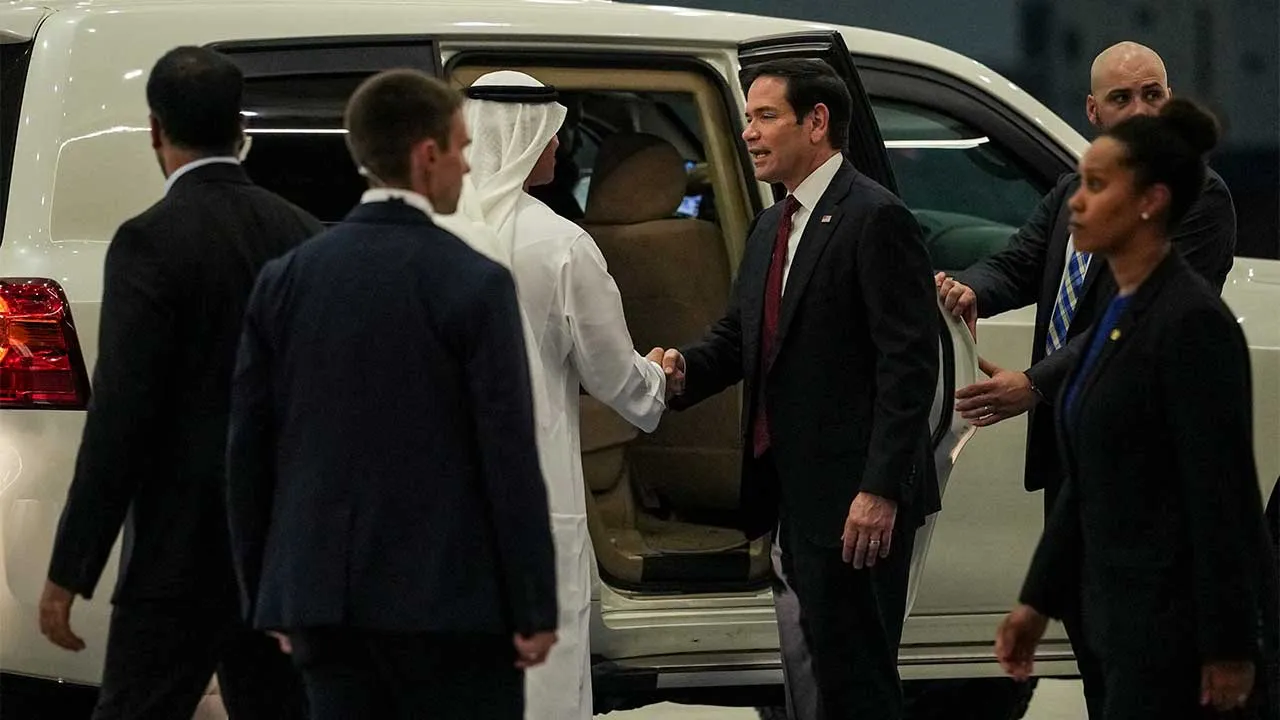
ABU DHABI, June 23 (Reuters) – U.S. Secretary of State Marco Rubio is embarking on a challenging mission this week as he seeks to promote Washington's Iran peace deal to Gulf Arab leaders. Many of these leaders are concerned that too many concessions to Iran could empower Tehran and alter the security dynamics in the region, especially regarding oil flows.
Rubio arrived in the United Arab Emirates late Tuesday and plans to visit Kuwait and Bahrain in the coming days. He will meet with officials from the Gulf Cooperation Council (GCC), which includes Saudi Arabia, Qatar, and Oman, among others.
When asked if he would address the concerns of allies regarding the agreement, Rubio confirmed, “That most certainly will come up in these discussions.” He also mentioned that other topics not covered by the memorandum of understanding (MoU) would be on the table.
The draft agreement in question lacks restrictions on Iran's ballistic missile program, proposes a $300 billion reconstruction fund, and includes provisions that could increase Tehran's regional power and control over vital oil shipping routes.
Rubio stated that he would not be asking regional allies to contribute to the reconstruction fund during this trip, although the MoU implies that these countries might share some financial responsibility. He clarified that discussions about financial contributions are for the future and that any funds for Iran would depend on Tehran's actions moving forward. “That’s far down the road,” he added.
All six GCC members are critical U.S. allies and provided varying levels of support to Washington during the ongoing U.S.-Israeli conflict with Iran, which started four months ago, and they have faced retaliatory Iranian airstrikes.
Some of these nations are privately disappointed and surprised by an interim deal that could lead to U.S. normalization with Iran, a mainly Shi'ite nation regarded as a rival by the predominantly Sunni GCC states.
These nations’ views are significant to U.S. policymakers. The UAE, Saudi Arabia, Qatar, Kuwait, and Bahrain host U.S. military bases that form the backbone of America's security strategy in the Middle East. Any shift in their security stance towards the U.S. could have major implications for America's military operations in the area.
Rubio, who has kept a distance from the Iran negotiations in recent weeks and mostly deferred to Vice President JD Vance and other Trump aides, faces a delicate task. While he aims to reassure regional allies, he must do so without criticizing the U.S.-Iran memorandum of understanding. President Donald Trump, who endorsed the agreement last week, continues to support it despite some Republican concerns about yielding to Tehran.
Andrew Peek, a former deputy assistant secretary of state who served in Trump’s National Security Council, suggested that Rubio could ease allies' nerves by reminding them that Trump has historically taken a tough stance against Iran. “If this MoU falls through, he will have no hesitation about striking again,” Peek said.
PEACE – BUT AT WHAT COST?
Leaders from all GCC countries involved in this week’s talks publicly advocated for a diplomatic solution before the war began in February and continued to call for diplomacy even while assisting the U.S. war efforts.
However, the specific terms of the MoU have surprised regional officials, as noted by analysts and diplomats. One major concern is regarding ballistic missiles. Throughout the war, the Trump administration emphasized the goal of dismantling Iran’s missile capabilities, aligning with the interests of the Sunni Gulf states that fall within Iran's missile range.
Surprisingly, the MoU does not address Iranian missiles, and Trump has recently suggested that denying Tehran such weapons would be “unfair.” Additionally, the proposed $300 billion reconstruction fund raises fears among regional neighbors that it could enhance Iran's military capabilities and enable support for proxy groups that threaten stability in the region.
Bahrain, governed mainly by Sunni leaders, is particularly worried that a wealthy Iran could incite unrest among the mostly Shi'ite population on the island. During the Arab Spring, Bahrain experienced significant protests.
Iran has denied any covert attempts to incite unrest but has publicly supported Bahraini Shi'ite activists in the past.
The agreement, as currently phrased, seems to allow Iran a significant role in controlling the Strait of Hormuz, a critical route for Gulf exporters reliant on it for oil and gas shipments. Rubio stated on Tuesday that Iran would not be able to impose tolls in the strait, as it would conflict with international law.
More broadly, U.S. officials have hinted at a potential fresh start for relations with Tehran, a concept that most GCC states view with caution. On Saturday, Vance indicated that the U.S. was open to “fundamentally transforming” its relationship with Iran.
“The agreement rehabilitates Tehran’s regime as a regional power,” wrote veteran Saudi columnist Abdulrahman Al-Rashed in the Arab News last week. “Most of the funds Tehran will receive in the coming weeks will likely go toward strengthening its military position rather than improving living conditions or the Iranian economy.”