
By Tony Capaccio (Bloomberg) – RTX Corp. has made agreements with the Department of Defense to increase the production of five important weapons. This includes a new version of the Tomahawk missile aimed at warships. These deals come shortly after President Donald Trump criticized the company for being "least responsive" to the Pentagon's needs.
The agreements, valid for up to seven years, also include a versatile missile considered key for intercepting Chinese ballistic anti-ship missiles, the company announced on Wednesday.
The framework was established about a month after Trump publicly called out RTX in a social media post, demanding that defense contractors reduce spending on stock buybacks and dividends. He even warned of potentially ceasing business with RTX, which manufactures a version of the well-known Patriot missile system and is the only supplier of engines for the F-35 stealth fighter jet.
At the time, RTX was already negotiating the framework, and discussions continued afterwards, according to a source familiar with the situation who requested anonymity.
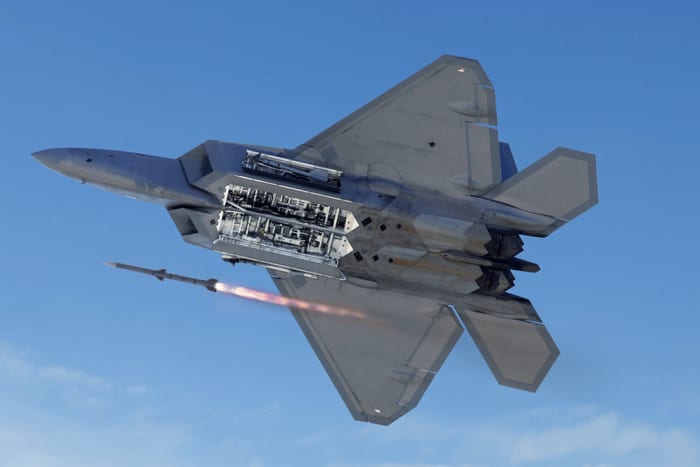
According to the deal, RTX will increase the annual production of Tomahawk missiles to over 1,000 and the Advanced Medium-Range Air-to-Air Missiles to at least 1,900 yearly.
Production of the SM-6, intended to intercept Chinese anti-ship missiles, will also surpass 500 units. Additionally, output for the SM-3 IIA and SM-3 IB will rise as well.
While the statement did not specify current production numbers, the company remarked that "many of these munitions will grow two to four times their existing production rates."
This deal aligns with Trump’s objective to boost military spending and address shortages revealed by high demand for missiles used in operations against Houthi rebels in Yemen and for defending Israel against Iranian missiles.
RTX's CEO Chris Calio stated, "These agreements redefine how government and industry can work together to speed up the delivery of critical technologies, directly resulting from the administration’s Acquisition Transformation Strategy aiming for faster delivery of essential technologies."
The agreement with the Defense Department includes "a collaborative funding approach designed to preserve upfront cash flow, enabling RTX to confidently invest in meeting long-term demands," according to the statement.
This represents another significant arms agreement under Trump’s administration. Similar frameworks have been made with Lockheed Martin Corp. to enhance Thaad and Patriot PAC-3 Missile Segment Enhancement interceptors.
RTX previously announced plans to raise capital spending to $3.1 billion this year, an increase of $500 million, to boost production capacity for weapons and munitions, including the Tomahawk.
These plans include adding automation and additional factory equipment to improve output and delivery speed to the Pentagon. RTX mentioned investments planned in Huntsville, Alabama; McKinney, Texas; and Tucson, Arizona, aimed at increasing missile production.
Maritime Strike Capability
Among the new missiles, two are particularly notable. One is the Maritime Tomahawk, a new anti-ship weapon that Admiral Daryl Caudle, the Chief of Naval Operations, referred to as a "game-changer" against a larger Chinese fleet. The US Navy intended to start deploying this anti-ship version on destroyers by last year.
The other is the SM-6, the only missile in the US for anti-air warfare, anti-surface warfare, and sea-based terminal ballistic missile defense. It was first used in combat in 2024 against drones operated by Houthi militants in the Gulf of Aden, according to RTX.
The SM-6 also plays a role in the US Army's ground-based Typhon launcher system, which provides extended-range anti-ship capability. RTX holds a $1 billion multi-year contract for 625 missiles issued in 2019, which continues through 2026.
Its most critical function may be to protect Navy ships from a satellite-guided Chinese missile known as the "carrier-killer." The final appropriations bill for this fiscal year includes $378 million for "additional SM-6 quantities to accelerate multi-year procurement," exceeding the Pentagon's original request of $187 million.