
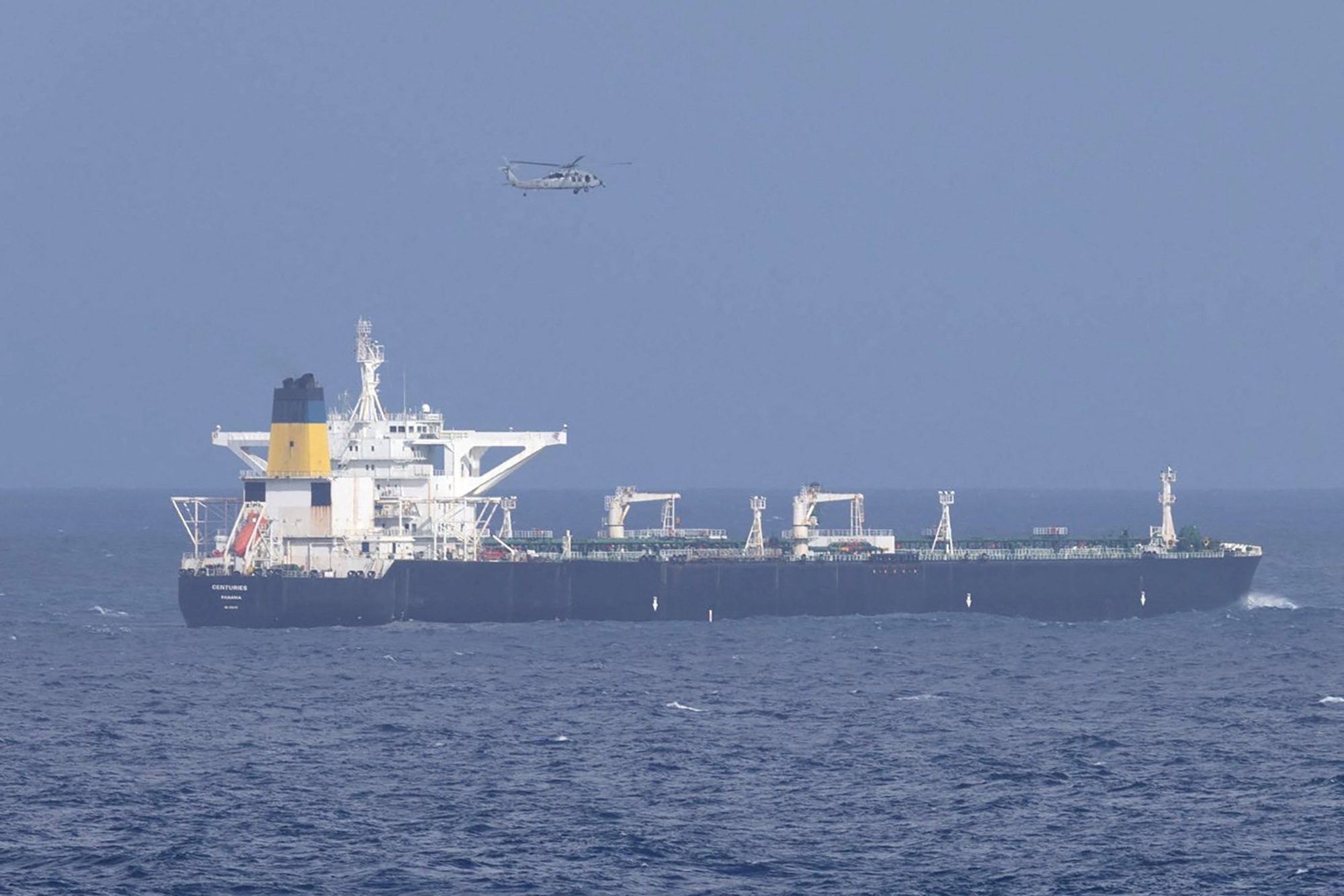
By Julian Lee (Bloomberg) – US President Donald Trump is applying a strategy similar to his approach with Venezuela by announcing plans to blockade Iranian ships. However, dealing with Iran presents more complex challenges, including logistical difficulties, increased risks for American troops, and a more determined adversary.
In a social media post on Sunday, Trump stated, “The US will begin the process of BLOCKADING any and all ships trying to enter or leave the Strait of Hormuz,” following failed discussions between American and Iranian representatives aimed at resolving the ongoing six-week conflict.
If this blockade is effectively carried out—which remains uncertain—it represents a wager that inflicting economic pressure on Tehran will compel it to meet US demands before it attempts to close this vital waterway and disrupt the global economy.
The US military plans to wait outside the Persian Gulf to intercept ships departing from Iran. This tactic mirrors efforts used in Venezuela, which helped Trump gain control over the nation's oil following the capture of Nicolas Maduro.
The goal of this blockade is to target Iran’s oil exports, the only significant oil shipments still leaving the region, which serve as a crucial economic lifeline for Tehran. The big question is how much impact this will actually have.
Iran's oil exports are currently much higher than those of Venezuela during its blockade, indicating that the US may need a stronger military presence. Despite a fragile ceasefire, Iran's military capabilities still pose a significant threat to international shipping in the Strait of Hormuz.
The US Central Command announced it would start implementing the blockade at 10 a.m. Eastern Time on Monday, or about 6:30 p.m. in Tehran. They provided further details on the plan beyond what Trump mentioned.
In a notice to mariners, Centcom warned that ships entering the blocked areas without authorization could face “interception, diversion, and capture.” The blockade will cover the Gulf of Oman and the Arabian Sea—areas outside the Persian Gulf—and will not be limited to just ports and oil terminals.
Key questions now include how aggressively the US will enforce this blockade, how much force Iran might use to protect its shipping interests—especially oil tankers—and what kind of retaliatory actions Tehran could take.
Increasing Challenges
It is still unclear if this blockade will effectively pressure the Tehran regime, and whether it can be executed on a large scale.
“Establishing a blockade against Iran could prove more difficult than against Venezuela, and we expect Tehran to increase attacks on regional energy infrastructure if President Trump follows through on his threats,” said Helima Croft, Head of Global Commodity Strategy and MENA Research at RBC Capital Markets LLC, in a note dated April 12.
The US has attempted to limit Iran's oil exports in the past, but never fully succeeded.
Even when shipments dropped to about 25% of normal levels, the Iranian government showed little willingness to back down. Currently, Iran has benefited financially since the start of the war, as the US lifted sanctions to alleviate price pressures shortly thereafter.
“This will certainly impact Iran’s revenue, but they have endured hardships before and continue to export oil at over $100 a barrel recently,” said Dina Esfandiary, a geo-economics analyst at Bloomberg Economics. “Though it’s not ideal, they perceive the war as a pivotal threat, making this a risk they must manage.”
Importance of Enforcement
The proposed US strategy seems less aggressive compared to the actions Iran has taken during the war, which have included attacks on commercial shipping. These threats have made crews and vessel owners apprehensive about transiting Hormuz.
Iran possesses a sizeable fleet of tankers, so they might risk sending ships with protection, despite the potential for some to be seized.
There are additional logistical concerns as well, including what will happen to ships that are intercepted and the overall US naval capability to enforce the blockade, especially if the ceasefire is violated.
If the US does manage to disrupt a significant portion of Iran's oil exports, it risks retaliation from Iran and its allies against energy infrastructure in the area.
“The blockade, by itself, is a high-stakes gamble that I believe Iran could ultimately withstand because they are capable of enduring hardships,” warned Nouriel Roubini, CEO of Roubini Macro Associates, during an interview with Bloomberg TV’s David Ingles at the Greenwich Economic Forum in Hong Kong. “There are considerable political and economic ramifications involved in attempting to impose a slow squeeze on the regime.”