
By Samia Nakhoul
BEIRUT, July 14 (Reuters) – After restricting shipping through the Strait of Hormuz, Iran is now hinting at a potentially dangerous move: using its Houthi allies in Yemen to shut the Bab el-Mandeb, which links the Red Sea to the Gulf of Aden. This could open a new front against the United States and put two critical global energy routes at risk.
As U.S. military action intensifies in Iran and Houthi attacks increase, experts believe Tehran is trying to escalate the conflict and increase pressure on Washington. They aim to extend the threat to international trade and energy supplies beyond the Gulf.
Iran has shown the strength of its strategic assets by disrupting traffic through Hormuz. Now, it appears prepared to apply pressure at Bab el-Mandeb, a narrow strait that handles a significant amount of Saudi oil exports and global shipping.
A senior Yemeni official recently warned that Yemen's armed forces would be ready to close Bab el-Mandeb, which could potentially drive oil prices to $200 per barrel if Saudi attacks on Yemen continue, as reported by Iran's Press TV.
Mohammed al-Farah, part of the political bureau of the Houthi movement, stated that the U.S. is provoking Saudi Arabia to escalate strikes on Yemen, which would counter U.S. interests.
“If the current situation worsens, both the Bab el-Mandeb Strait and the Strait of Hormuz could be closed together, leading to a shocking spike in oil prices to $200 per barrel,” he warned.
If Hormuz is Iran's main strategic leverage point, Bab el-Mandeb might be its last major reserve, according to analysts.
Fawaz Gerges, a Middle East scholar, stated that Iran is willing to escalate tensions to show Washington that it can threaten both critical chokepoints. This could shift the conflict from a bilateral issue to a wider challenge to global energy trade routes.
“Now, Tehran is escalating tensions both near and far. The message is clear: not only Hormuz is at risk, but also Bab el-Mandeb,” he added.
‘MISSION CREEP’
Analysts believe the real danger lies not in an immediate outbreak of war, but in a slow escalation of hostilities. Each side might raise tensions without actually engaging in direct confrontation.
As the conflict broadens from the Gulf to the Red Sea, the threat to trade and energy supplies could pressure both Washington and Tehran to enter negotiations before these key oil routes become main conflict zones.
Dennis Ross, a former U.S. Middle East peace negotiator, suggested Washington needs to find a way to change Iran's stance to encourage meaningful negotiations.
HOUTHI ATTACKS ON COMMERCIAL SHIPPING
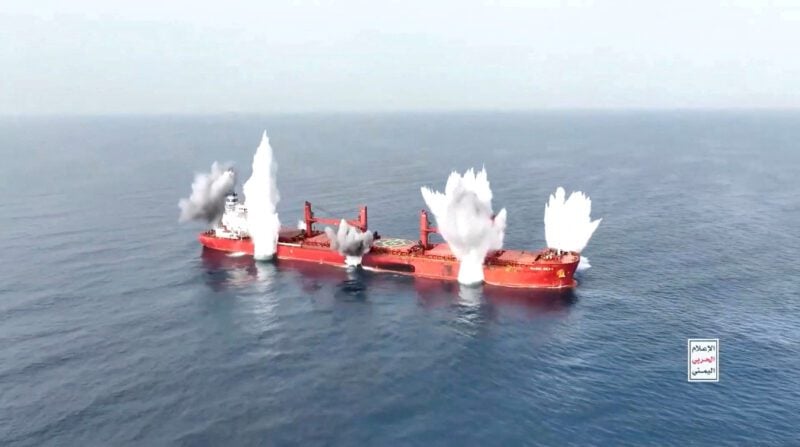
The Houthis have already demonstrated their ability to disrupt global commerce through Bab el-Mandeb. Following the outbreak of the Gaza war in October 2023, the Iran-backed group targeted commercial shipping in the Red Sea, claiming to focus on vessels linked to Israel in support of Palestine.
This campaign forced major shipping companies to reroute around southern Africa, increasing transport costs and prompting U.S. and British airstrikes, along with a multinational mission to protect shipping lanes.
Andreas Krieg from King's College London described the latest Houthi threat as “another nuclear option” for Iran, to be used if the Revolutionary Guard believed all-out war was unavoidable.
He warned that if the U.S. increases strikes on Iran’s infrastructure, Tehran might respond by having its allies close Bab el-Mandeb, worsening the economic shock already stemming from tensions in the Strait of Hormuz.
Abdulaziz Sager, chairman of the Gulf Research Center in Saudi Arabia, said Gulf states feel that diplomacy with Iran has reached its limits, even though a wider conflict would carry heavy costs for the region.
“Both a victorious Iran and a defeated one will have implications for the region. Many Gulf states might find the costs of a defeated Iran more acceptable if it leads to increased regional stability,” Sager noted.
He pointed out that while the Houthis can disrupt navigation through Bab el-Mandeb, they are unlikely to escalate tensions without clear instructions from Tehran. Any attempt to threaten shipping could trigger a significant military response from the U.S. and its allies aimed at reducing Houthi capabilities.
The ongoing conflict, which began in late February with U.S. and Israeli involvement, has destabilized the Gulf and affected the region, with Iran attacking U.S. bases in multiple countries. Thousands have lost their lives in the conflict, primarily in Iran and Lebanon.