
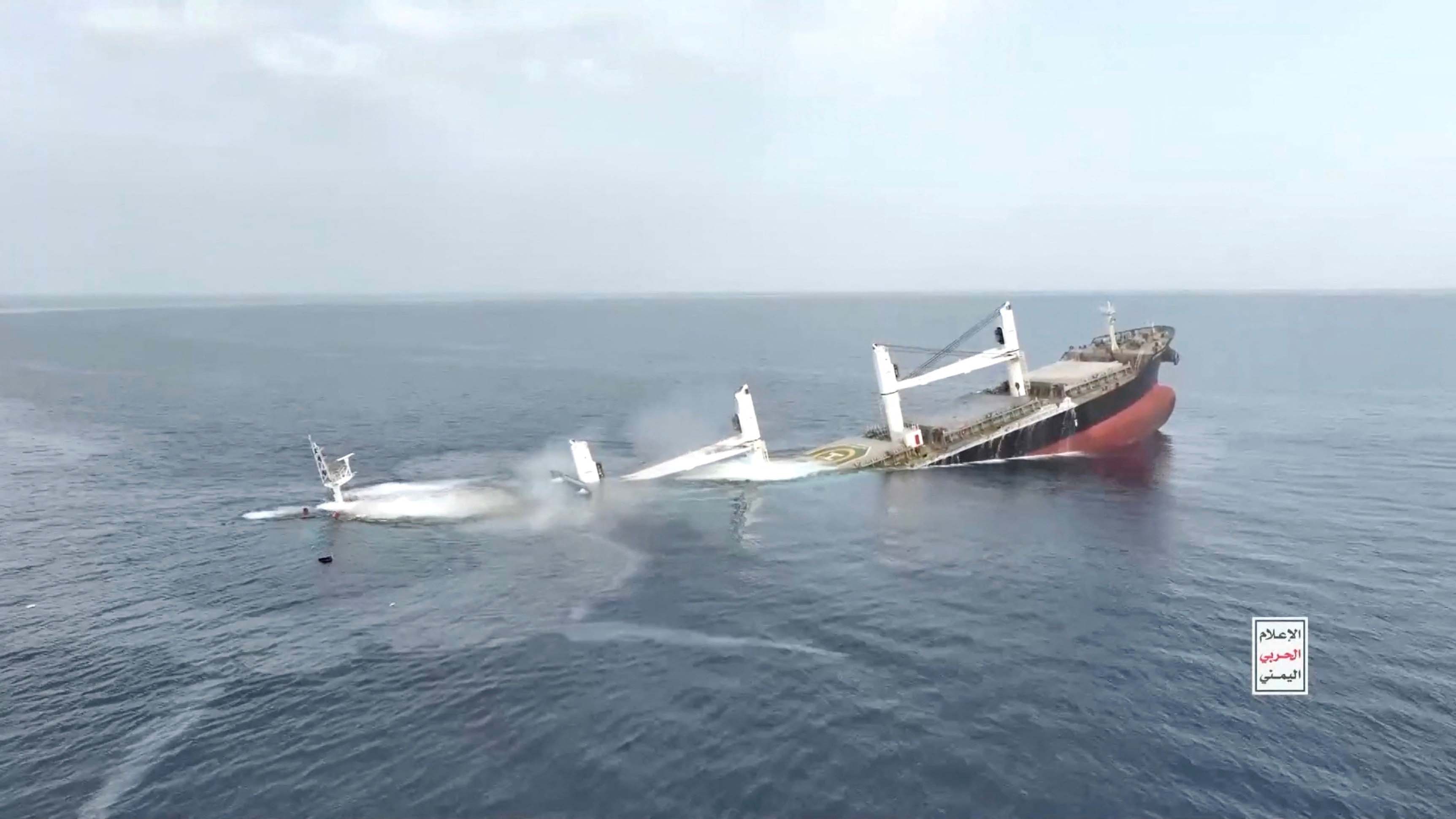
LOS ANGELES/LONDON, March 25 (Reuters) – Western nations are looking for ways to safeguard the Strait of Hormuz for energy shipping, but they face a tough reality. A previous attempt to secure the Red Sea, which started years ago, cost billions and ultimately failed against Yemen's Houthis.
The experience in the Red Sea is troubling: four ships were sunk, over $1 billion was spent on weapons, and the shipping industry mostly avoids the area now. This backdrop is concerning for the Strait of Hormuz, an important route that carries about a fifth of the world's oil and liquefied natural gas supply, and is currently blocked by Iran, a much more significant threat than the Houthis.
Iran's threats and attacks on energy infrastructure in neighboring Gulf countries have driven oil prices up, causing major disruptions in oil and gas supplies. If the Strait of Hormuz isn't reopened soon, shortages could worsen, leading to higher costs for energy, food, and other goods worldwide.
“There is no substitute for the Strait of Hormuz,” said Sheikh Nawaf Saud Al-Sabah, CEO of Kuwait Petroleum, during a live video call at the CERAWeek energy conference in Houston on Tuesday. “It is the world's strait, recognized by international law and practical reality.”
On Tuesday, U.N. Security Council members were discussing resolutions to protect the strait. Some nations, like Bahrain, were advocating for an approach that would allow for the use of “all necessary means” to ensure security in the area, which could include military action.
Reuters spoke to 19 experts in security and maritime fields, who highlighted the many challenges that the U.S. and its allies face in securing the strait. Iran's military capabilities far exceed those of the Houthis, with access to drones, floating mines, and missiles, along with direct access to the narrow waterway from its mountainous coastline.
This situation is a major concern for U.S. President Donald Trump as he tries to justify the Iran conflict to voters facing nearly $4 per gallon gasoline ahead of the November midterm elections. Analysts suggest that the rise in energy prices is unlikely to reverse until shipping traffic can safely resume in the strait.
Trump has been vague about the U.S. role, at first indicating that the U.S. Navy would escort ships when necessary, then more recently suggesting that other countries should take the lead. Since U.S.-Israeli attacks on Iran began on February 28, Iran has restricted access to most vessels in the chokepoint.
According to a state media report last week, Iran is also contemplating a proposal to impose fees on ships wishing to pass through the strait.
THE HORMUZ QUAGMIRE
The U.S. mission to protect shipping in the Red Sea began in December 2023, with European nations joining soon after. The allies managed to shoot down hundreds of drones and missiles, but the Houthis still managed to sink four ships between 2024 and 2025. As a result, shippers now largely avoid what was once a crucial trade route and are now opting for the longer journey around the Horn of Africa.
“It was a tactical victory but a strategic draw, if not a defeat,” commented Joshua Tallis, a naval analyst at the research firm CNA.
The danger zone around the Strait of Hormuz is potentially five times larger than the threat area from the Houthis in the Bab el-Mandeb Strait leading to the Red Sea. Unlike the Houthis, Iran’s Islamic Revolutionary Guard Corps (IRGC) is a professional military with its own weapons factories and ample resources.
Experts suggest that protecting the strait could require as many as a dozen large warships, such as destroyers, along with jet, drone, and helicopter support to address challenges tied to limited operational space. Air cover would be essential to defend against drones and explosive-laden boats that could easily mix in with regular maritime traffic.
“A destroyer can stop missiles but can’t simultaneously clear mines and fend off swarms of drone boats,” analysts at SSY pointed out.
There are concerns that Iran’s IRGC fighters may have hidden missiles and drones along the steep coastline, making surveillance difficult. In some areas, the shore is so close to shipping lanes that drones could attack a vessel within five to ten minutes, experts warn.
Sea mines and heavily armed mini-submarines present a challenge that the U.S. did not face in the Red Sea, noted retired Royal Navy commander Tom Sharpe, who emphasized the gravity of the situation.
Currently, there is no confirmed evidence that Iran has mined the strait, according to U.S. Defense Secretary Pete Hegseth, despite reports of approximately a dozen mines being deployed in the area.
A strategy involving mine clearance, military escorts, and air patrols could eventually restore traffic in the strait, according to Bryan Clark, an autonomous warfare expert at the Hudson Institute.