
LONDON, Nov 3 (Reuters) – Looking to your main competitor for help isn't typically a good sign. However, Qatar's decision to sign long-term contracts to import US liquefied natural gas (LNG) indicates that the country, the second-largest LNG exporter in the world, is growing more worried that instability in the Gulf region could threaten its expansion plans.
Last week, QatarEnergy signed a 20-year deal to purchase 3 million metric tons per year (mtpa) of LNG from Woodside Energy's facilities in Louisiana. A week earlier, it secured agreements with Cheniere Energy for up to 4 mtpa from its Sabine Pass and Corpus Christi plants lasting through 2054.
These deliveries will start in 2030 and 2031, making Qatar the largest buyer of US LNG.
QatarEnergy CEO Saad al-Kaabi mentioned that he anticipates signing more supply agreements with US and other producers this year, potentially ensuring millions of tons of LNG from abroad for decades.
Before the US-Iran conflict escalated on February 28, QatarEnergy was already expanding internationally, purchasing stakes in LNG projects from North America to Africa in a bid to diversify its trading portfolio and enhance its flexibility.
However, these recent agreements indicate a deeper change. Qatar now seems to be securing a safety net against possible disruptions to its own LNG exports, rather than merely broadening its portfolio.
Qatar's actions also reflect how the US has emerged as a key beneficiary of the global shift in energy risk concerning the Middle East, marking a significant change in roles.
“Twenty-five years ago, my White House colleagues and I were concerned that the US could become as dependent on Qatar for LNG as we were on OPEC for oil,” stated Bob McNally, the founder of Rapidan Energy Group and a former energy advisor to President George W. Bush.
“Then came the shale revolution and the Iran War, and now Qatar is buying LNG from us,” McNally added.
INSURANCE POLICY
As Washington and Tehran continue to clash over the future of the Strait of Hormuz, Gulf producers are working to lessen their dependence on this key waterway, which carried about a fifth of the world's energy supplies before the conflict.
Saudi Arabia and the United Arab Emirates are expanding their pipeline networks to bypass the Strait as a method of enhancing their crude oil and refined fuel exports outside the Gulf.
Qatar faces a more complex challenge.
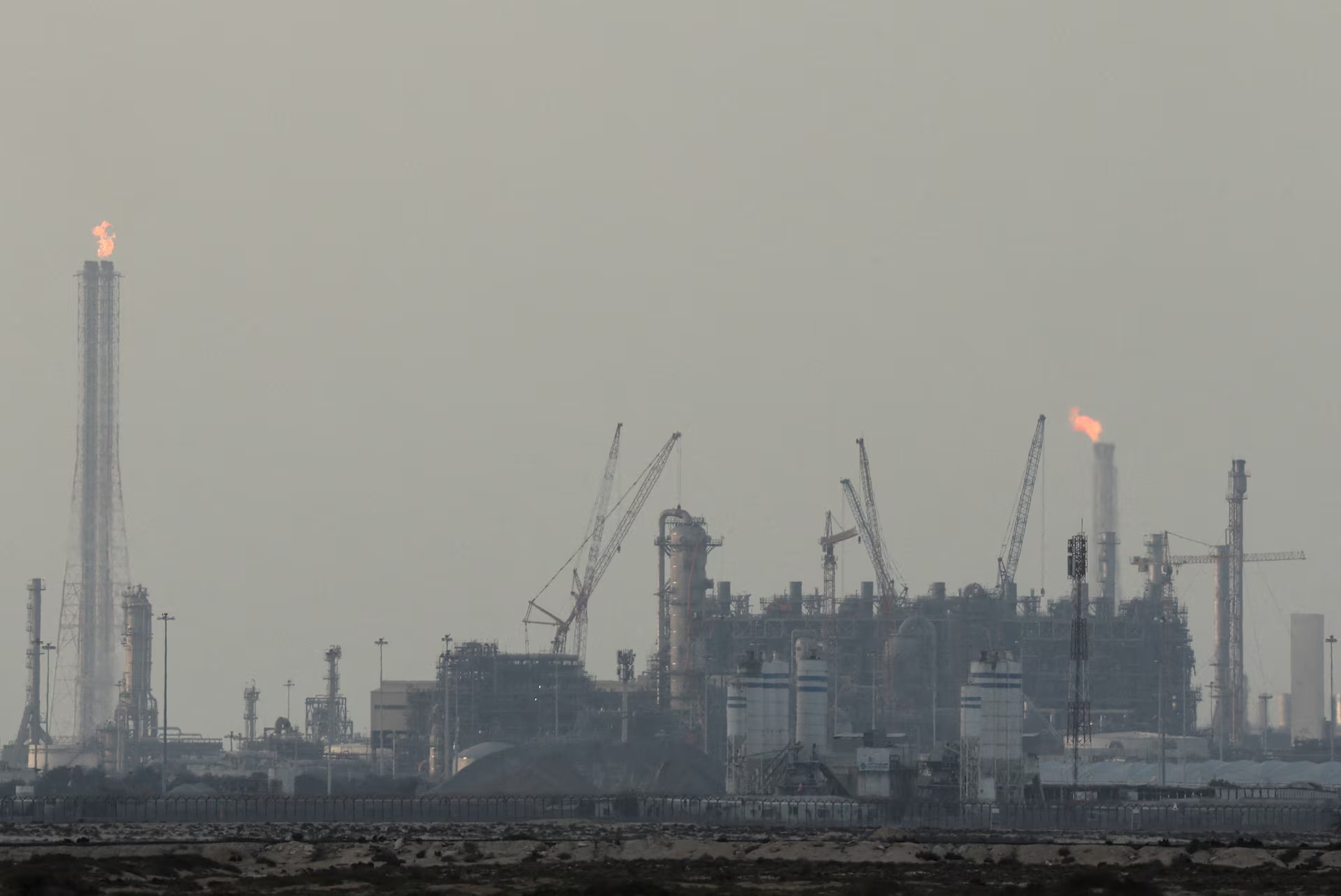
Unlike its neighbors, the small Gulf nation has no practical way to export LNG besides the Strait of Hormuz. The entire LNG industry in Qatar is centered at its massive Ras Laffan facility, where gas from the North Field is processed and shipped globally.
The ongoing conflict highlighted these risks in March, when an Iranian missile struck two of QatarEnergy's 14 LNG trains at Ras Laffan, reducing the country's export capacity by about 17%.
QatarEnergy reported that this outage could result in around $20 billion in lost revenue annually and repairs could take about three years.
Developing alternative export infrastructure would require investments of tens of billions of dollars in pipelines and liquefaction capacity. Yet, building large new energy facilities would also create more sites that could be targeted, as recent events have shown.
Thus, it's not surprising that Qatar is focusing on geographic diversification rather than building more domestic infrastructure as a means of securing its energy supply.
A TWO-HORSE RACE
These challenges arise at a crucial time for Qatar, as the nation embarks on its most significant growth push in decades.
The International Energy Agency estimates that about 300 billion cubic meters of new LNG export capacity will be added globally between 2025 and 2030, boosting worldwide supply by roughly 50%.
More than half of this new supply is expected to come from the US, while Qatar is projected to contribute around another quarter.
Consequently, both countries are set to lead the global LNG market expansion over the next decade, intensifying competition for market share.
Qatari LNG still has certain advantages over US supplies, particularly in production costs. Estimates suggest Qatari production costs range from about $3 to $5 per million British thermal units, which is nearly half the cost of many US projects.
However, the US has a significant advantage: American LNG exporters are not burdened by the geopolitical risks tied to the Strait of Hormuz.
While this wasn't a major concern before, the recent conflict has made security of supply as important as price for oil and gas buyers.
Now, the focus shifts from whether QatarEnergy's plans to nearly double LNG production by 2030 will stay on course—new trains are expected to begin operations in early 2024—to whether those facilities will remain operational in the transformed Gulf environment.
Even if the US and Iran reach a peace agreement in the coming months—a big 'if'—the importance of Hormuz in regional energy markets seems to have shifted permanently, likely to Qatar's disadvantage. The days of assured access through this waterway appear to be gone.
Thus, for Qatar, buying US LNG presents an opportunity to capitalize on the growing demand for secure political supplies, even if they originate from North America.
This development may be a strong indication that the ongoing Iran conflict is hastening the long-term shift in energy market power from the Middle East to the US.