
By Weilun Soon and Stephen Stapczynski
July 7, 2026 - A liquefied natural gas carrier was struck by a projectile near Oman's coast as it was leaving the Strait of Hormuz, raising concerns among shipowners and putting a US-Iran agreement to halt attacks in the waterway to the test.
The incident involving the Al Rekayyat took place early Tuesday, according to sources who spoke on the condition of anonymity due to the sensitive nature of the situation. The EOS Risk Group confirmed the attack occurred about 8 nautical miles (15 kilometers) east of Limah, Oman, with reports indicating a fire that could have been caused by a drone or missile.
This tanker is owned by Nakilat, Qatar’s state-owned shipping company, and it is the first LNG tanker from the country to face an attack since the war began. This event poses a setback for Qatar's attempts to boost exports, which had been stagnant for months. The tanker had recently picked up a shipment from Ras Laffan in Qatar.
Ship-tracking data revealed that the vessel was operating without its transponder, a typical tactic to avoid detection. UK Maritime Trade Operations had previously issued a warning about possible attacks but did not name the affected ship.
QatarEnergy and Nakilat have not yet responded to requests for comment.
The attack has raised new fears among shipowners. Another LNG tanker, Al Areesh, which had loaded in Qatar and was leaving the Persian Gulf, appeared to alter course before the strait, eventually sailing in circles. Its destination was indicated as Pakistan's Port Qasim.
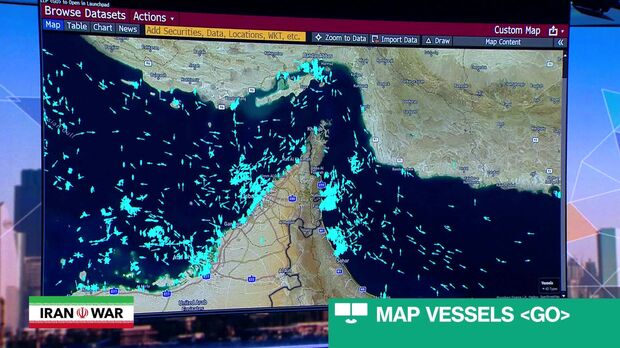
Despite this, other shipping traffic continued to navigate the strait. A Japanese-flagged supertanker and another ship registered in Singapore were observed using an Iran-approved route, alongside a carrier transporting liquefied petroleum gas to China. Meanwhile, at least six ships, including three very large crude carriers, were seen approaching the Omani coast after leaving the Persian Gulf.
Following the news, European gas prices increased by as much as 6%, and Brent crude futures also saw a rise. Oil prices had recently dropped as there were expectations that more vessels would be able to transit the strait, leading to fears of market oversupply.
The Strait of Hormuz has become a central point of concern since the US and Israel launched strikes against Iran in late February. Shipowners are continuously assessing the safety of navigating this crucial passage while trying to send vessels in and out of the Persian Gulf. Despite a temporary peace agreement signed last month, Iran is still trying to maintain control over the waterway.
Traffic in the Strait has improved since the agreement, but issues still persist, with Iran at times blocking routes it has not authorized or attacking vessels. On Monday, some Japan-linked ships managed to transit the strait by following an Iran-approved route.
However, there is still no clear long-term solution to managing the strait amidst ongoing discussions for lasting peace.
Recent data from intelligence firm Kpler Ltd. shows that two-thirds of recent transits have occurred through the Iran-approved corridor on the northern side of the strait, while the remaining ships have utilized the US-managed Oman route.
Out of 25 ships that crossed Hormuz on Monday, only three did so on the Omani side with their transponders activated. This occurred despite a recent update from regional naval forces reminding shipowners of the availability of the US-managed Oman route.
“The use of different shipping lanes indicates that traffic through the strait is still operational, but fragmented, as shipowners choose their routes based on their individual risk assessments,” said Muyu Xu, a senior crude oil analyst at Kpler.
The attack took place as President Donald Trump was attending a NATO leaders' summit in Ankara, Turkey. The ongoing US war with Iran is expected to be a key topic, with Trump expressing frustration at several NATO members for not supporting the US more against Iran.
Discussions between the US and Iran were put on hold as Tehran held a mass funeral for the late Supreme Leader Ali Khamenei, who died on the war's first day in late February. Qatar has stated that the next meeting will be scheduled promptly after the funeral, with Khamenei's burial set for July 9 in his hometown of Mashhad.
Earlier reports indicated that two merchant vessels had been hit by Iranian missiles, resulting in significant damage but no casualties, according to an unidentified US official.