
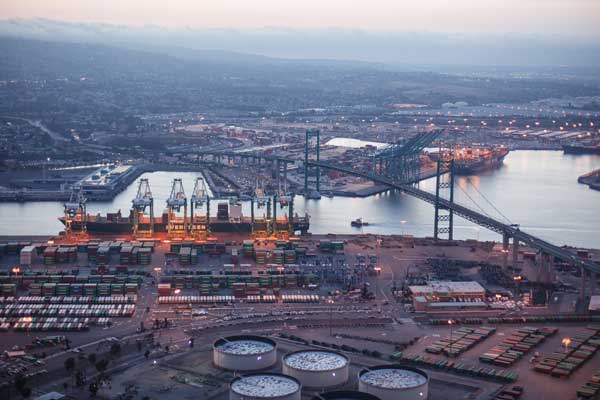
The Port of Los Angeles is set to have its third-busiest cargo year ever, despite a significant drop in volumes last November due to increased uncertainty from tariffs affecting U.S. trade.
The busiest container port in the country processed 782,249 TEUs in November, which is a 12% decrease compared to last year's high levels. However, this brings the total for the year so far to 9.45 million TEUs, according to Executive Director Gene Seroka. With December still ahead, the port expects to surpass 10 million TEUs by the end of 2025, marking one of its best years.
“Despite all the uncertainty in trade, we expect to finish 2025 with over 10 million TEUs,” Seroka stated during a media briefing. “This positions us in the top three years in our history, and we achieved this without congestion or ships waiting to dock.”
Efficiency Maintains Amid Cooling Volumes
Seroka attributed the port's success to efficient coordination among supply chain partners, including terminals, railroads, truckers, and dock workers.
“This dependability is why more than 200,000 importers and exporters continue to choose Los Angeles, no matter the market conditions,” he added.
November's slowdown affected various aspects of trade, with loaded imports down 11% year-over-year to 406,421 TEUs. Loaded exports also decreased to 113,706 TEUs, down 8% from 2024, and empty containers saw a 13% drop to 262,122.
Tariffs Starting to Influence Trade
The decline in November is part of a wider trend seen across U.S. container ports, as the volatility of tariffs impacts supply chains.
According to the National Retail Federation and Hackett Associates’ Global Port Tracker, year-over-year declines in imports are expected to continue into 2026, largely due to changing trade policies and lower demand.
“We are witnessing the impact of tariffs lowering cargo demand from the fourth quarter into at least the first half of next year,” said Ben Hackett, founder of Hackett Associates. He added that container shipping rates are decreasing on both coasts as demand for shipping space declines.
In October, U.S. ports handled 2.07 million TEUs, which is a 7.9% decrease from the previous year, with even larger drops expected in November and December.
Frontloading Creates Supply Gaps
The slowdown is partly due to aggressive frontloading earlier in the year, as retailers rushed to import goods ahead of possible tariff changes. While this strategy left shelves stocked, it has created a gap in cargo for late 2025.
“Stores are well-stocked and prepared for a busy holiday season,” said Jonathan Gold, vice president for supply chain and customs policy at NRF. “However, there is still considerable uncertainty surrounding trade policies for 2026.”
Looking Ahead
Nationally, container volume for 2025 is now predicted to reach 25.2 million TEUs, a decrease of 1.4% from 2024. This is an improvement over earlier forecasts that suggested much larger declines. Nevertheless, predictions for early 2026 indicate possible double-digit drops from current levels.
Despite this, the NRF anticipates record U.S. holiday sales surpassing $1 trillion this year, indicating a growing gap between consumer demand and import volumes as retailers focus more on inventory management.
Industry experts believe that tariff policy will remain a key factor influencing cargo movements well into 2026, putting pressure on volumes even as consumer spending remains strong.