
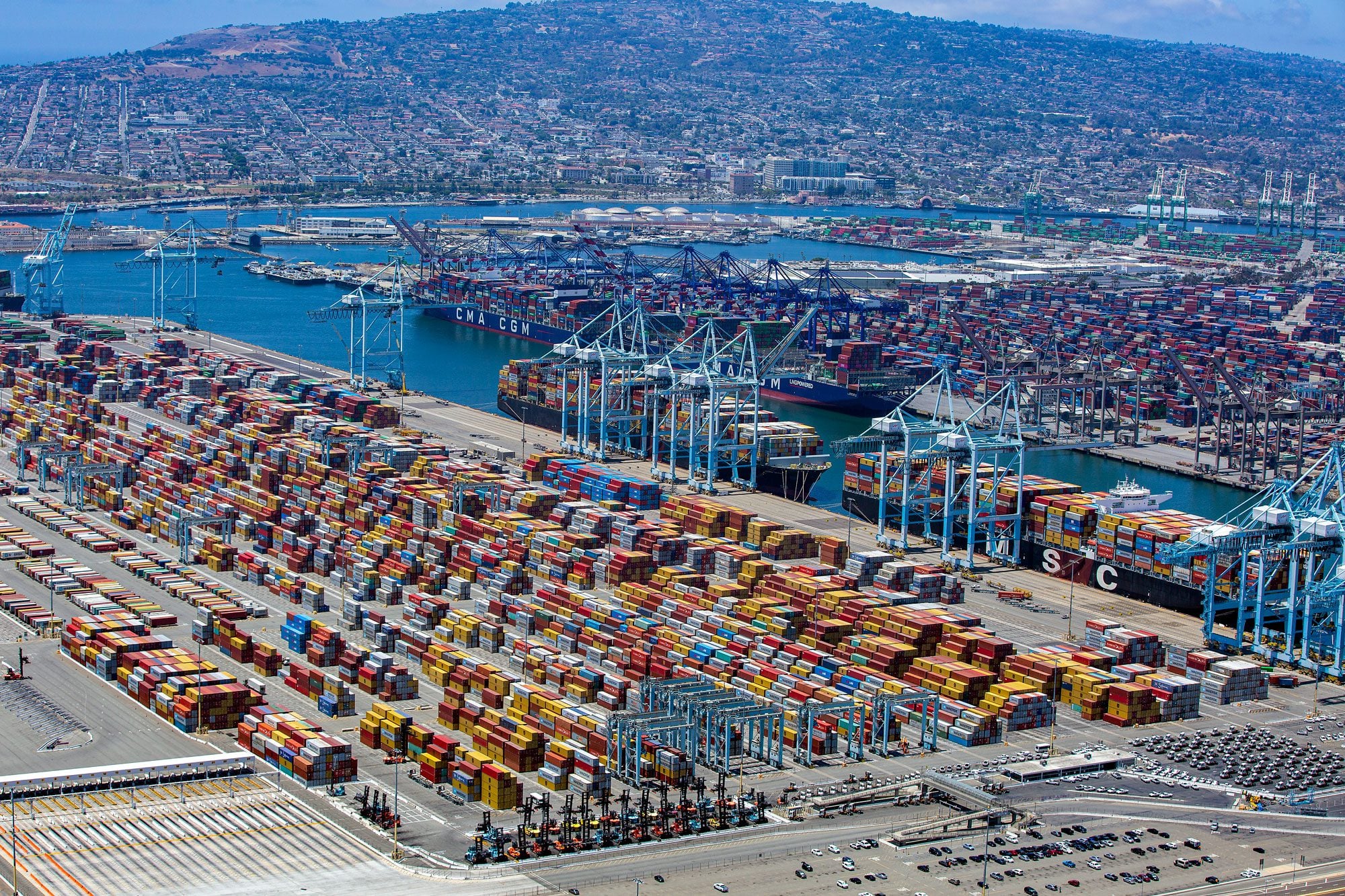
In May, the Port of Los Angeles processed 840,165 twenty-foot equivalent units (TEUs), which is a 17% increase compared to the same month last year. This uptick reflects importers continuing to move goods amidst ongoing uncertainties in trade policies, tariffs, and global supply chains.
This strong performance in May allows the Port to stay slightly ahead of last year’s figures. In the first five months of 2026, the Port has handled 4.12 million TEUs, marking a 1.4% increase over the same timeframe in 2025.
“The solid results in May show the strength of American consumers and how businesses can adapt to an ever-changing environment,” said Gene Seroka, Executive Director of the Port of Los Angeles, during a media briefing on Tuesday.
Seroka mentioned that cargo movement is driven by various factors, including the need to replenish inventory, concerns about fuel prices, uncertainties in trade policy, and preparation for upcoming retail seasons. “Companies are working with shorter planning periods and seizing opportunities as they arise,” he added.
The increase in imports was a major contributor to these gains. Loaded imports hit 449,370 TEUs in May, up 26% year-over-year. This growth was partly due to lower import volumes in May 2025, when many shippers paused shipments in response to rapidly changing tariffs.
On the other hand, loaded exports are still falling behind. Export volumes dropped to 107,657 TEUs, which is a 10% decrease from a year earlier, continuing a long-standing trend of reduced outbound cargo through Southern California ports. Meanwhile, empty container movements rose by 18% year-over-year to 283,138 TEUs.
Despite changes in the trade environment, Seroka assured that cargo is moving smoothly through the port, with no vessel backlogs or delays in processing shipments.
“Our terminals, longshore labor force, trucking companies, and rail partners are all performing excellently,” he noted. “This reliability gives cargo owners the assurance that they can transport freight quickly and without disruptions at the Port of Los Angeles.”
These latest figures come on the heels of strong results from the nearby Port of Long Beach, which last week reported its third-busiest May on record, with cargo volumes up 31.7% year-over-year. Together, these two Southern California ports seem to be benefiting from a surge in front-loading as retailers rush to import goods ahead of potential tariff changes and rising transportation costs.
However, industry experts warn that this recent growth might not last. Importers have been shortening their planning cycles and adjusting inventories due to changing trade policies, which raises concerns about whether these high cargo volumes can be maintained in the second half of the year.