
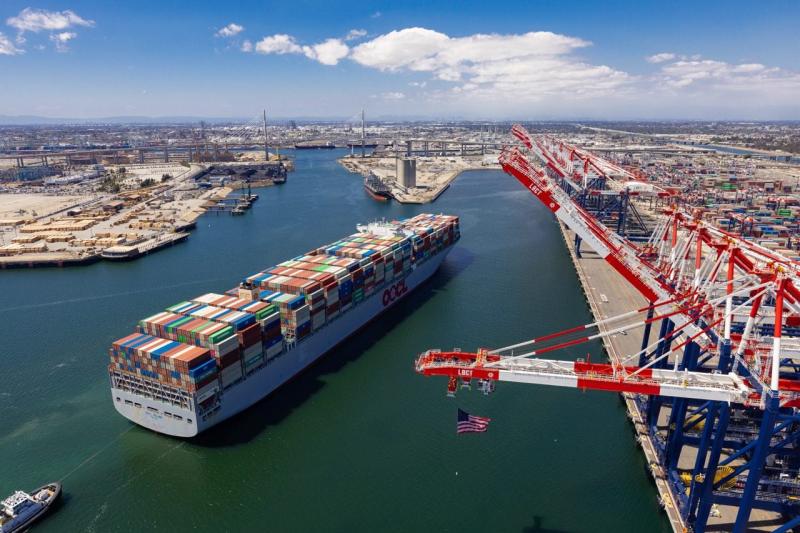
In May, the Port of Long Beach processed 842,030 twenty-foot equivalent units (TEUs), making it the third-busiest May in its history. This shows a strong recovery from last year's slowdown caused by tariffs that affected cargo volumes.
The California port saw a 31.7% increase in overall cargo volumes compared to May 2025, thanks to a rise in imports as retailers brought in shipments in anticipation of ongoing trade policy changes.
Imports jumped 40% from the previous year to 418,851 TEUs, and exports increased by 32.9% to 109,168 TEUs. There was also a 21.8% rise in empty container movements, totaling 314,012 TEUs.
This positive performance is partly due to unfavorable comparisons with last year's tariff-related slowdown. In May 2025, Long Beach handled only 639,160 TEUs, which was an 8.2% drop from the year before, as importers reduced shipments in response to tariff announcements and disruptions in global trade.
ILWU Local 13 President Mario “Moe” Medina joined Port of Long Beach CEO Dr. Noel Hacegaba to present the new cargo figures.
So far this year, the port has handled 4,050,247 TEUs in the first five months of 2026, which is roughly on par with last year's numbers and keeps it on track for its busiest year ever. Volumes are up by 0.2% compared to the same period in 2025.
The new statistics align with the National Retail Federation's Global Port Tracker, which anticipates strong container imports in the first half of 2026, as retailers speed up shipments in case of potential tariff increases and rising shipping costs.
The June Global Port Tracker report indicates that U.S. ports are experiencing better conditions compared to last year's tariff-related issues, as many importers continue to pull cargo to avoid possible costs later in the year.
Ben Hackett, founder of Hackett Associates, mentioned in the report, “We have increased our outlook for June cargo volume as retailers bring forward their peak season cargo,” citing concerns over rising shipping rates, fuel prices, and possible tariff changes.
The report predicts that U.S. container imports will remain high through June, but may decrease later in the summer as inflation worries and economic uncertainty impact demand.
While the May results for Long Beach indicate solid import activity, industry analysts expect the second half of 2026 to be more challenging. The Global Port Tracker forecasts declines in July, August, and September volumes at major U.S. ports as the initial surge of imports subsides and retailers make inventory adjustments.
Overall, the latest results for Long Beach show a significant recovery from the cargo declines seen during the tariff disruptions of 2025 and suggest that this year’s peak shipping season may arrive earlier than usual.