
The Port of Corpus Christi has teamed up with the Trump administration to explore the use of nuclear technology in the maritime industry. They signed a deal with the U.S. Maritime Administration (MARAD) to look into small modular reactors, port microgrids, and concepts for nuclear-powered vessels.
On Wednesday, Transportation Secretary Sean Duffy, along with Maritime Administrator Stephen Carmel, Representative Michael Cloud from Texas, and port officials announced this collaboration. This is the second agreement under MARAD's initiative aimed at small modular reactors that started in May.
Through a Memorandum of Cooperation, MARAD and the Port of Corpus Christi will investigate how to incorporate small modular reactor technology into energy systems for maritime use. This project will focus on developing resilient port microgrids, energy infrastructure onshore, facilities that can support new types of vessel propulsion, and workforce training.
“Small modular reactors could change America’s maritime industry, lower shipping expenses, and enhance our supply chains,” Duffy stated. “I’m excited that the Port of Corpus Christi is partnering with the Trump Administration to ensure the U.S. leads in innovation.”
This agreement is part of a larger effort that started in May when Duffy and MARAD launched an initiative to develop commercially feasible small modular reactors for the U.S. marine transportation sector. The government sees nuclear technology as a way to reduce shipping costs, bolster domestic shipbuilding, and enhance the resilience of U.S. maritime infrastructure.
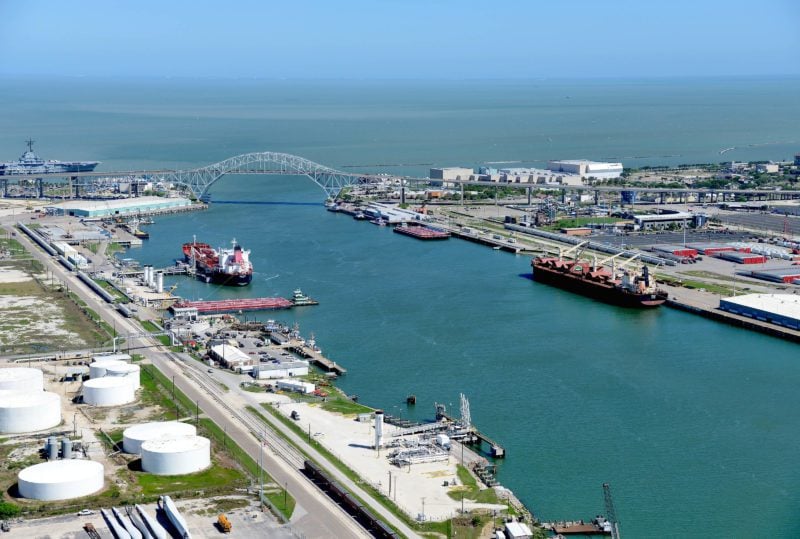
The Port of Corpus Christi provides a unique environment for this initiative. As the largest petroleum export port in the U.S. and a significant LNG gateway, it could play an important role in exploring how advanced nuclear power could benefit energy-intensive port and industrial operations.
“This deal with the Port of Corpus Christi shows that the top energy port in the nation recognizes the importance of this technology,” said Carmel. He mentioned that small modular reactors could help lower costs and make the Gulf Coast maritime supply chains more resilient to various disruptions, including extreme weather and power grid failures.
The Corpus Christi agreement follows a partnership between MARAD and the Port of Long Beach, which was the first U.S. seaport to officially collaborate with the agency on small modular reactor technology for commercial maritime use.
The Long Beach agreement sets up a structure for working on nuclear technology concerning vessels, port operations, and other maritime facilities, which includes coordination with the U.S. Coast Guard, the Department of Energy, and the Nuclear Regulatory Commission on safety standards, inspections, and operating procedures.
These agreements are exploratory and do not authorize the construction of nuclear-powered ships or commit the government or ports to any specific reactor design.
Interest in nuclear power for maritime use is growing as shipowners, builders, and governments search for alternatives to traditional marine fuels. Although nuclear propulsion has been utilized on naval vessels and icebreakers for years, commercial use has faced significant challenges, such as high initial costs, complex regulations, liability and insurance issues, port access challenges, and public acceptance.
MARAD’s initiative aims to begin tackling some of these challenges while also exploring how these reactors could potentially be built in U.S. shipyards.
For Corpus Christi, the possible applications go beyond just ships. “Small modular reactor technology could power port operations, support the larger industrial complex, and improve maritime propulsion capabilities, benefiting the entire Gulf Coast and the nation,” Cloud remarked.