
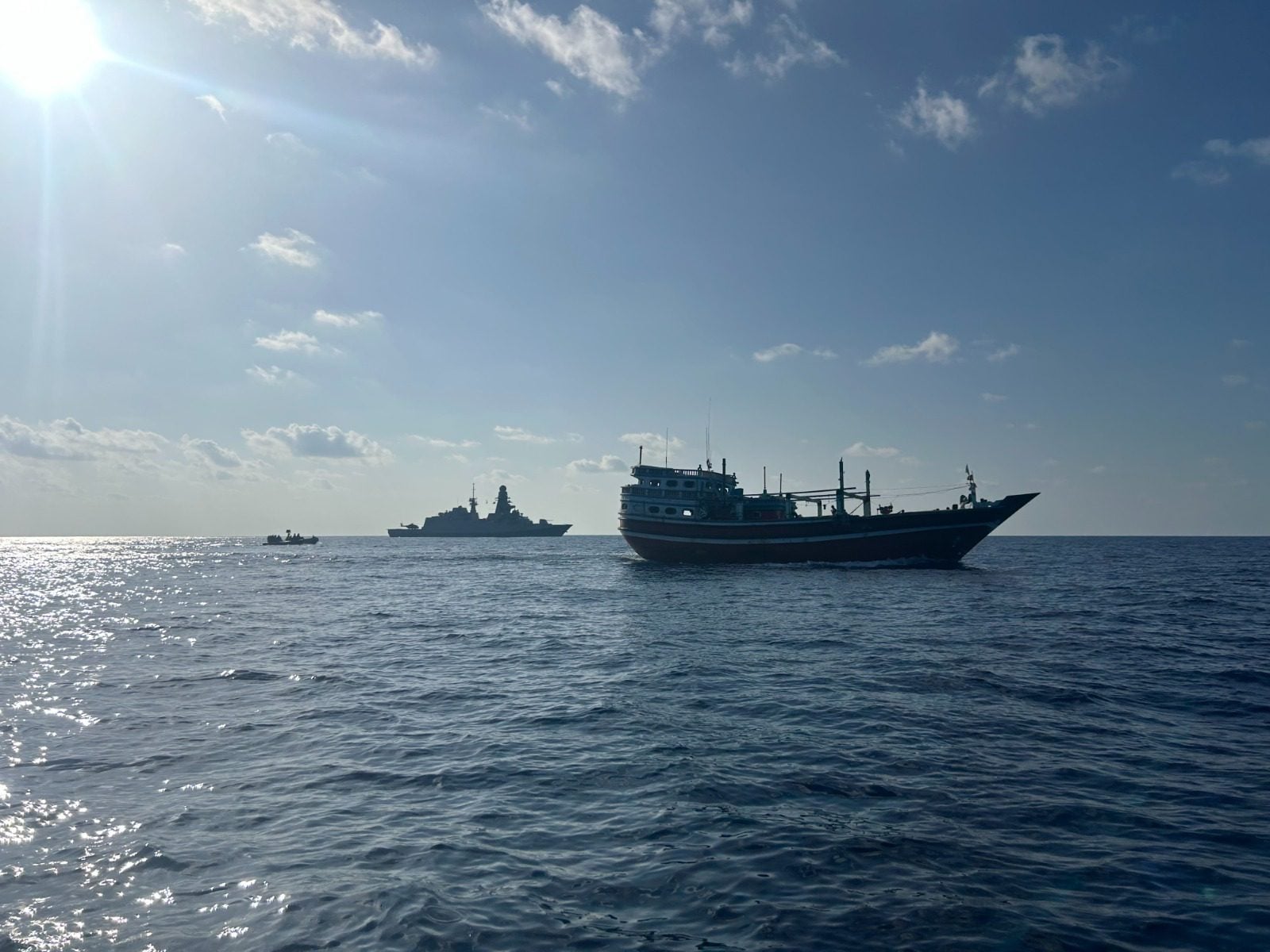
European naval forces have successfully rescued a hijacked Iranian fishing dhow after it spent nearly two weeks in the hands of pirates in the Western Indian Ocean. This incident highlights ongoing issues with piracy in the region.
The EU’s naval mission, known as EUNAVFOR Operation ATALANTA, announced that the Iranian-flagged dhow ALWASEEMI was freed on April 5 when the pirates abandoned the ship due to continuous pressure from naval and air forces.
The dhow was taken over on March 24, about 400 nautical miles east of Mogadishu, by a group of pirates who likely intended to use it as a "mothership" to attack larger commercial vessels.
Instead of launching a direct assault, ATALANTA forces used a strategy called the “concertina effect.” This involved a coordinated increase in surveillance and presence using ships and aircraft. By working closely with Somali maritime police, the pirates were ultimately forced to flee along Somalia’s northwestern coast.
Naval teams later boarded the dhow, confirmed that the crew was safe, and provided them with food, water, and medical assistance. They also collected evidence that might be used for prosecuting the pirates.
The hijacking raised immediate alerts in the region. The Maritime Security Centre Indian Ocean advised ships to stay at least 200 nautical miles away from the dhow's last known location and to enhance their security measures.
By March 27, ATALANTA forces had located the vessel about 480 nautical miles southeast of Mogadishu and began to monitor it closely. Within days, they verified the hijacking and effectively isolated the dhow, preventing it from being used for further attacks.
This response involved several regional and international partners, including Somali security forces, Combined Maritime Forces, and INTERPOL, demonstrating the importance of coordinated maritime security efforts in the area.
This incident serves as a reminder of the persistent risks of piracy off the coast of Somalia, despite a general decline in attacks since their peak in the early 2010s and a potential resurgence anticipated in 2024-2025 due to increased Houthi attacks on shipping routes in the Red Sea and Gulf of Aden.
Since its launch in 2008, ATALANTA has remained a key part of international efforts to combat piracy in the Western Indian Ocean, where opportunistic groups continue to exploit weaknesses in maritime security.
The quick resolution of the ALWASEEMI situation—and the prevention of its use as a mothership—demonstrates that naval coordination in the region is still effective in stopping piracy before it escalates.