
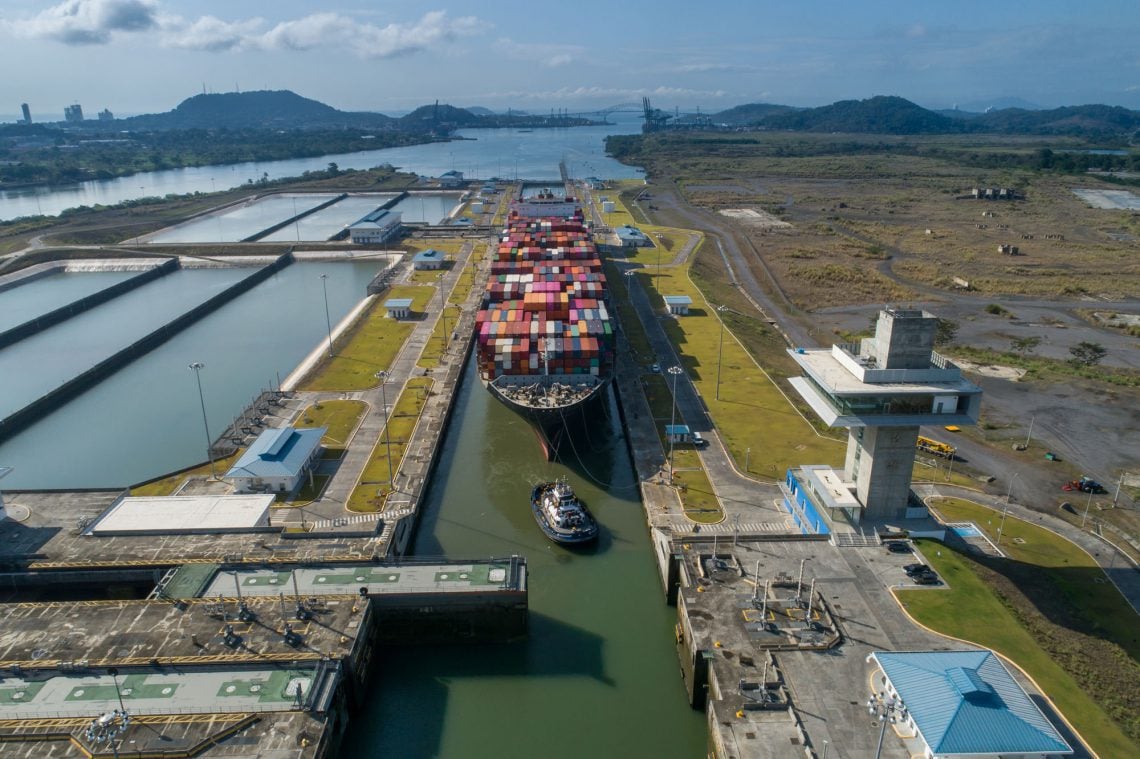
The Panama Canal is reducing its daily transit capacity and changing its auction system due to lower-than-expected rainfall, which is affecting the freshwater supplies crucial for operations. This announcement comes just months after officials expressed confidence that normal operations would continue through the year.
Starting September 3, the Panama Canal Authority stated that the daily capacity for Neopanamax vessels will be cut to nine slots, while Panamax capacity will be limited to 25 slots. From September 15, Panamax availability will drop further to 23 daily slots.
This marks a significant change for the canal, which earlier this year still believed it could avoid transit restrictions despite the development of a strong El Niño.
Even though Panama's rainy season has begun, rainfall in the canal's watershed has not met expectations. As a result, officials are taking extra steps to conserve water and ensure longer-term operations continue.
The canal has cautioned that fewer daily transits may lead to longer waiting times for ships without reservations, advising operators to use its booking system for optimized transit dates.
On a positive note, improving near-term water conditions have allowed the canal to delay some previously announced draft restrictions.
The expected reduction of the maximum authorized Neopanamax draft from 48.0 feet, which was set for August 26, has been postponed to September 2. A further drop to 47.5 feet, originally planned for September 3, has been moved back nearly a month to October 1.
As recently as April, officials had a much more hopeful outlook, saying they expected to maintain standard operations through the end of the year.
"We don’t expect significant changes until December, but we are closely monitoring the situation. We want to keep the lakes as full as possible before the next dry season to maintain our service quality," said Espino de Marotta.
Changes to the Auction System
The canal is also making temporary adjustments to how daily auction slots are allocated to ensure fairer distribution among different shipping sectors.
Starting September 3, auction participants will be categorized into four groups: LNG and LPG carriers; dry bulk, general cargo, and miscellaneous vessels; containerships, vehicle carriers, and reefers; and chemical, crude, and product tankers.
Customers with a reservation for the same transit date through the canal’s Long-Term Slot Allocation, NetZero, or other programs typically won’t be able to get an extra slot unless no other bidders are competing.
For Neopanamax transits, full containerships with the highest TEU capacity will be given priority, with the canal’s Customer Ranking used as a deciding factor in case of a tie.
These changes come as competition for Panama Canal slots has increased due to disruptions in global shipping.
In the first half of fiscal 2026, the canal managed 6,288 transits, which is 224 more than last year, while cargo volumes rose about 5% to 254 million PC/UMS tons. Average daily traffic peaked at 37 vessels in March, with some days seeing over 40 transits.
The auction system has seen heightened competition as well. Earlier this year, officials noted that average last-minute auction prices surged from around $135,000-$140,000 before conflicts in the Middle East to about $385,000 during March and April, with some bids exceeding $1 million.
Most recently, on August 14, the gas carrier G. Arete reportedly paid a record $4.6 million for a Neopanamax auction slot.
El Niño and Drought Concerns
The latest actions highlight the ongoing issue of water availability after Panama spent the last two years strengthening its resilience in response to the 2023-24 drought.
Earlier this summer, the canal gradually reduced its maximum Neopanamax draft from 49.5 feet to 49 feet, and then to 48.5 feet as levels in Gatun Lake dropped. At that time, officials assured that these draft reductions would not impact daily transit capacity.
However, due to continuing low rainfall, this situation has now changed.
The canal has introduced several water conservation measures following the previous drought, such as increased use of the water-saving basins at Neopanamax locks, simultaneous lockages for smaller vessels, interior lock gates, and reduced hydropower generation at Gatun Dam.
These measures are becoming increasingly vital as a strengthening El Niño raises the risk of another extended dry period. The NOAA Climate Prediction Center stated in July that there is an 81% chance that El Niño will reach “very strong” status between October and December, with a 97% chance it will last into early spring 2027.
The canal will continue to monitor rainfall, watershed inflows, and lake levels, making further operational adjustments as necessary.