
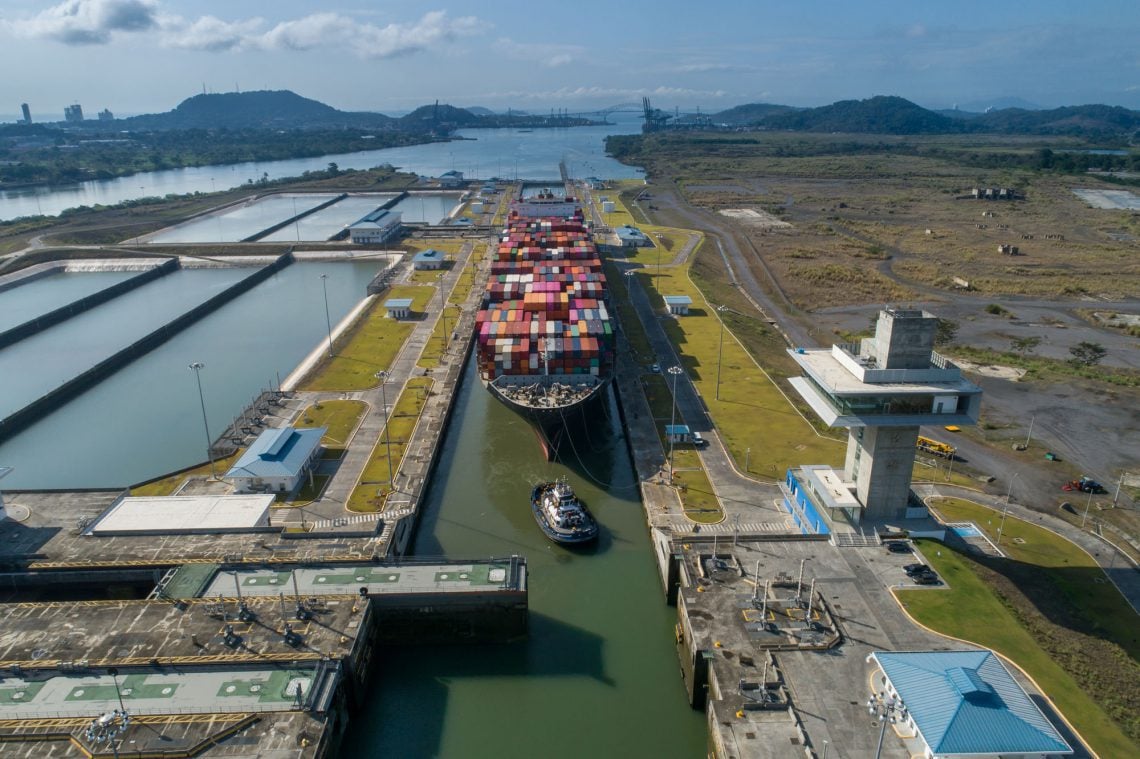
The Panama Canal celebrated its 112th anniversary over the weekend, with an increase in vessel traffic. However, officials are preparing for a stronger El Niño, which may affect the canal's freshwater supply.
Since its opening on August 15, 1914, the canal has seen significant activity. During the first ten months of the fiscal year 2026, it recorded 10,623 deep-draft vessel transits, a 6.1% rise from the 10,010 transits the previous year, according to the Panama Canal Authority (ACP).
This increase translates to 613 more transits from October 2025 to July 2026, indicating higher demand after the drought-related restrictions that affected canal operations in 2023 and 2024.
In this period, 2,990 vessels used the Neopanamax locks, while 7,633 were Panamax vessels.
The anniversary follows another important milestone: ten years since the expanded locks were opened in June 2016.
As of May, over 31,000 vessels have passed through the expanded locks, with Neopanamax operations now making up more than half of the canal's total revenue.
From Canal to Logistics Hub
The ACP is also using this anniversary to showcase a broader transformation of the canal under its strategic vision for 2025-2035.
This vision aims to evolve the Panama Canal from a traditional ship transit route into a comprehensive logistics, energy, and maritime services platform.
Currently, there are projects underway for container transshipment terminals at Corozal on the Pacific side and Telfers on the Atlantic side, which will enhance Panama’s capacity to handle containers and improve connectivity with global shipping networks.
Additionally, the canal is working on an Energy Corridor, which includes a proposed 76-kilometer pipeline linking terminals on both coasts. This pipeline aims to transport propane, butane, and ethane across the isthmus, providing an alternative route for energy shipments without requiring vessels to go through the locks.
These projects are designed to boost the economic benefits generated by maritime traffic and create new revenue streams beyond canal tolls.
Today, the Panama Canal connects 180 trade routes and about 1,920 ports across 170 countries. The ACP estimates that the cargo moving through the canal is worth approximately $444 billion in annual trade value, representing roughly 3% of global maritime trade.