
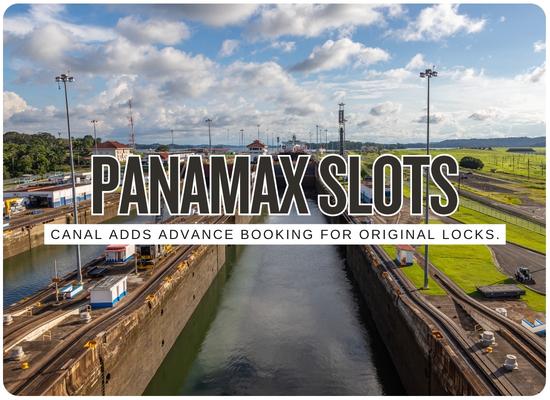
The Panama Canal is expanding its transit reservation program to include the Panamax locks for the first time. This change will allow more shipping customers to book their passage months in advance for the dry season in 2027.
On Monday, the Panama Canal Authority announced that the next phase of its Long-term Slot Allocation (LoTSA) program will cover transits from January 3 to April 3, 2027.
The LoTSA program will continue to operate at the Neopanamax locks, while a new pilot program will start offering long-term slots for vessels using the Panamax locks.
LoTSA aims to provide shipping companies with more certainty about Canal transits by allowing them to secure slots well in advance of their planned journeys, reducing issues with availability and high last-minute prices.
The Neopanamax program will feature 36 packages with 270 transit slots, including 165 slots for northbound and 105 for southbound passages. This amounts to three reserved transits per day during the program period.
The new Panamax pilot will offer 51 packages with 288 slots, consisting of 147 northbound and 141 southbound transits, also totaling three slots per day.
Both programs will use sealed-bid competitions for capacity allocation. The bidding for the Neopanamax slots is set for November 17, while the Panamax pilot competition will occur on November 24.
The Canal noted that the Panamax program will follow the same allocation process, selection criteria, and tie-breaking rules that have been established for Neopanamax vessels.
Any transit capacity not assigned through LoTSA will still be available through the Canal’s regular reservation system and auction methods.
This expansion comes as the Panama Canal is adjusting its operating practices after a severe drought limited daily transits in 2023 and 2024, revealing the vulnerability of the freshwater-dependent system to changing rainfall patterns.
Although water levels and transit capacity have improved, the Canal is increasingly focused on providing customers with more reliable booking options while implementing longer-term strategies to secure its water supply.
For carriers and vessel operators, the appeal of LoTSA is clear: guaranteed access to limited transit capacity allows for more reliable voyage planning, especially during the dry season when water availability has historically been a challenge for Canal operations.
By extending the program to the Panamax locks, the Canal is opening up this option to a wider range of the commercial fleet for the first time.