
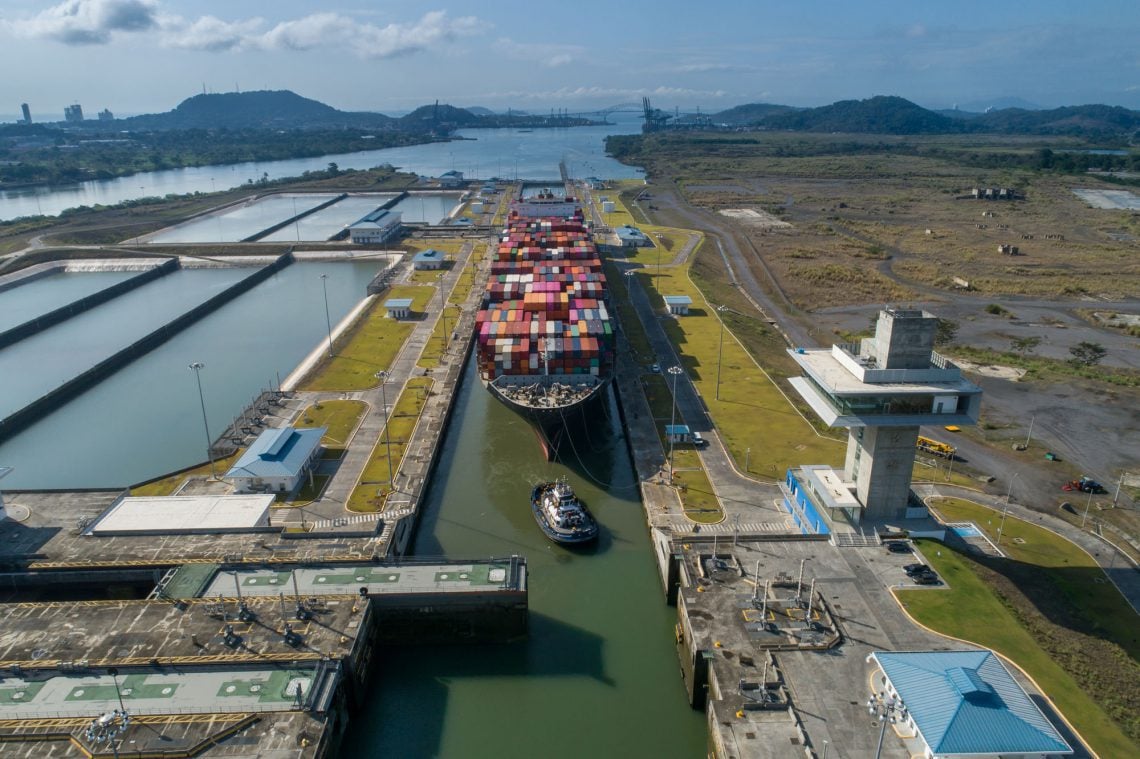
This summer, the Panama Canal Authority (ACP) will lower the maximum allowed draft for vessels using its Neopanamax locks. This decision comes as forecasts indicate that a strengthening El Niño may lead to reduced rainfall in the canal’s watershed.
In an advisory released on July 1, the ACP stated that the maximum draft will drop to 49.0 feet (14.94 meters) of tropical fresh water (TFW) starting July 24, and will further decrease to 48.5 feet (14.78 meters) from August 15. This follows an earlier reduction to 49.5 feet that began on July 3.
According to the canal authority, these changes are part of its strategy to manage water effectively and ensure the safe, reliable, and sustainable operation of the canal under current conditions while preparing for the expected impacts of El Niño.
The advisory mentioned, “The ACP will keep monitoring lake levels and hydrological forecasts and will announce any additional operational changes if necessary.”
This adjustment marks the second round of operational changes made this year, reflecting the increasing likelihood that El Niño is developing.
On Friday, the World Meteorological Organization reported that El Niño conditions have formed in the tropical Pacific and are expected to increase rapidly this autumn in the Northern Hemisphere. Forecast models indicate a strong El Niño is likely, raising the chances of drought, heatwaves, and other extreme weather events, particularly in parts of Central America.
Less rainfall poses a challenge for the Panama Canal, as every vessel transit relies on fresh water stored in Gatun Lake, making water conservation essential during dry periods.
The recent restrictions are relatively modest compared to those imposed during the severe drought of 2023-24, which significantly lowered lake levels and led to extensive draft and transit limitations that disrupted global shipping and created long backlogs of vessels.
Canal officials have been working for months to prevent a crisis like that from happening again. They have implemented water-saving measures such as using water-saving basins in the Neopanamax locks, allowing simultaneous lockages for smaller vessels, installing interior lock gates to minimize water use, and suspending hydroelectric generation at Gatun to prioritize water storage.
Despite the new draft limits, the canal is still managing heavy traffic. The ACP has been maintaining around 38 daily transits, close to its operating capacity, as shipping demand has rebounded following the previous drought, and ongoing disruptions in other major trade routes have boosted canal volumes.
The Panama Canal, responsible for about 5% of global maritime trade, will continue to monitor Gatun Lake levels and hydrological forecasts to determine if further operational changes are required.