
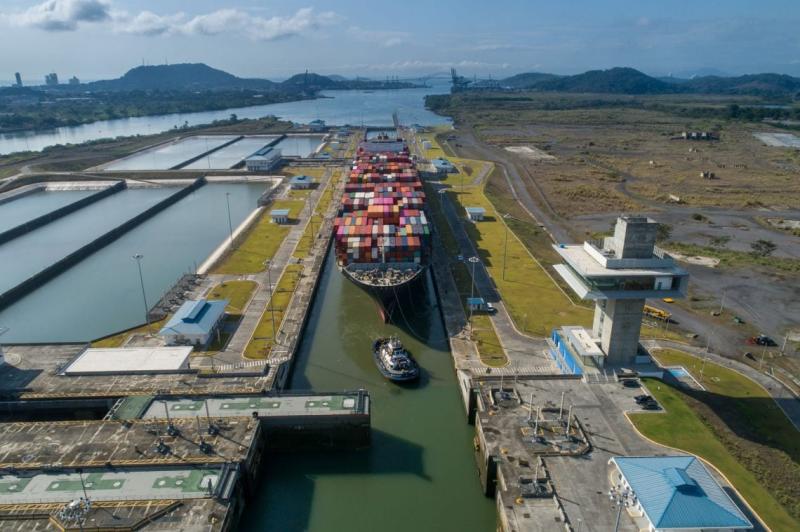
Competition for transit slots at the Panama Canal has greatly increased, with as many as 18 ships vying for a single opening as more vessels arrive without appointments.
According to key supply and demand data, the rise in auction prices at the Panama Canal reflects market pressures.
In an interview with gCaptain, Ricaurte Vasquez, the Administrator of the Panama Canal Authority (ACP), noted that the percentage of vessels arriving without an appointment has gone up from 10% to between 20% and 25%.
“We are seeing a significant number of vessels arriving without reservations,” said Vasquez. “From our experience with the last (El Niño) event, we learned that everyone should book an appointment. Those without a reservation are left waiting, and many end up paying high prices to secure an auction slot.”
Vasquez explained that the number of bidders per auction depends on the number of available slots. The total number of slots each day hinges on water levels and any cancellations from the Long-Term Slot Allocation System (LoTSA) that were booked in advance.
“Once a slot is available, the bidding starts, and the highest bid wins,” said Vasquez. “The allocation process has always followed market principles.”
Recently, auction rates have been breaking records. For example, a slot reached $5.3 million on Monday, surpassing the $4.6 million bid from the previous week. During March and April, auction slots were around $385,000, whereas before the conflict, they were priced between $135,000 and $140,000.
“At one point, we had 18 bidders for a single slot,” said Vasquez. “That's quite high. Typically, there are only two to three bidders a day.”
The number of bidders has increased as the conflict with Iran continues.
In May and June, the average number of bidders per Neopanamax slot auction was around four. By July, this increased to about eight bidders daily.
In August, for the Neopanamax locks, the ACP recorded up to 15 bidders for one slot, with an overall average of six bidders for the month so far.
From April to August, the Panamax locks consistently had over eight bidders each day, with one auction in May featuring 18 bidders. Before this period, the average was about two bidders each day.
This data highlights the strong demand driving the bidding process.
When asked if the Trump Administration has commented on these record auction rates and transit fees, Vasquez stated that they are maintaining transparency.
“We communicate with everyone,” he said. “Our local and international press releases share information about vessels that arrived without slots, waited, and then engaged in bidding against each other. We do not set prices; the market determines the prices.”
In the past, former U.S. President Donald Trump referred to Panama Canal transit fees as “exorbitant” and a “ripoff,” even threatening to take control of the Canal.
Following the significant El Niño event in 2023, the ACP established a daily transit auction system for 2024 and recently updated it to the Long-Term Slot Allocation System (LoTSA). They have also created a special booking system for Liquefied Natural Gas (LNG) vessels, along with other options like last-minute reservations.
Three auction slots are set aside each day for LPG and LNG segments that require immediate space. When slots are not booked, they go to the highest bidder. Canceled bookings can also be added to the auction slots, which increases daily availability by 3 to 5 slots.
With planned reductions in vessel transit for September, prices for auction slots are expected to rise.
The expenses related to passing through the Panama Canal have prompted some shipping companies to impose “Panama Canal Surcharges” or change routes altogether.
One company, ONE, has eliminated three routes. Customers report receiving alerts about these changes. When inquired about the cancellations, Vasquez mentioned that they met with ONE executives recently.
“They understand the situation,” said Vasquez. “They need to find alternative solutions to ensure on-time deliveries. We have guidelines that apply to everyone, and we collaborate with them on how they can adjust their schedules. Being open about available options is important to us.”