
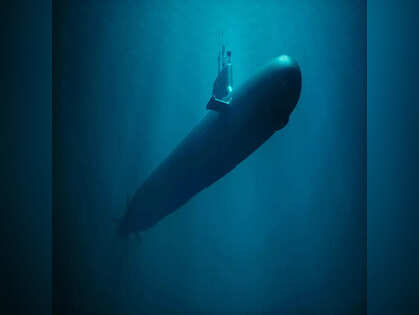
BEIJING, Nov 3 (Reuters) - The Pakistan Navy is set to welcome its first Chinese-designed submarine into active service next year, according to the country's top admiral. This move is part of Pakistan's strategy to strengthen its position against regional rival India and extend its influence towards the Middle East.
Admiral Naveed Ashraf shared with Chinese state media that the deal for eight Hangor-class submarines, expected by 2028, is progressing well. He noted that these submarines will enhance Pakistan's capabilities to patrol the North Arabian Sea and the Indian Ocean.
This announcement comes after a recent incident where Pakistan's air force used Chinese-made J-10 fighter jets to shoot down an Indian Air Force Rafale aircraft, raising questions about the effectiveness of Western versus Chinese military equipment.
The submarine agreement, estimated at around $5 billion, stipulates that the first four diesel-electric attack submarines will be constructed in China, while the remaining units will be assembled in Pakistan. This approach aims to help improve local technical skills.
So far, Pakistan has launched three submarines from a shipyard along the Yangtze River in China's Hubei province.
According to Ashraf, "Chinese-origin platforms and equipment have proven to be reliable and technologically advanced, meeting the operational needs of the Pakistan Navy."
He also emphasized the importance of adapting to modern warfare technologies, including unmanned systems, artificial intelligence, and advanced electronic warfare. The Pakistan Navy is focused on these innovations and is exploring partnerships with China.
Historically, Islamabad has been China’s largest arms buyer, accounting for over 60% of China's weapons exports during the period from 2020 to 2024, according to data from the Stockholm International Peace Research Institute.
Billion-Dollar Build-Up
Along with significant arms sales, Beijing is heavily investing in the China-Pakistan Economic Corridor, a 3,000 km (1864.11 miles) trade route from China's Xinjiang region to Pakistan's Gwadar port. This initiative is part of President Xi Jinping’s broader 'Belt and Road' infrastructure strategy.
The corridor aims to provide a secure supply route for China, the world's largest energy importer, allowing it to access resources from the Middle East without relying on the strategically vulnerable Straits of Malacca.
This project also extends China's influence towards Afghanistan, Iran, and Central Asia, effectively encircling India, given China's relations with Myanmar and Bangladesh.
India currently has three nuclear-powered submarines and various diesel-electric attack submarines developed or acquired from France, Germany, and Russia over the years.
According to Ashraf, "This cooperation with China is more than just hardware. It symbolizes a shared strategic vision, mutual trust, and a longstanding partnership." He anticipates that their collaboration will expand significantly over the next decade to include shipbuilding, training, research, technology sharing, and industrial partnerships.