
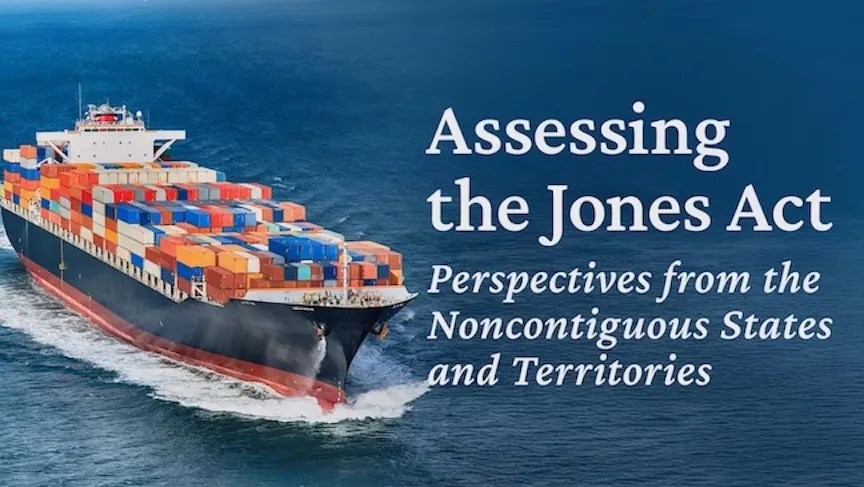
Gasoline prices in the US are rising, and the Trump administration is exploring all options to address the impact of conflict in the Middle East. Some people quickly suggest that the costs associated with the Jones Act are a major reason for high fuel prices, claiming that waiving this law would magically reduce prices at the pump.
However, this assumption is far from accurate. A closer examination of current international freight rates reveals that replacing a Jones Act vessel with a foreign flag tanker on a domestic route would likely increase the overall cost of fuel delivered.
To understand this, it’s helpful to know how tanker freight costs are determined. Tanker operators use a system called Worldscale, which organizes payment for oil tanker voyages into over 350,000 different possible routes.
Worldscale rates are figured out so that, after accounting for costs like port fees, fuel expenses, and canal tolls, the net daily earnings are consistent across all voyages. Tanker owners and charterers make negotiations easier by quoting freight costs in Worldscale "points," where each point represents 1% of the established flat rate by the Worldscale Association.
The idea is that if freight is quoted at WS200, it should provide the same daily earnings to the owner, regardless of the specific voyage. While real-world situations are often more complicated, this theory helps when comparing freight costs.
While foreign-flagged tankers typically can’t carry domestic US cargoes, Worldscale does list flat rates for those voyages. By comparing these flat rates with current market rates, we can estimate the impact of using a foreign flag vessel instead of a Jones Act vessel on similar routes.
For example, the Worldscale flat rate for a trip from Houston to New York in 2026 is $10.88 per tonne. Today, the market rate for that same trip is WS410, which is 410% of the flat rate, amounting to $44.61 per tonne, or about 14.5 cents per gallon.
In contrast, shipping with a Jones Act tanker for the same route today would cost around 13.5 cents per gallon. A similar calculation for freight from Houston to Fort Lauderdale also shows that using current WS rates results in a delivered cost per barrel that is only a penny more than with a Jones Act tanker. This highlights the complexity of finding simple solutions.
For those truly interested in lowering fuel prices for consumers, it’s crucial to grasp how freight markets work. Making policy decisions based on incorrect assumptions can do more harm than good.