
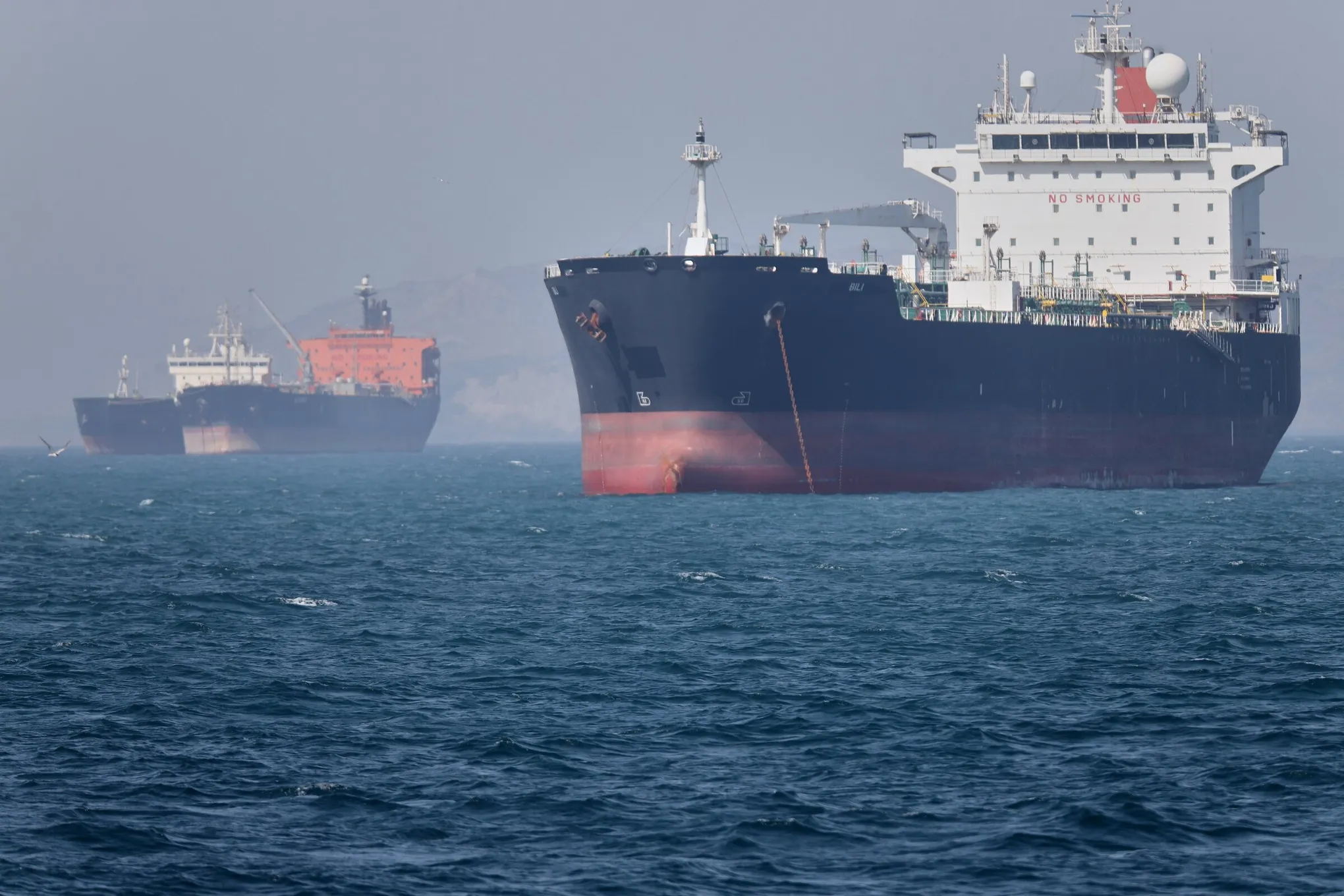
(Bloomberg) — Over the weekend, 16 tankers gathered off the coast of Oman to transfer millions of barrels of oil that had previously been stuck in the Persian Gulf. Just a month earlier, this area was completely empty.
A growing number of tankers are now turning off their transponders to increase oil flows through the Strait of Hormuz, shifting from a trickle to a more consistent stream. While traditional vessel-tracking data shows little change in shipments, shipping executives, Asian oil buyers, and satellite images tell a different story: The Strait of Hormuz appears to be much less congested, with more regular and higher-volume transits.
This shift has been driven by Gulf producers using their own ships to move oil without detection by Iran, which is key to the increased flows. During this time, the US has also been assisting vessels navigating through the strait. The recent changes suggest that the oil market is successfully directing enough supply to buyers, helping to avoid a surge in prices amid the ongoing disruptions from the conflict with Iran.
Middle Eastern producers are utilizing ships they control to transport oil outside of Hormuz, steering clear of exorbitant fees charged by the limited number of shipowners willing to transit the strait. After leaving, they transfer oil onto larger tankers that transport the cargo to buyers in Asia and beyond.
“There’s a noticeable trend,” said Larry Johnson, head of freight at Mercuria Energy Group. “Most of these tankers are either government-owned or heavily influenced by the government, and they seem to have found ways to ensure safe passage,” he added.
Some ships are reportedly navigating under the cover of darkness and turning off their lights, according to sources familiar with the situation. Crews have also been told to avoid using radios, one of the sources noted.
Currently, roughly 2 million barrels a day of oil and related products are flowing out of the Gulf, according to Rapidan Energy Group. While this is still below normal levels, it is significantly higher than during the earlier stages of the conflict. These flows, combined with a drop in Chinese demand, rising US oil exports, and alternative routes such as pipelines across the Middle East, have contributed to a nearly 30% drop in oil prices from their peak during the war.
The transfers over the weekend off Oman were detected using satellite imagery from the European Union’s Copernicus program. TankerTrackers.com reported spotting 12 non-Iranian tankers transferring oil outside Hormuz on June 6 alone.
“This oil is coming from Iran's Arab neighbors,” TankerTrackers.com stated. “This is just one more reason why oil isn't $200 a barrel right now.”
On Wednesday, former President Donald Trump shared on social media that “lots of oil is getting out” of Hormuz. The day before, US Energy Secretary Chris Wright mentioned at a conference that tanker traffic is “rising significantly.”
With the prospect of increased supplies, the main oil benchmark in the Middle East has been steadily dropping toward pre-war levels. Before the effective blockade of Hormuz, the strait handled about 20% of global oil supply in a market exceeding 100 million barrels a day.
Trump also mentioned that Iran would “pay the price” for delaying negotiations for an interim peace deal, following renewed attacks that further heightened tensions in a fragile truce. He claimed to have retaliated against Iran for shooting down a US Apache helicopter near Hormuz.
There are additional indications that more oil is being exported from the region. Recently, both Kuwait and the United Arab Emirates have expressed willingness to sell oil outside Hormuz, suggesting that shipments are successfully moving past this critical chokepoint. Satellite imagery shows a consistent flow of ships loading at UAE oil terminals in recent weeks.
Asian buyers are reportedly receiving more offers for barrels that are now available, and they expect additional shipments to surface in the upcoming days and weeks, according to traders who preferred to remain anonymous.
At least two supertankers, each capable of carrying 2 million barrels, crossed Hormuz late last month and have since started signaling off the coast of Kuwait. Both tankers are managed by Kuwait Oil Tanker Co., and neither has transmitted a signal since. One shipowner, who also requested anonymity, mentioned that it had been contracted to transport oil from Kuwaiti vessels that successfully crossed Hormuz.
Kuwait Petroleum Corp. has not responded to requests for comment as of yet.
The increase in Kuwaiti oil flows mirrors a similar trend observed with oil from the UAE. The Abu Dhabi National Oil Co. recently sold at least 14 million barrels in a tender that closed last week. These shipments are expected to start loading this month.
Adnoc is among the companies that have moved crude through Hormuz while keeping their transponders off to avoid detection, according to previous reports. They have continued to ship oil at a steady rate across the strait lately, as confirmed by two sources knowledgeable about the operations.
Satellite images indicate that loading has continued at key terminals in the UAE. An oil tanker was recorded loading on six out of eight days when images of Zirku Island were taken in May, according to Copernicus data. Before the war, this terminal could load more than 1 million barrels a day of crude and condensate, according to intelligence from Kpler.
Adnoc has not yet responded to requests for comment.
As of late May, approximately a quarter of the non-Iranian large oil tankers that were stuck in the Persian Gulf had successfully navigated out. Currently, around 90 tankers remain trapped, down from nearly 160 earlier in April, according to Georgios Sakellariou, a freight analyst at Signal Maritime.
“The frequency of these dark transits has increased,” he noted. “This is evident in the declining amount of oil left stranded in the Gulf, but it is still not enough to return to pre-war levels.”