
By Weilun Soon
Jul 20, 2026 (Bloomberg) – An oil tanker seems to have stopped in the Strait of Hormuz near Oman after the Iranian Navy targeted vessels in the area again, raising worries about worsening disruptions as tensions in the Middle East increase.
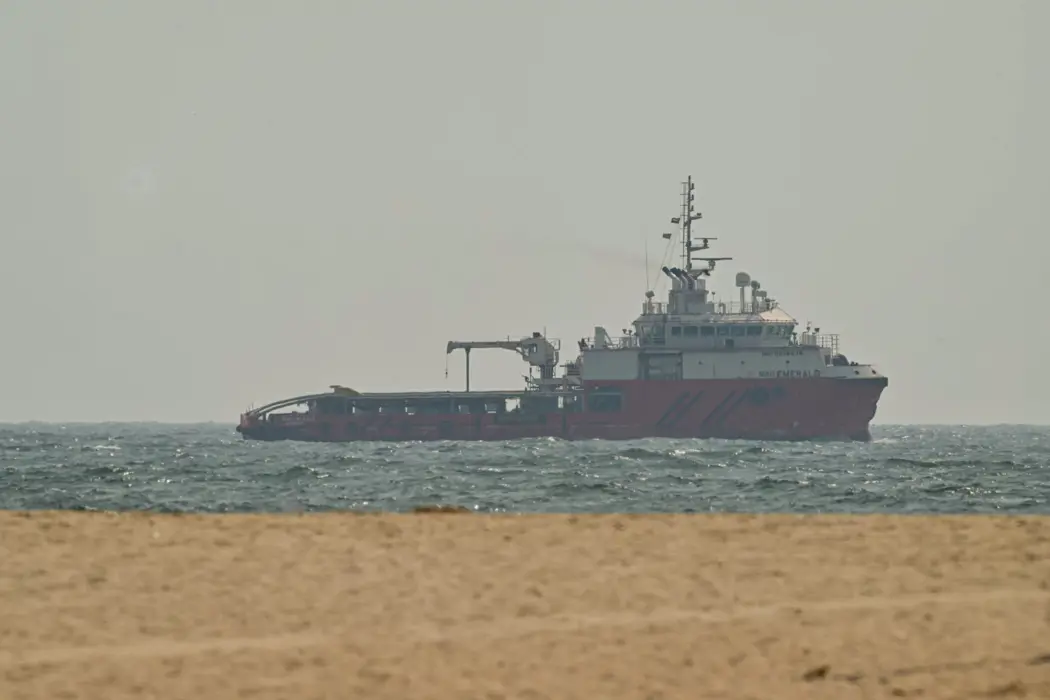
The Kavomaleas, a product tanker, began sending signals early Monday near the Musandam Peninsula, indicating that it is anchored and empty. Its last signal was in the Gulf of Oman on Sunday morning, suggesting that it had initially been moving through the strait toward the Persian Gulf with its transponder turned off, a strategy to avoid detection.
Several hours before the Kavomaleas reappeared, the Islamic Revolutionary Guard Corps announced that four vessels tried to navigate the narrow waterway through an “unsafe route” after ignoring warnings. These ships had also turned off their transponders, and two of them "encountered accidents and were halted," according to Iranian media citing the IRGC.
The UK Maritime Trade Operations reported receiving information from military sources about a vessel on fire northwest of Kumzar, Oman, although the cause of the fire is still unknown. While they didn't name the ship, the location mentioned in their alert was close to where the Kavomaleas is located.
The Kavomaleas is managed by Greece’s Dynacom Tankers Management, and documents reviewed by Bloomberg indicate it was chartered to pick up cargo in the Persian Gulf over the weekend. Dynacom has not yet replied to an email inquiry sent outside of business hours. The company was one of the first shipping entities to remove their tankers from the gulf while keeping their transponders off.
Traffic through the Strait of Hormuz appeared nearly frozen early Monday following a weekend of rising hostilities between the US and Iran. The recent vessel attacks are likely to heighten concerns regarding the safety of ships using this waterway, often hugging the Omani coast—often with their transponders turned off, a practice known as going dark, and sometimes with the backing of the US military.
On Monday, only a few ships seemed to attempt to navigate through Hormuz, including a bulk carrier flagged by the Marshall Islands, which exited the Persian Gulf after turning off its transponder while closing in on the strait near Oman. A liquefied petroleum gas carrier listed as part of the dark fleet involved in Iranian exports also appeared to be heading toward the strait.
Another Marshall Islands-registered bulk carrier began signaling from the Gulf of Oman after indicating it was in the Persian Gulf early Sunday, suggesting it had crossed Hormuz without signaling.
Oil traders and shipping executives are closely monitoring whether vessels are passing through Hormuz via the Iran-approved route further north, which could expose charterers and shipowners to compliance risks, or the Omani route to the south.