
By Weilun Soon and Julian Lee
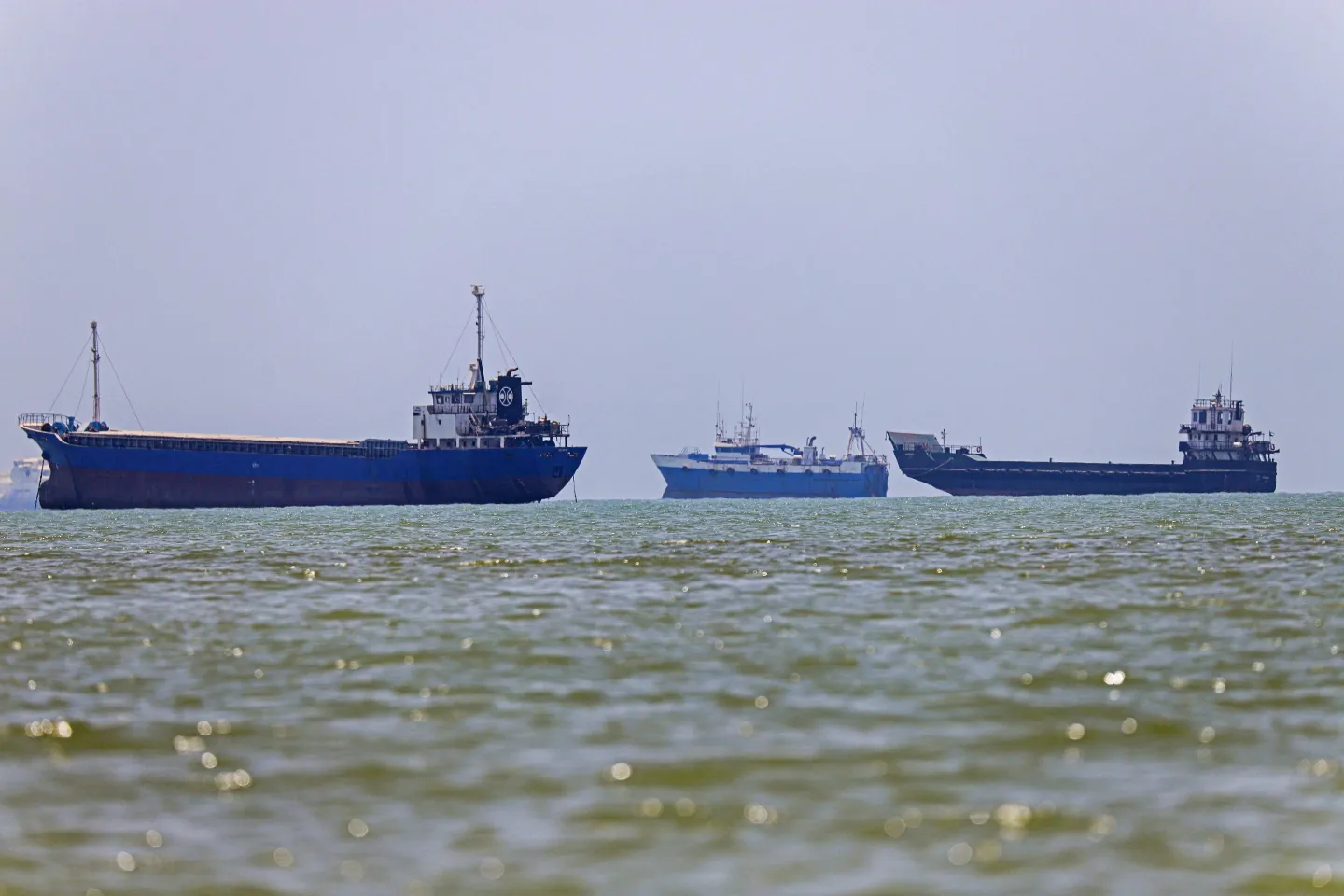
June 21, 2026 (Bloomberg) – Millions of barrels of oil continued to travel through the Strait of Hormuz over the weekend, despite Iran's claims of closing the waterway. The situation has led to differing accounts from Washington and Tehran regarding the status of this crucial shipping route.
Over the weekend, five oil supertankers, with a total capacity of 8 million barrels, were spotted entering or navigating through the strait along a path near Oman's coast before going "dark." One tanker resumed transmitting automated signals early Sunday after reaching the Gulf of Oman.
If all the tankers complete their journeys, it would support the US military's claim that it can effectively secure the southern passage near Oman, even though Iran insists it controls the area and allows only its northern route. A few vessels were also seen entering the Persian Gulf using this southern route.
The US Central Command reported on Saturday that 17 million barrels had passed through Hormuz, contradicting Iranian media reports that claimed the strait was shut. A liaison between navies and shipping indicated early on Saturday that vessels could still navigate along the Omani side during day or night while remaining visible, just before Iran announced the closure.
As both Iran and the US try to shape the narrative surrounding Hormuz and engage in peace talks in Switzerland, shippers, traders, and producers are left trying to determine if it is safe to use the strait.
Omani Route
The Gulf Sunrise, carrying about 2 million barrels of Saudi crude to Japan, has been traced crossing the Gulf of Oman after disappearing from tracking systems near the strait on Saturday. The Angola B, loaded with Emirati crude, was last spotted rounding the Musandam peninsula, an Omani area that extends into Hormuz, on Saturday. The Monaco Loyalty also went dark before reaching the strait’s peak on the same day.
Two smaller tankers, the Suezmax-class Nordic Cross and Nordic Pollux, last sent signals early Sunday from locations that put them on track along the Omani route.
Despite Iran's claims of the strait being shut, ships were also detected emitting signals off its own coastline.
The Desh Vibhor, Desh Vaibhav, and Sanmar Herald were seen in the Gulf of Oman and Arabian Sea on Sunday, following their last signals indicating attempts to cross the Strait of Hormuz late on Friday, as reported by ship-tracking data from Bloomberg. They may have passed through the strait before Iran declared the closure.
The supertankers, signaling Indian ownership or Indian-bound cargo, together carry approximately 6 million barrels of oil from Iraq and Kuwait. They transmitted signals near Iran’s Qeshm island, suggesting they might have used the route approved by Tehran.
The Shipping Corporation of India, listed as the owner and manager of Desh Vibhor and Desh Vaibhav in the Equasis database, did not respond to requests for comment outside standard business hours. Sanmar Shipping Ltd., the operator of Sanmar Herald, also did not reply.
In addition to outgoing vessels, a few empty tankers were seen entering the Persian Gulf along the Omani coast. One large gas carrier was reported to have arrived from Duqum in the Gulf of Oman.
Two crude supertankers that recently delivered Emirati crude were also tracked, with one vessel openly signaling its position at an anchorage in the Gulf of Oman a few days ago. Some Gulf producers have been known to send tankers "dark" through Hormuz to allow cargo transfers to new vessels awaiting in those waters without attracting attention.
Liquefied natural gas carriers were also reported entering the Persian Gulf, with ship-tracking data indicating their arrival late Friday.
The notice allowing ships to transit along the Omani side with their transponders on was issued by the Joint Military Information Center early Saturday morning.
According to the JMIC, “Mariners are advised they can transit the southern route day or night with their AIS on, radars radiating, running lights on, and normal use of VHF,” referring to the automated tracking system and high-frequency radio communication.
This guidance followed an alert from Pakistan late Friday, confirming a mine sighting along the southern route. Pakistan is responsible for coordinating navigational warnings in the region.