
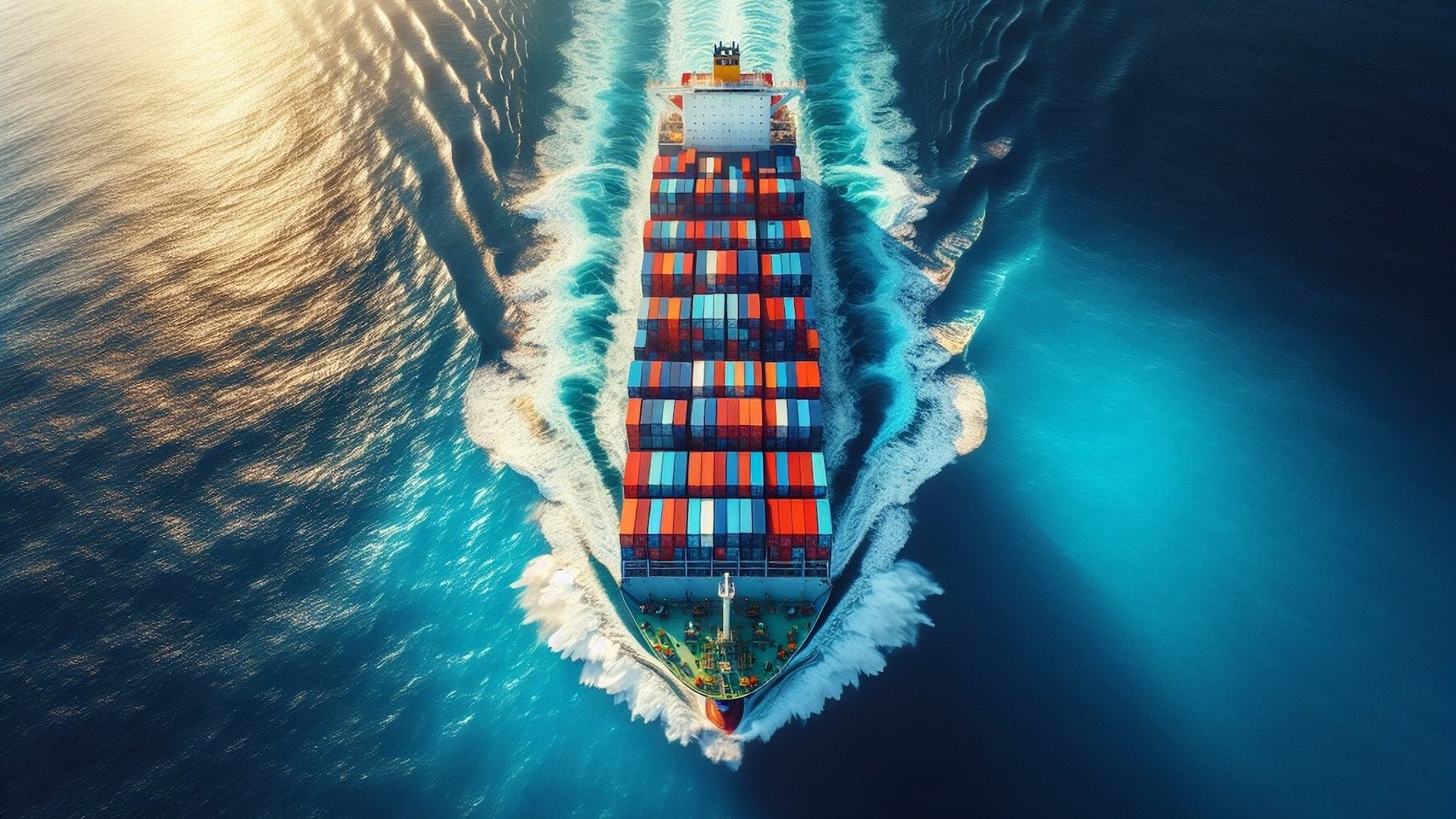
Since June 2026, three major approvals in principle (AiP) have been given for nuclear-powered commercial ships. These approvals were awarded to a molten salt reactor container ship developed by a Korean consortium, a car carrier project supported by Lloyd's Register, and a reactor design from the MIT Maritime Consortium. While these concepts are genuine, none of them is set to dock at any ports yet. This gap between approval and actual deployment tells the entire story.
An AiP is a preliminary statement from a classification society indicating that a design seems technically feasible and aligns with existing safety standards. However, it does not mean that a ship can be built or operated. Lloyd's Register has clarified that an AiP does not guarantee future regulatory approval nor confirmation that all applicable codes can be met.
This distinction is especially critical in the context of nuclear propulsion due to outdated codes that the AiP evaluates against for nuclear ships.
The most recent AiP, issued by the American Bureau of Shipping in mid-July 2026, pertains to a 15,000 TEU container ship developed by South Korea's Korea Atomic Energy Research Institute, the Korea Research Institute of Ships and Ocean Engineering, and Samsung Heavy Industries. This ship is designed to carry two molten salt reactors. In this system, the nuclear fuel is dissolved within the coolant salt, and if the reaction goes awry, the mixture solidifies to encase the fuel. The project is part of South Korea's “K-Moonshot” research initiative, and the reactor design, named MARINA, reportedly costs around 29 billion won or about $19.5 million.
Another AiP was granted a month earlier by Lloyd's Register for a large pure car and truck carrier. This design is based on Hyundai Glovis's existing 7,000 CEU model, adapted to incorporate a molten salt reactor. The collaborators on this project include HD Hyundai Heavy Industries, HD Korea Shipbuilding & Offshore Engineering, and KAERI, among others. The study focused on how to physically separate the reactor from the rest of the ship, the necessary shielding, potential impacts on cargo capacity, and how the reactor's weight would affect the ship's stability.
The third approval, which is intriguing, comes from the MIT Maritime Consortium. This partnership includes the American Bureau of Shipping and various maritime companies. ABS granted AiP for a reactor design that uses a synthetic heat-transfer fluid at near atmospheric pressure, contrasting with the highly pressurized water used in traditional reactors. Lower pressures allow for a lighter reactor vessel, which facilitates more modular construction. Current models usually operate between 10 to 20 megawatts thermal, but exact figures for this specific design have not been disclosed. Themis Sapsis from MIT described this design as a significant step towards creating nuclear propulsion for commercial vessels.
Despite these approvals, all three projects remain in the concept phase. None has a construction contract, a keel-laying date, or the necessary licensing from a flag state.
History shows that commercial nuclear shipping has faced challenges before, often serving as a warning. The NS Savannah, which entered service in 1962 under President Eisenhower's Atoms for Peace initiative, struggled due to its limited cargo capacity and high operational costs. It is still noted in records as the only nuclear-powered commercial ship to traverse the Panama Canal.
Germany's NS Otto Hahn operated from 1964 to 1979 without major technical issues but faced bureaucratic challenges for entry into ports due to the absence of an international treaty governing nuclear ships. Germany concluded that port entry negotiations needed to begin years prior to a vessel's construction.
Japan's NS Mutsu had a worse experience; a shielding failure led to a neutron leak, causing public outcry and effectively trapping the ship in its home port until it was converted to diesel power in 1995.
Currently, the only operational nuclear-powered cargo ship is Russia's Sevmorput, launched in 1988, which has also faced port-access issues but remains in service. Presently, no other commercial nuclear vessels are active worldwide, and any contrary suggestions are outdated.
International guidelines for nuclear-powered vessels are centered in Chapter VIII of the SOLAS Convention, which mandates bilateral agreements between the flag state and any foreign ports visited by the vessel. The SOLAS framework lacks detailed safety criteria, which fall under the IMO's 1981 "Code of Safety for Nuclear Merchant Ships" — a code that hasn't been significantly updated since its inception.
Recent assessments from the World Nuclear Transport Institute indicate that the existing code does not provide adequate guidance for newer reactor types, including molten salt designs. There is no confirmed plan for a formal revision of this code.
In contrast, classification societies are progressing quicker than the IMO. ABS has created a code for Floating Nuclear Power Plants, which updates elements of the 1981 code but focuses on stationary systems rather than propulsion. Russia's Maritime Register of Shipping has the only active classification code for commercial nuclear ships, but it too is limited to pressurized water reactors.
Outside of Russia, only the UK has established a dedicated regulatory framework for nuclear shipping through the Merchant Shipping (Nuclear Ships) Regulations 2022, requiring safety assessments for any nuclear vessel in UK waters. The U.S. is likely to split oversight between the Nuclear Regulatory Commission and the Coast Guard, similar to past arrangements, but there is currently no specific guidance for modern nuclear propulsion from the NRC.
Despite these challenges, regulatory groundwork is being laid. Recently, the U.S. Maritime Administration (MARAD) and the Port of Long Beach signed a Memorandum of Cooperation to investigate advanced nuclear technologies in commercial shipping. This agreement involves multiple agencies working together to tackle safety, emergency response, and regulatory hurdles associated with small modular reactors.
A crucial issue yet to be addressed is the lack of an international treaty governing liability for nuclear ship incidents. The 1962 Convention on the Liability of Operators of Nuclear Ships could have mitigated this, but it has never been ratified. Thus, liability for nuclear incidents at sea remains unregulated, creating a significant barrier for new contracts.
Bringing a design from AiP to commercial service will require a comprehensive engineering design review against current safety standards, licensing from a nuclear regulator, agreements for port access, an adequate insurance framework, trained crews, and community acceptance due to past public reactions against nuclear-powered vessels.
At present, none of these elements exists for the three concepts from 2026. The approvals mainly indicate that classification societies believe engineering challenges can potentially be addressed safely with certain reactor types, but they do not suggest resolution of the political, legal, and insurance challenges that have previously slowed progress in this field. Based on historical patterns, these issues typically take longer to resolve than engineering matters, and there is no sign that this trend has changed in 2026.