
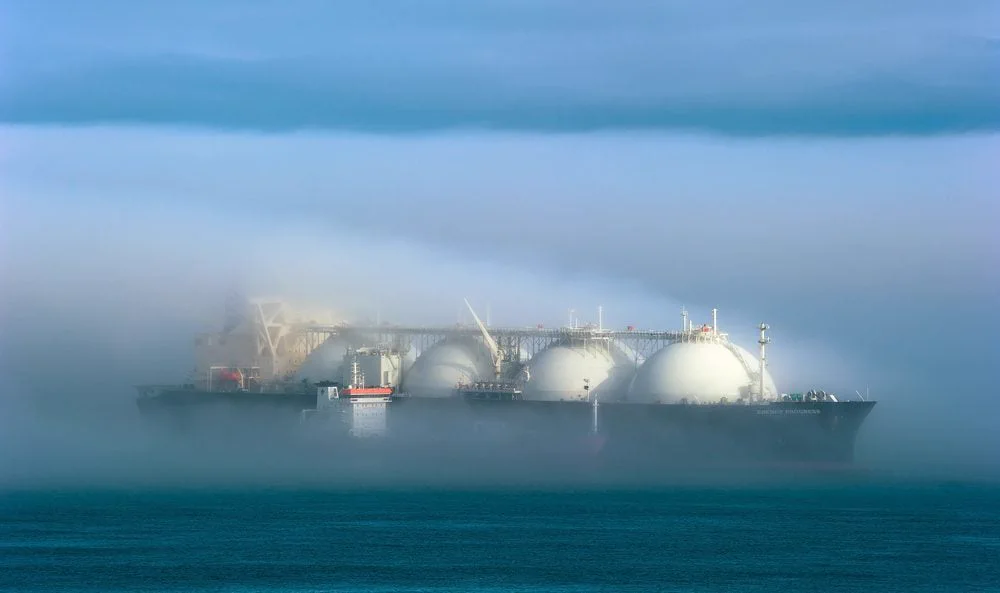
Building a nuclear-powered LNG carrier might cost about 2.5 times more than making a regular vessel. However, lower fuel costs could change the financial dynamics throughout the ship's operational life, according to a recent study backed by the American Bureau of Shipping.
Presented at Gastech 2026, the study focused on a LNG carrier with a capacity of 174,000 cubic meters. This carrier is designed with a high-temperature gas-cooled reactor (HTGR) that is being developed by Japan’s Blossom Energy.
ABS, Blossom Energy, and an unnamed global shipping company compared the nuclear design to a new conventional LNG-fueled vessel. They looked at factors like ship layout, propulsion systems, and various operating conditions, considering different potential regulatory penalties.
One major challenge is the initial investment. The study showed that the upfront cost for the nuclear vessel would be around 2.5 times higher than that of a traditional LNG carrier.
In the long run, however, the nuclear reactor would significantly lower fuel costs, which could enhance the financial viability throughout the ship's lifespan.
The research also considered the idea that the reactor could be treated as a long-term energy asset instead of being permanently attached to one ship. This way, the reactor could be removed from the first vessel at the end of its operational life and installed on a second vessel, thereby increasing its residual value.
“Nuclear energy could fundamentally change the economics of commercial shipping, affecting everything from ship design to long-term operating expenses,” said Patrick Ryan, ABS Senior Vice President and Chief Technology Officer.
Blossom Energy's CEO, Shimpei Hamamoto, noted, “This study gives a solid foundation for discussions about nuclear propulsion in commercial shipping.”
This research builds on several years of studies examining nuclear shipping, especially focused on LNG carriers.
In 2024, ABS and Herbert Engineering Corporation explored how to integrate an HTGR into a 145,000-cubic-meter LNG carrier, addressing issues like heat and energy management, shielding, weight distribution, and other design challenges.