
Investigation Reveals NOAA Research Vessel Hard to Detect, Highlighting Safety Gaps in U.S. Maritime Regulations.
The National Transportation Safety Board (NTSB) is urging the U.S. Coast Guard to create national safety standards for uncrewed surface vessels. This comes after an investigation found that a NOAA research vessel was hard to detect and lacked proper monitoring when it collided with a recreational boat on Lake Erie.
In a report released Tuesday, the NTSB made six safety recommendations focusing on visibility, collision avoidance, and remote monitoring. These suggestions highlight significant gaps in regulations as uncrewed and autonomous vessels are becoming more common in U.S. waters.
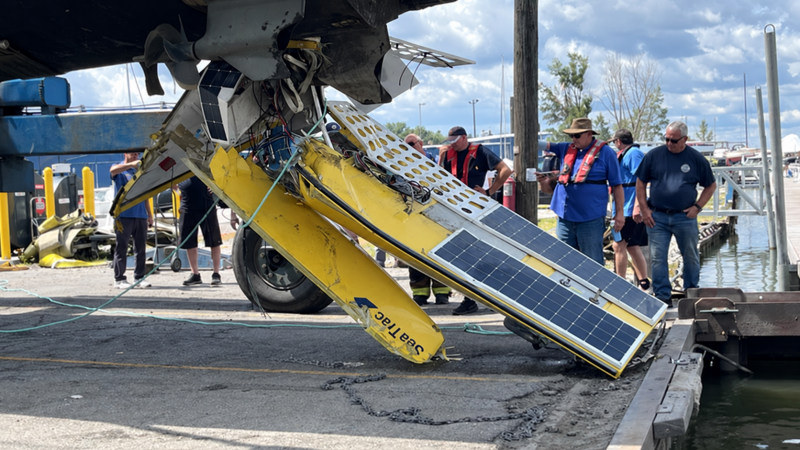
The investigation is a result of a collision on August 10, 2024, between a NOAA SeaTrac SP-48 uncrewed surface vessel and a private 45-foot Prestige 450 Flybridge recreational boat, which occurred about six miles east-southeast of Monroe, Michigan.
The 15.7-foot research vessel got stuck in the recreational boat's propeller pod, causing both boats to be towed to a local marina where they were separated. One minor injury was reported. The NOAA vessel was declared a total loss, estimated at $186,000, while damages to the recreational boat were around $100,000.
According to the NTSB report, the low-profile design of the uncrewed vessel made it hard for other boaters to see it. Only about one foot of the hull was above water, and it was unlikely to be spotted by the radar or automatic identification systems used on recreational boats nearby.
Additionally, the vessel did not have an audible warning system for approaching boats.
But visibility was just part of the issue.
At the time of the accident, NOAA's Great Lakes Environmental Research Laboratory was operating the vessel in a mode called "adapted hold." This system allowed the vessel to return to preset coordinates whenever it drifted beyond a 150-foot radius.
A remote pilot was monitoring the vessel from the shore, but the NTSB found this monitoring to be passive and inadequate for the conditions at the time.
Importantly, the vessel lacked the ability to independently evaluate nearby traffic and take necessary actions to avoid collisions.
Investigators concluded that the combination of poor visibility and insufficient monitoring effectively left the vessel without proper oversight.
According to the NTSB, “The USV could not make decisions regarding navigation or operational actions and therefore could not take appropriate actions to prevent a collision.”
Coast Guard Urged to Create National Standards
The investigation showed that, at the time of the collision, there were no industry-wide standards for the visibility, collision-avoidance abilities, and navigational safety of uncrewed surface vessels in U.S. inland and territorial waters.
The NTSB is now recommending that the Coast Guard create a national framework addressing these issues and integrate these standards into federal regulations.
“As uncrewed vessels become more common in U.S. waterways, it is important for the Coast Guard to set standards and policies for these vessels,” the report stated.
The agency also suggested that NOAA revise its internal procedures to ensure better detection of uncrewed vessels by other mariners.
These changes would involve testing vessels against the types of traffic they are likely to face and requiring appropriate remote monitoring based on each vessel's level of autonomy, operating environment, and mode of operation.
Manufacturer SeaTrac Systems Inc. was also advised to enhance the visibility and detectability of the SP-48 design.
These recommendations come as the maritime industry increasingly uses uncrewed vessels for various tasks, including oceanographic research, hydrographic surveying, and environmental monitoring.
While the NTSB's recommendations do not create new regulations, they increase pressure on the Coast Guard to address these vital questions as the use of uncrewed vessels continues to grow.