
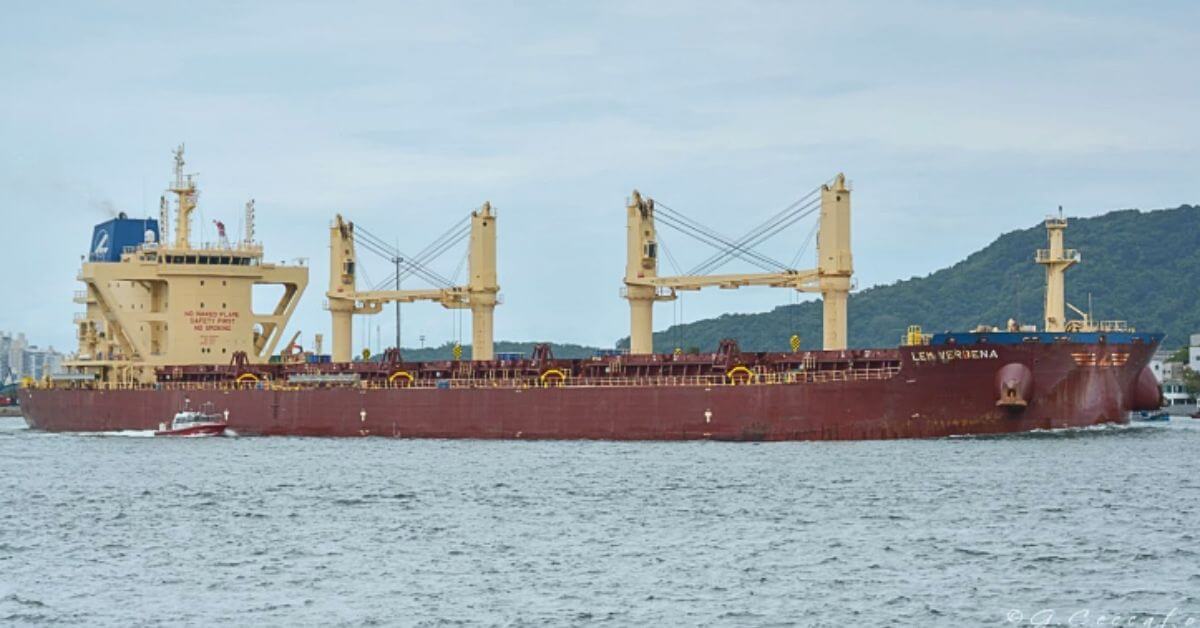
The National Transportation Safety Board (NTSB) discovered that a failed O-ring seal and misaligned fuel system components led to a significant fire in the engine room of the bulk carrier Lem Verbena while it was docked in Mobile, Alabama.
The incident occurred on January 4, 2025, at the Alabama State Docks on the Mobile River, with 19 crew members on board. The fire caused damages amounting to $5.5 million, but thankfully, there were no injuries or pollution, according to the agency's marine investigation report.
The fire started around 11:23 PM local time in the upper engine room near the composite boiler, shortly after cargo operations were completed and the boiler burner had finished a normal cycle.
Seconds after the alarm rang, crew members saw burning fuel falling from the upper deck, which spread flames to the lower engine room platforms. The vessel's water mist system activated automatically, but the fire continued to grow.
The crew quickly shut down the fuel systems and secured ventilation. They eventually activated the vessel's CO₂ firefighting system, which successfully put out the fire with help from shore responders.
Root Cause: O-Ring Failure and Fuel Leak
Investigators traced the fire's origin to the oil fittings block of the boiler’s burner unit, where an O-ring seal had not been properly seated between two misaligned fuel ports.
The NTSB found that this misalignment pinched the O-ring, preventing it from sealing correctly. This allowed pressurized diesel fuel, at about 43 psi, to leak, atomize, and ignite on a hot surface nearby.
To make things worse, a software error kept the fuel pump running between burner cycles, which maintained pressure in the system and worsened the damaged seal.
Over time, the compromised O-ring failed, releasing atomized fuel into the engine room.
While investigators could not find a definite ignition source, they believed the atomized fuel caught fire on a hot surface near the boiler or exhaust system, which was still warm from recent use.
Damage from the fire was primarily around the burner unit, fuel flow meter, and nearby components, with additional fire spread to lower platforms.
The NTSB commended the crew's actions—quickly shutting down fuel systems, sealing the engine room, and effectively using CO₂—as crucial in preventing injuries and reducing further damage.
Coordination with Mobile Fire-Rescue allowed for proper monitoring and ensured the space remained sealed long enough for the CO₂ system to fully suppress the fire.
Safety Takeaways
This investigation shows how small mechanical misalignments and software errors can create dangerous situations in fuel systems, especially in high-temperature areas like engine rooms.
It also highlights the need for proper assembly, checking sealing components, and ensuring correct control system configurations to prevent fuel leaks and fires.
You can view the NTSB’s full report here.