
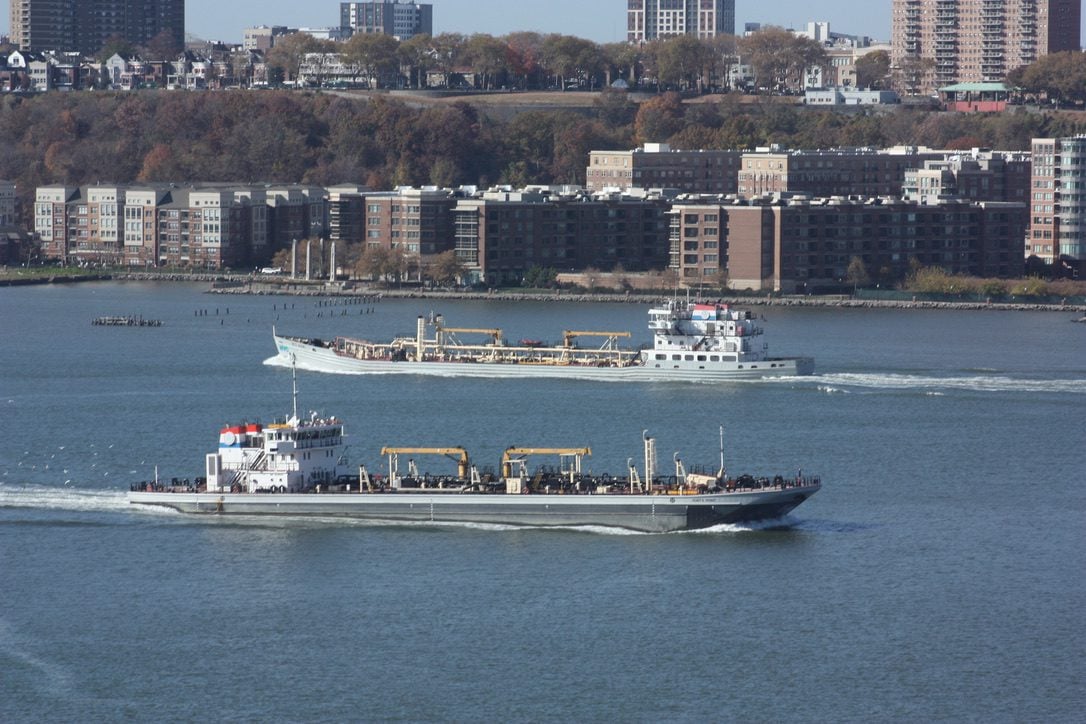
By Daniel Katzive (gCaptain) - An unapproved use of a propane torch on the deck caused the explosion on the New York City sludge tanker Hunts Point last May, according to a report released by the National Transportation Safety Board (NTSB) last month. The explosion resulted in the death of the tanker’s chief engineer and injured two other crew members, while also damaging the vessel significantly.
The chief engineer, Raymond Feige, tragically lost his life in the explosion on May 26, 2025. Feige was 59 years old and had worked for 34 years with New York City's Department of Environmental Protection, which manages the city's water and sewer services. He had been part of the Hunts Point's crew since its launch in 2014. The explosion occurred while the tanker was docked at the North River Wastewater Treatment Plant, located in Manhattan near West 138th Street along the Hudson River.
Feige was reportedly using a torch to remove broken bolts from a hatch cover shortly before the explosion, which knocked him off the tanker. He was found between the concrete dock and a wooden fender next to the vessel and was declared dead at the scene by paramedics. An assistant engineer was discovered on the deck, injured and covered in sludge but still conscious. The NTSB determined that the torch likely ignited flammable methane gas in the hold, causing the explosion.
New York City operates a small fleet of tankers to transport sludge between water treatment facilities. Sludge is the leftover solids from sewage treatment and can be converted into fertilizer. The city has used tankers for years, especially since offshore dumping of sludge was stopped. The Hunts Point is one of three 289-foot tankers the city acquired in 2014 for this purpose. These modern tankers are utilized to move sludge from plants lacking the centrifuge systems needed to de-water the sludge, such as the North River plant, to those that do have such mechanisms. On the day of the accident, the Hunts Point was filling up with sludge to transport it to the larger Wards Point sewage plant on the East River for dewatering.
On the day of the incident, the tanker’s hatches were being opened to add water from a dockside hydrant. This was done to loosen up sludge that had thickened too much to pump out after being left overnight. This process, known as “innage reduction,” is rarely performed and the NTSB report stated it had not been done on the Hunts Point in the last five years. Before the procedure, some rusted bolts holding removable plugs in the hatch covers broke off. Feige and an assistant engineer were trying to remove these broken bolts when the explosion occurred.
The NYC DEP’s procedures, as recorded by the NTSB, prohibit using flames on tanker decks and require a permit before starting any hot work on DEP vessels, which was not obtained in this case. Additionally, the report notes that the vessel’s master told investigators he specifically instructed Feige not to use a torch near the tanks and reminded the assistant engineer to pass on this warning.
The NTSB concluded its report by stating, “Despite these warnings, the chief engineer used a torch to heat a broken bolt by an unprotected opening to a tank containing flammable gas. The chief engineer had other tools available that could have removed the broken bolts without the risk of igniting the flammable gas. Had he used any of these tools, the casualty could have been prevented.”
Following the accident, the DEP released two memos instructing staff to review hot work procedures and associated hazards with sludge. A DEP spokesperson mentioned in an email, “The safety of our employees remains our top priority…. Information from the NTSB report, along with an independent investigation conducted by DEP right after the accident, is being used to improve safety procedures, training, and communication, and to strengthen accountability across DEP's operations.”
The NTSB report estimates the damage to the Hunts Point tanker at around $10 million. The vessel has not returned to service since the accident and last showed its location via AIS from the Caddell shipyard on Staten Island. The city’s oldest tanker, the North River, which was launched in the 1970s, is also out of service for at least a year. This leaves the DEP with only three functioning tankers to perform work typically covered by five; however, privately owned sludge barges have been observed servicing the North River plant since the accident. The DEP spokesperson did not respond to inquiries about the current status of the Hunts Point and the agency's maritime fleet.
For more details on the accident, see the full NTSB report.