
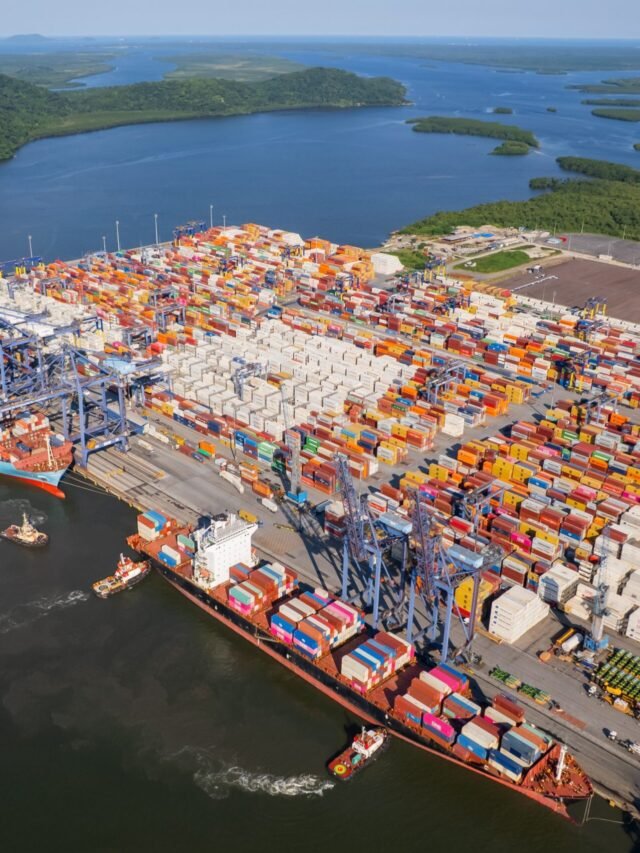
The New York State Energy Research and Development Authority (NYSERDA) announced a $300 million competitive grant program on Friday to support the development of maritime ports. This initiative aims to enhance New York's offshore wind supply chain, even as the industry faces significant regulatory and financial hurdles.
This Port Infrastructure Request for Proposals will finance upgrades such as improving load-bearing capacity, extending wharfs, and making other enhancements. These improvements are intended to facilitate offshore wind manufacturing, staging, and logistics, while also allowing for multi-use activities like container handling and vessel repair.
“To develop New York’s maritime assets and the offshore wind sector, we need ports that can support various industries and technologies,” said Doreen M. Harris, NYSERDA President and CEO. “This grant opportunity will promote port development for offshore wind projects by investing in multi-purpose ports that can adapt to changing demands across different markets, thereby ensuring stability and driving economic growth both now and in the future for New York.”
This announcement comes as the offshore wind industry faces increasing pressure. A federal judge recently overturned a directive from the Trump administration that halted federal approvals for new wind energy projects, ruling that the agencies' implementation of the order was illegal. New York led a coalition of 17 states and the District of Columbia to challenge this directive after the Interior Department ordered Norway's Equinor to stop construction on its Empire Wind project off New York's coast.
The wider industry has seen its project pipeline cut from 45 projects to 23 between the third quarters of 2024 and 2025, with the planned capacity dropping from 55.9 gigawatts to 25.4 gigawatts, according to the Energy Industries Council (EIC). This reduction is largely due to changes made under President Trump's One Big Beautiful Bill Act, which states that projects must begin construction by July 4, 2026, to qualify for tax credits, or start service by December 31, 2027. About 83 percent of projects do not meet these deadlines.
Financial challenges have been considerable. Stop-work costs for the Empire Wind project reached up to $50 million weekly. Equinor reported a $763 million impairment related to the Empire Wind 1 and South Brooklyn Marine Terminal development in its financial results for the second quarter of 2025, as part of a broader $955 million write-down linked to regulatory changes and increased tariff costs.
Trade measures have added to these challenges, imposing duties of 10 to 15 percent on goods from the EU and UK, and up to 50 percent on certain steel and aluminum, which are critical for components like blades, towers, nacelles, and cables. The Department of Transportation's recent decision to cancel $679 million in port grants has further delayed infrastructure enhancements.
The $300 million grant program in New York will be open in multiple rounds until it is fully used, repurposing $200 million that was previously set aside for the 2024 Offshore Wind Supportive Manufacturing and Logistics program. The final proposals for the first round are due by 3:00 p.m. ET on March 26, 2026.
“Investments in New York’s waterfronts are expected to create thousands of well-paying jobs across the state, and the New York State Department of Labor is prepared to develop our workforce to seize these new opportunities,” said New York State Department of Labor Commissioner Roberta Reardon.
Rebecca Groundwater, EIC Global Head of External Affairs, highlighted the urgent need for clear regulations. “Policy clarity will be crucial in deciding whether these projects will move forward or remain stalled,” she stated. “Stable and predictable frameworks are essential for investors to turn uncertainty into action and help the US regain momentum in offshore wind development.”
Despite the challenges, construction on the Empire Wind project has resumed, and Equinor is still aiming for a 2027 commercial operation date for Empire Wind 1. This $5 billion initiative is designed to supply power to 500,000 homes in New York and includes redeveloping the South Brooklyn Marine Terminal into what is expected to become the largest dedicated port facility for offshore wind in the country.