
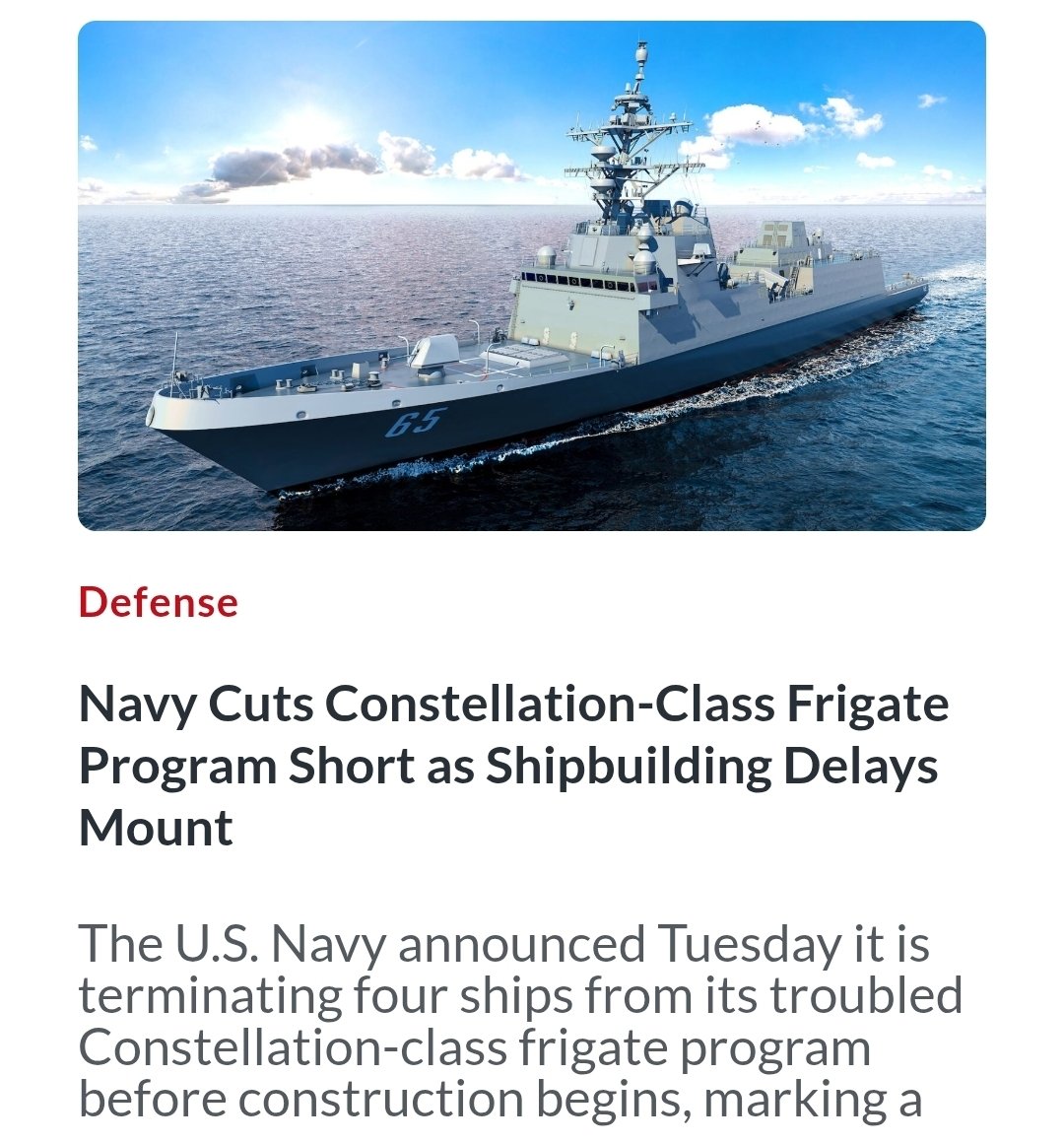
The U.S. Navy announced on Tuesday that it will cancel plans for four ships in its Constellation-class frigate program before construction even starts. This move indicates a major change in strategy as the Navy tries to deal with delays and find quicker ways to expand its fleet.
Secretary of the Navy John Phelan shared the news on social media, confirming that the first two frigates—Constellation (FFG-62) and Congress (FFG-63)—will still be built at Fincantieri Marinette Marine's shipyard in Wisconsin. However, the Navy has decided to work with the Italian-owned contractor to cancel the next four planned ships in the series.
Phelan stated, "We are reshaping how the Navy builds its fleet. Today, I'm announcing a strategic shift away from the Constellation-class frigate program. The Navy and our industry partners have reached an agreement to cancel the last four ships of the class, which have not started construction."
This announcement comes amid serious schedule issues. The lead ship, which was supposed to be delivered in April 2026, is now expected to arrive three years later in April 2029, causing concerns about the Navy's ability to meet its modernization goals.
In response, Fincantieri Marine Group highlighted that the agreement aims to reshape the Constellation-class program to better meet the needs of the U.S. Navy and strengthen their partnership.
The deal ensures continuing work on the two Constellation-class frigates that are currently being built while canceling plans for the four additional ships. Importantly, Fincantieri noted that the Navy will cover the company's existing economic commitments and industrial impacts because of this decision.
Looking ahead, Fincantieri expects to receive new orders for different types of vessels that align with the immediate needs of the nation, such as amphibious ships, icebreakers, and other specialized missions. They also plan to support the U.S. Navy as it redefines its strategies for small surface combatants, both crewed and uncrewed.
George Moutafis, CEO of Fincantieri Marine Group, remarked, "The agreement with the U.S. Navy marks a new chapter in our partnership built on mutual trust and a commitment to excellence. The path laid out for the Constellation-class program gives our teams the stability they need and allows us to continue investing in innovation and skills."
Impact on Workforce and Facilities
This update creates a complex situation for Fincantieri Marine Group, which celebrated a "U.S. shipbuilding renaissance" earlier this year. The company had hired over 600 workers for its U.S. operations between February and September 2025, bringing total employment to more than 2,300 skilled workers across its four shipyards. Currently, Fincantieri employs around 3,750 highly skilled workers in the U.S., having recently added 850 employees.
The company stressed that the new arrangement provides stability and clear workloads for its staff and the Wisconsin System of Yards, which includes facilities in Marinette, Green Bay, Sturgeon Bay, and Jacksonville. Fincantieri has invested over $800 million in these four U.S. shipyards to enhance production efficiency, flexibility, and technological advancements.
This workforce increase followed a presidential executive order aimed at restoring America's maritime capabilities amidst worries about China's increasing influence in global shipping.
Program Background and Challenges
A May 2024 Government Accountability Office report pointed out significant issues with the Constellation program, criticizing the Navy for beginning construction before finalizing the ship design, which goes against best practices in shipbuilding. The report warned that these design delays have led to increasing construction delays and that moving forward with the second frigate without addressing these problems could result in repeating past mistakes.
These challenges mirror those encountered by the U.S. Coast Guard's Polar Security Cutter and Offshore Patrol Cutter programs, where starting construction without completing designs was also identified as a key issue.
The Navy initially planned to acquire at least 20 Constellation-class frigates, with six already contracted for fiscal year 2024. The fiscal year 2025 budget sought $1.2 billion for a seventh ship, with six more planned by 2029.
Fincantieri received a fixed-price incentive contract for designing and constructing up to 10 ships in this program. The company also works on Littoral Combat Ships and various Coast Guard vessels like icebreakers and response ships.
This reduction in the program reflects broader challenges in U.S. naval shipbuilding as the Navy strives to grow its fleet while dealing with cost overruns and delays across several programs. Congressional concerns include the potential for increased costs, the introduction timing of a second shipyard, and overall technical risks in the program.
The cancellation of the four Constellation-class frigates adds to the list of federal shipbuilding programs that have been canceled or significantly changed recently. Earlier decisions included scrapping the planned eleventh Legend-class National Security Cutter for the Coast Guard and a partial shutdown of the troubled Offshore Patrol Cutter program, indicating a worrying pattern of cutbacks across multiple maritime programs, especially as U.S. naval and Coast Guard leaders warn that the country's shipyards are falling behind those in China.