
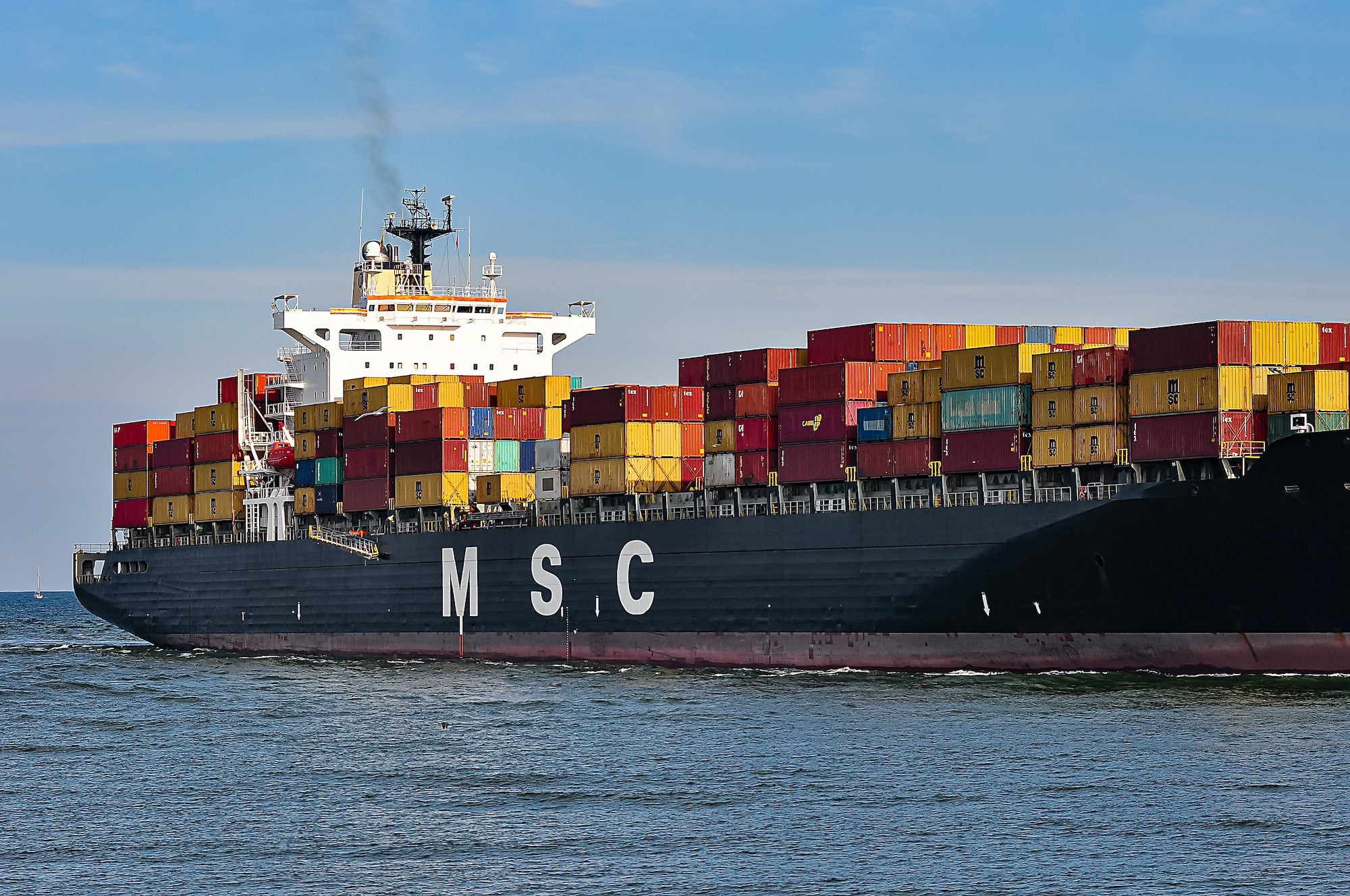
MSC Shipmanagement Limited has been fined $6 million and placed on four years of probation due to the "runaway ship" incident involving the containership MSC Michigan VII in Charleston, South Carolina, in 2024. This situation forced authorities to evacuate the Arthur Ravenel Jr. Bridge because there were fears the ship would collide with it.
The ship’s chief engineer, Fernando San Diego San Juan, was also fined $2,000 after pleading guilty to not reporting a dangerous situation and obstructing a federal investigation.
The U.S. Department of Justice announced these actions on Tuesday, more than two years after the incident occurred on June 5, 2024, when the MSC Michigan VII lost control of its main engine while leaving Charleston Harbor.
The Liberian-flagged vessel sped up to about 16 to 17 knots after a linkage rod that connects the main engine governor to the fuel rack became disconnected. Since the engine could not respond properly to commands from the bridge, the vessel continued heading towards the Arthur Ravenel Jr. Bridge.
Authorities evacuated the bridge with eight lanes out of concern that the ship could hit it. This was just months after another containership, the Dali, had destroyed Baltimore’s Francis Scott Key Bridge in March 2024.
A harbor pilot eventually guided the MSC Michigan VII safely beneath the Ravenel Bridge and out to sea. Additionally, local beaches were cleared due to the large wake created by the ship, which caused injuries to two people and damaged boats and piers in the area.
“The hazardous condition on this vessel, along with MSC’s failure to report it, could have resulted in a fatal bridge strike, similar to the incident in Baltimore months earlier,” stated Adam Gustafson, Principal Deputy Assistant Attorney General of the Justice Department’s Energy and Natural Resources Division.
“If the MSC Michigan VII had been entering port instead of heading out to sea, the outcome could have been catastrophic,” he added.
Investigators Discover Unsafe Engine Modifications
Investigators found that the incident was more than just an unexpected mechanical failure.
MSC and San Juan acknowledged that the ship’s engineering crew had been manually adjusting the length of the governor linkage rod to make the main engine reach the revolutions per minute (RPM) requested from the bridge.
The governor controls engine speed. Prosecutors argued that only trained technicians should adjust the governor and linkage system, but none of the engineering crew on the MSC Michigan VII were qualified to do this.
Despite this, the engineers had developed a routine of monitoring the bridge telegraph from the engine control room and manually adjusting the linkage rod as necessary until the engine reached the desired RPM.
San Juan admitted he was aware this practice was unsafe because manually adjusting the linkage could lead to its failure, yet he allowed it to continue.
Investigators discovered that nuts on both ends of the linkage rod had been loosened to allow engineers to turn the rod more easily. Locking washers that were meant to prevent the nuts from loosening had also been removed. The Coast Guard later found one of these washers on the deck below the governor.
The faulty setup failed during the ship's departure on June 5 after the crew made another manual adjustment. Once the linkage rod disconnected, the engine could no longer slow down normally.
According to the Justice Department, both the main engine’s unreliable response to commands and the manual adjustment of the linkage rod were hazardous conditions that should have been reported to the Coast Guard. However, that did not happen.
Chief Engineer Misled Investigators
The case grew as investigators discovered that San Juan had repeatedly misled them about the crew’s actions.
In interviews with the Coast Guard and National Transportation Safety Board, San Juan first claimed that the crew never adjusted the linkage rod and that only qualified technicians did such work.
He also denied any previous delays between the bridge telegraph commands and the engine’s response, despite knowing the linkage had been manually adjusted before to meet the requested RPM.
At one point, San Juan told another crew member he had told the Coast Guard he had not seen anyone modify the linkage rod. He directed that crew member along with two others to give investigators the same story so they would be on “the same page,” according to prosecutors.
San Juan pleaded guilty in September 2025 to failing to report the unsafe condition and obstructing the federal investigation.
Court records previously revealed that there were wider machinery problems on the 74,583-gross-ton containership. The issues with the engine governor were partly linked to problems with the ship’s fuel injection system when using lower-viscosity low-sulfur fuel. The ship also faced challenges with its main air compressors and generators, some of which could not handle a 75% power load, sometimes preventing the use of the bow thruster while maneuvering in port.
Records indicated that San Juan was given only about five hours for his handover when he joined the vessel near Santos, Brazil, in April 2024. He claimed the process should typically take at least 24 hours and that the brief handover was not enough to give him a full understanding of the engine room and critical machinery.
MSC Receives Four Years of Probation
MSC Shipmanagement pleaded guilty to failing to report the unsafe condition and obstructing both Coast Guard and NTSB investigations.
Along with the $6 million criminal fine, the company was sentenced to four years of probation and ordered to conduct a thorough investigation into the hazardous conditions aboard the MSC Michigan VII.
U.S. Attorney Bryan P. Stirling for the District of South Carolina praised local authorities for their actions that prevented the incident from becoming a larger disaster.
“The real heroes here are our local law enforcement, who evacuated the Ravenel Bridge and local beaches, and the harbor pilot who safely navigated the vessel out to sea,” Stirling said.
This sentencing wraps up the criminal case related to an incident that raised concerns about large containerships and bridge safety, especially after the Dali disaster in Baltimore just three months earlier.