
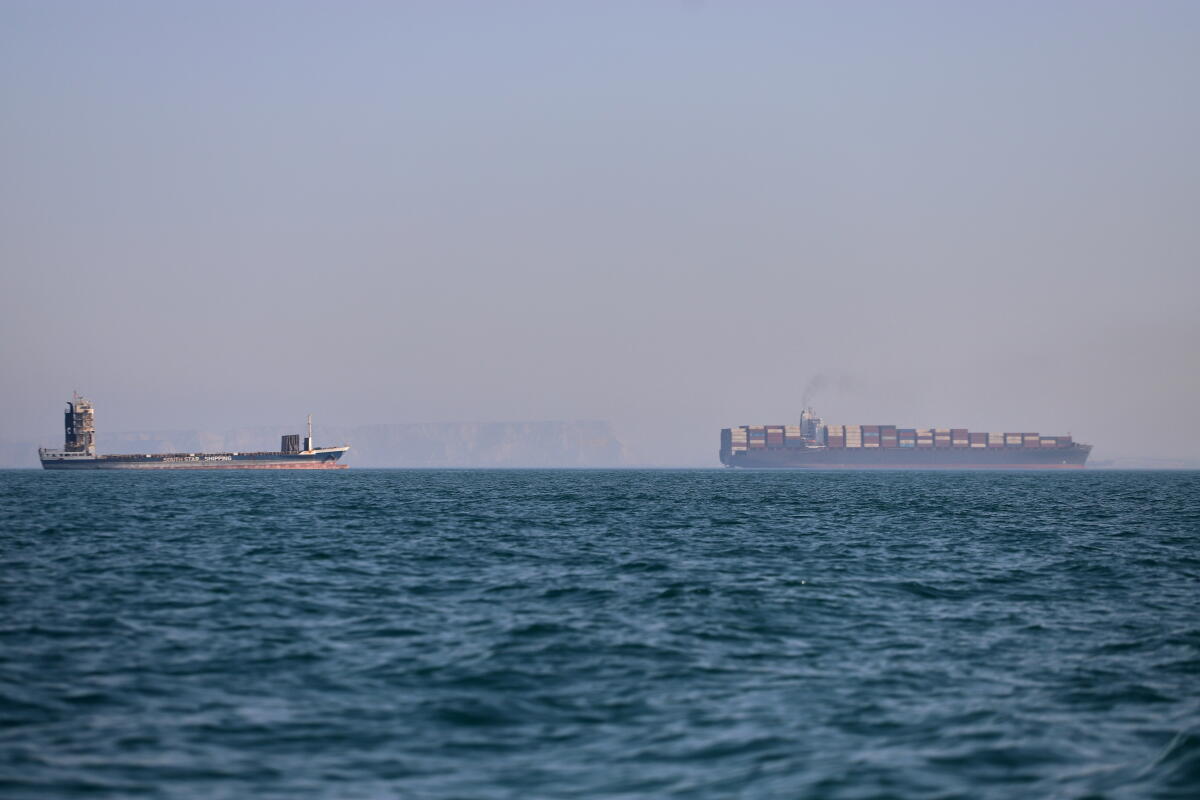
Two tankers were hit by projectiles in the Strait of Hormuz, while U.S. forces disabled a commercial cargo ship in the Gulf of Oman. This adds to a series of attacks and military actions against merchant shipping in the area.
These recent events show a sharp rise in attacks on commercial vessels, with strikes recorded on tankers far beyond just the Strait of Hormuz.
UK Maritime Trade Operations (UKMTO) reported that an outbound tanker was hit on its port side by an unknown projectile around 1920 UTC on Saturday, October 10. This incident caused a fire on board. Fortunately, the crew is safe, but the damage and potential environmental effects are still unclear.
On Sunday, October 11, the security officer of another outbound tanker reported that their vessel was also struck on the port side by an unidentified projectile. UKMTO confirmed that the ship was damaged, but all crew members were unharmed, and no environmental impact was noted.
The names of the tankers involved have not been disclosed, and UKMTO did not indicate who might be responsible for the attacks.
These incidents follow a particularly violent period for commercial shipping in the region.
On Friday, a tanker identified by maritime security sources as the Panama-flagged crude carrier GEM NO.2 was hit by a projectile while anchored about 13 nautical miles west of Al Jazeera, United Arab Emirates. This attack caused a fire, which has since been extinguished.
This strike took place just two days after another tanker was struck by multiple projectiles off the coast of Qatar, indicating a worrying increase in attacks beyond the Strait of Hormuz.
In recent weeks, Iran has intensified its attacks and threats against commercial vessels, especially targeting ships trying to use routes through Hormuz without Iranian approval. These latest strikes raise concerns that the threat to shipping is spreading beyond the narrow waterway.
The U.S. has also continued its military actions against commercial ships attempting to enter or leave Iranian ports.
In a statement released on Saturday, U.S. Central Command reported that an American fighter jet struck the stern of the Panama-flagged cargo vessel Ocean Molica, also known as Arika Sun, after the crew ignored multiple warnings and attempted to breach the U.S. naval blockade against Iran.
CENTCOM stated that the precision strike disabled the vessel's propulsion system without harming the crew. The ship had recently left an Iranian port.
This incident marks the fourth commercial vessel disabled since U.S. forces resumed their blockade of Iranian ports on July 14, according to CENTCOM.
The command also noted that U.S. forces have redirected 135 commercial ships and destroyed 10 tankers that were linked to the Islamic Revolutionary Guard Corps' shadow fleet during this time.
The blockade is part of the U.S. effort to restrict maritime trade with Iran, even though U.S. officials maintain that the Strait of Hormuz is open to international shipping.
These recent developments highlight the increasingly challenging security situation faced by commercial operators. Ships navigating through Hormuz risk Iranian attacks and intimidation, while those visiting Iranian ports may face interception or disabling strikes by U.S. forces.
The risks have also extended beyond the Strait itself, with recent attacks reported off the coasts of Qatar and the UAE, alongside ongoing military activity in the Gulf of Oman.
UKMTO issued two additional advisories on Saturday. In one of them, several ship captains near Ras Al Khaimah, UAE, reported receiving VHF messages instructing them to leave their anchorages. In the other advisory, UKMTO mentioned an incident involving a tanker and military forces in the Gulf of Oman, without providing more details.
It remains unclear if the Gulf of Oman advisory is related to the U.S. strike on Ocean Molica.
The U.S.-led Joint Maritime Information Center warned last Thursday that attacks have become more frequent and urged crews to stay vigilant and for the shipping industry to monitor the situation closely.
Despite Washington's repeated assurances that the Strait of Hormuz is open and under U.S. control, the latest incidents emphasize the ongoing risks of operating in the region, where commercial vessels and their crews are still vulnerable to attacks from both sides in the conflict.