
By Florence Tan and Emily Chow
SINGAPORE, June 29 (Reuters) – Middle Eastern oil and liquefied natural gas producers are continuing their operations despite recent ship attacks in the Strait of Hormuz and new clashes between the U.S. and Iran, according to shipping data.
Oil shipping activities in the strait slowed down after attacks on a container ship and an oil tanker led to a series of retaliatory strikes, putting at risk the interim peace agreement between Washington and Tehran.
However, a U.S. official stated on Sunday that both countries agreed to stop hostilities and resume discussions about the crucial waterway.
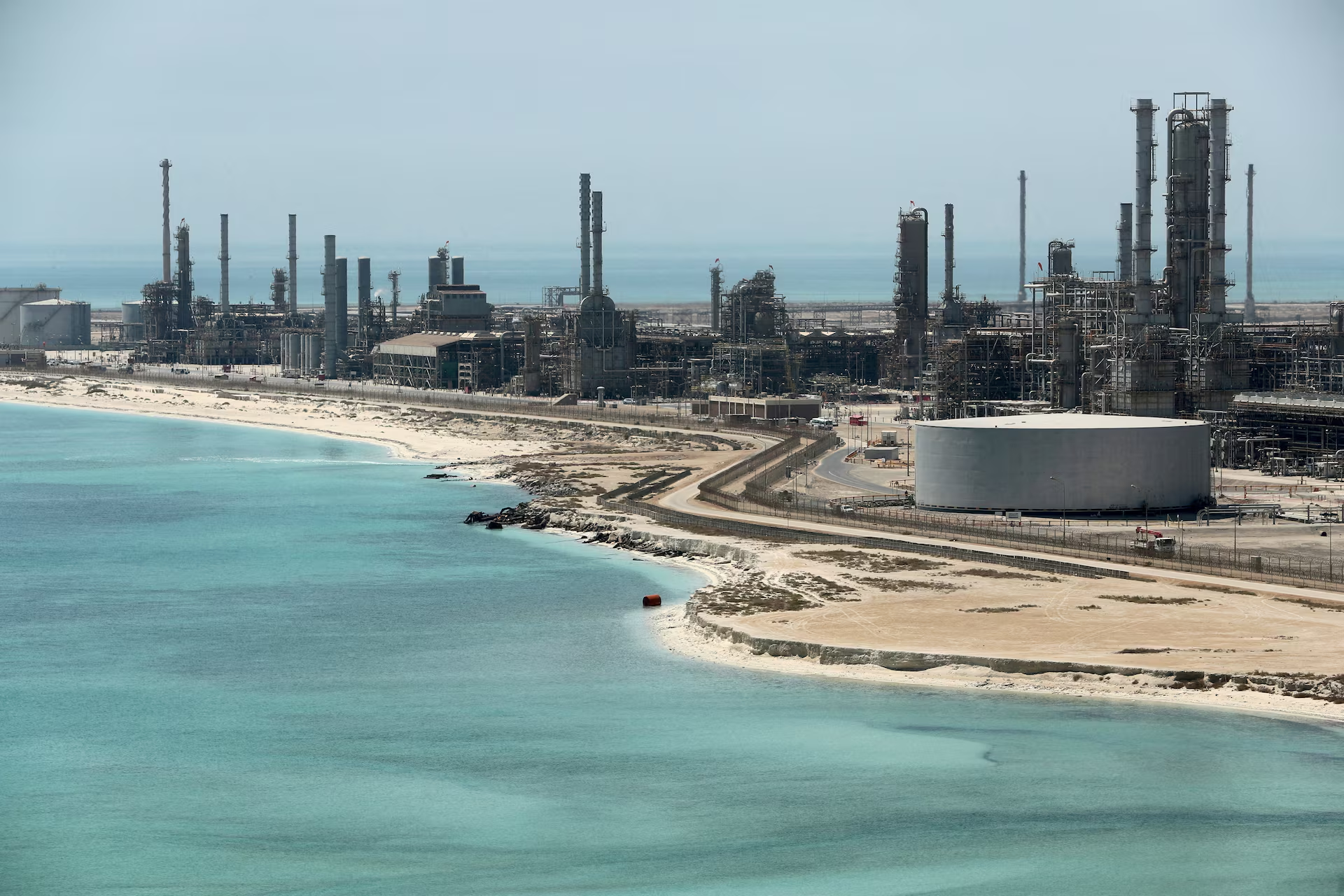
A fourth Very Large Crude Carrier (VLCC), capable of carrying 2 million barrels of oil, was observed loading at Saudi Arabia's Ras Tanura terminal on Monday. This occurred despite a helicopter crash belonging to Saudi Aramco on Sunday that resulted in 14 fatalities, with the cause still unknown.
Data indicates that three other VLCCs have loaded oil and then turned off their transponders, a tactic used to minimize attack risks while navigating through the Gulf.
One of these supertankers reappeared on Monday after leaving the strait and is now en route to Japan.
Additionally, two VLCCs entered the strait on Sunday and have docked at a terminal in the United Arab Emirates to load crude, according to LSEG data.
Saudi Aramco declined to comment.
The Abu Dhabi National Oil Company mentioned that it does not provide details about its vessels' positions, movements, or routes as a policy.
Two oil product tankers and a smaller fuel tanker passed through the strait on Monday, with overall traffic lower than last week. The previous week had seen the highest traffic level since the conflict began in late February, with 29 tankers sailing on June 24, according to Kpler analysis.
Shipping activity remains significantly below pre-conflict levels of 125 daily sailings.
IRAN ACCELERATES OIL LOADINGS
Despite the situation, Iran is increasing its oil loadings following a 60-day waiver of sanctions on its exports by Washington.
Tehran managed to load oil at both of its export terminals on Kharg Island on Saturday for the first time in almost a week, according to maritime intelligence firm Windward.
Data from Kpler showed that Iranian-flagged VLCCs, Dan and Hawk, entered the strait on Saturday, with around 8 million barrels of oil from the Emirates and Qatar being shipped out on four VLCCs over the weekend. The National Iranian Oil Company was not immediately available for comment.
Rising exports from the Gulf, which supplies a third of the world's oil, have led to falling global oil prices, with Brent crude down 10.6% last week for its third consecutive weekly decline, although prices increased slightly on Monday following weekend strikes.
“If you think the strait will continue to reopen gradually in the coming weeks and months, then crude oil prices here seem fair with a downward trend,” said IG markets analyst Tony Sycamore.
“Conversely, if you are concerned that these recent flare-ups might escalate the conflict, then current crude oil prices look too low.”
QATAR AND UAE CONTINUE LNG EXPORTS
In liquefied natural gas, two additional ballast tankers were tracked in the western part of the strait on June 26 after going dark, while two loaded LNG tankers exited Hormuz.
The Al Kharaitiyat is headed to Kuwait after loading at Qatar's Ras Laffan terminal, while another vessel controlled by QatarEnergy, the Al Kharsaah, is currently waiting off the coast of Qatar, as per Kpler data.
Additionally, the ADNOC-controlled Mraweh, which loaded at the UAE’s Das Island on June 21, is set to deliver its cargo to the Dahej terminal on the west coast of India on July 5, according to Kpler. The Al Hamla vessel, controlled by QatarEnergy, is transporting a cargo loaded at Ras Laffan on June 18 and is scheduled to reach China on July 3, as per LSEG and Kpler data.
QatarEnergy did not immediately respond to a request for comment.