
The Trump administration has approved an $8.2 billion project to export liquefied natural gas (LNG) from offshore Texas. This approval is part of their initiative to speed up licensing for deepwater ports by transferring oversight from the U.S. Coast Guard to the Maritime Administration (MARAD).
Transportation Secretary Sean Duffy announced on Wednesday that MARAD has accepted the application for a deepwater port license for ST LNG, LLC. This proposed LNG export facility will be located approximately 10.4 miles off the coast of Matagorda, Texas.
Construction for the project is anticipated to start in 2027, with operations set to begin in 2029, potentially adding up to 8.4 million metric tons of LNG export capacity annually. The Department of Transportation states that this $8.2 billion project could create around 2,000 construction jobs and 855 permanent jobs.
Interestingly, the approval process was completed quite quickly.
MARAD finalized the project’s Final Environmental Impact Statement (FEIS) in just 410 days, which is about 3.7 years faster than the average time in the past, representing a 70% reduction in review time, according to the DOT. This is noted as the fastest deepwater port license review in over twenty years.
This decision is one of the first tests of a regulatory change reported earlier this year, where the Trump administration announced that MARAD would take the lead on reviewing deepwater port applications from the Coast Guard.
With this new setup, MARAD manages the environmental review and licensing process, while the Coast Guard continues to handle maritime safety, security, vessel traffic, facility design, and operations oversight.
This change aims to tackle the long wait times in approving offshore energy projects. As mentioned before, only 11 deepwater port applications have been approved since the federal licensing system was created in the 1970s, with only eight licenses granted.
The administration argues that the lengthy review processes hinder the growth of U.S. energy exports.
“By cutting red tape and updating our licensing procedures, the Trump Administration is bringing significant economic benefits to the people of Texas,” Duffy said on Wednesday.
MARAD Administrator Stephen Carmel stated that the approval of ST LNG is the agency’s third deepwater port approval under the Trump administration.
“The approval of the ST LNG deepwater port license—our third approval under the Trump Administration—shows that we can accelerate the safe development of vital energy infrastructure that will strengthen our supply chains and reduce energy prices,” Carmel noted.
Offshore LNG Production
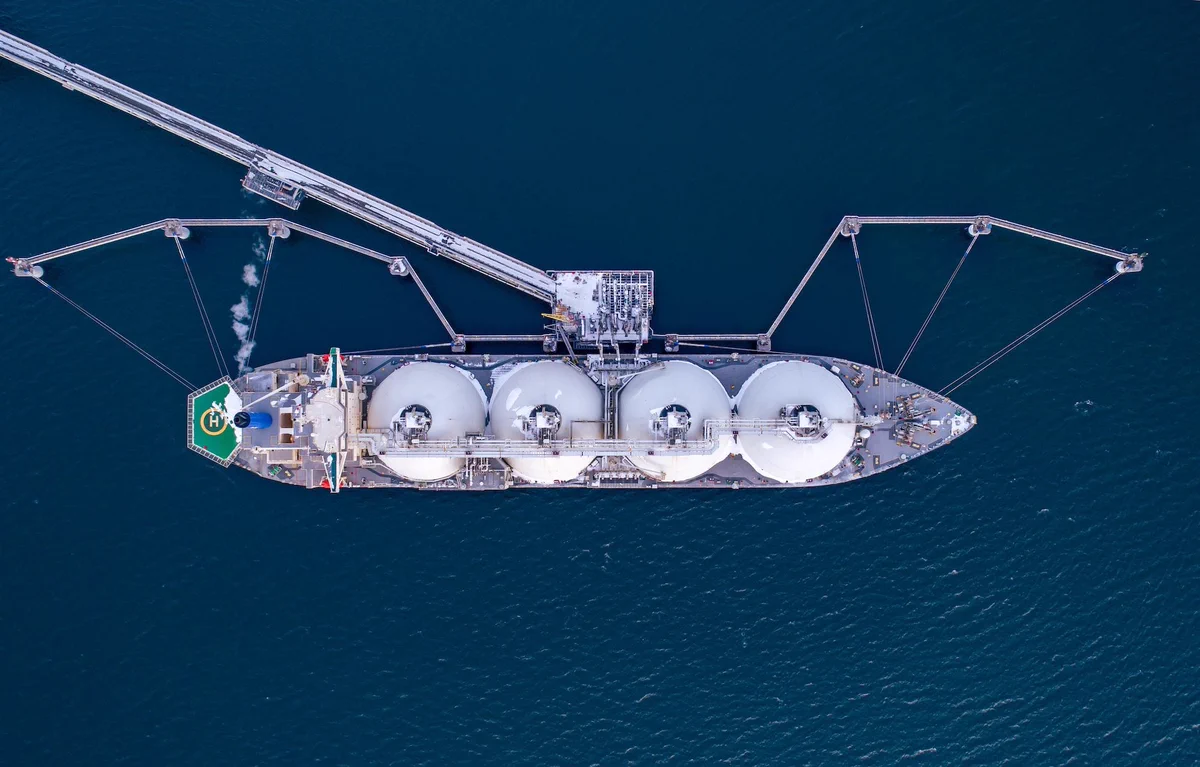
Unlike traditional onshore LNG export terminals, ST LNG will process and load natural gas offshore, allowing LNG carriers to function away from busy coastal ports.
The project plans to have four liquefaction systems, each capable of producing 2.1 million metric tons of LNG per year. Once fully developed, the facility will include 20 offshore platforms, four floating LNG storage units, four vessel mooring systems, and around 7.7 miles of pipeline.
Natural gas for the facility will come from the Tres Palacios Natural Gas Storage and Trading Hub and the Williams Markham Gas Processing Plant via existing pipelines.
The offshore location aims to limit vessel traffic in crowded coastal waterways and minimize collision risks associated with LNG transport.
According to the DOT, this facility could increase U.S. LNG export capacity by 7% to 9%.
A Faster Approval Process
The licensing decision follows a series of regulatory achievements over the past year.
MARAD officially started processing the ST LNG application in 2025, released the draft environmental impact statement in April 2026, and issued the final environmental impact statement in July. A final public hearing took place in August before the agency made its licensing decision.
The review included involvement from the Coast Guard, various federal agencies, and the State of Texas.
The DOT attributed the faster timeline to cutting out unnecessary procedures, streamlining decision-making, and improving cooperation among agencies.
This approval also supports the administration’s wider maritime and energy policies, including executive orders focused on boosting American energy production and restoring U.S. maritime leadership.
While the administration presents the ST LNG decision as proof that the new system can expedite federal reviews, the bigger challenge will be whether these changes lead to more offshore terminals starting construction and operating commercially.
The full Record of Decision and related documents can be accessed via Regulations.gov under docket MARAD-2025-0096.