
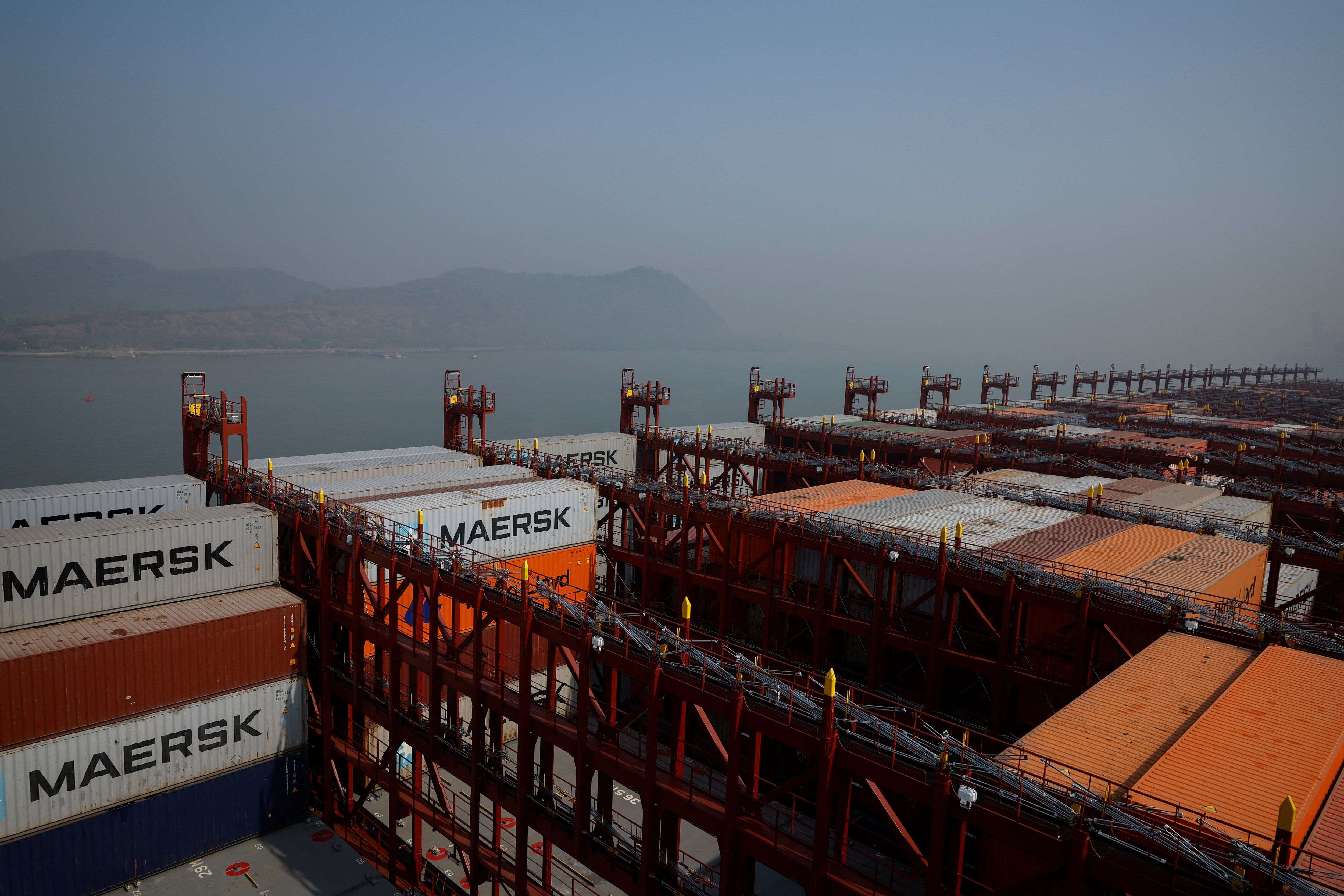
A.P. Moller – Maersk has unveiled a set of strategic plans to enhance its operations in India during the India Maritime Week 2025. These plans focus on investing in port infrastructure, reflagging vessels, and strengthening local partnerships.
APM Terminals Pipavav has signed a Memorandum of Understanding with the Gujarat Maritime Board, proposing an expansion investment of $2 billion (around ₹17,000 crore). This expansion, pending a long-term concession agreement with Indian authorities, aims to boost the port's capacity for both container and liquid cargo, while improving connections with the Dedicated Freight Corridor and the broader national network.
“This investment is not just about Pipavav Port; it's about creating new opportunities for Gujarat, India, and global trade,” stated Jon Goldner, Chief Executive of APM Terminals Asia & Middle East. “In support of Prime Minister Modi's vision, we are strengthening our capacity, resilience, and sustainability to support India's economy for many years ahead.”
Maersk has established a new legal entity called Maersk Bharat IFSC Pvt. Ltd. in GIFT City, Gujarat, and has reflagged two vessels—Maersk Vigo and Maersk Vilnius—under the Indian flag, recognizing the growing importance of domestic shipping for supply chain resilience.
The company is also enhancing its partnerships with Indian shipyards for vessel maintenance and repair. Several Memorandums of Understanding have been signed with different shipyards to explore maintenance and new building opportunities, meet international operational standards, and facilitate knowledge transfer and skill development.
Moreover, Maersk is looking into local manufacturing and sourcing containers from Indian manufacturers. They are collaborating closely with partners to define technical specifications and quality standards necessary for producing seaworthy containers, with a goal of creating a roadmap for domestic production.
“India has strong infrastructure capabilities that Maersk aims to leverage,” said Ahmed Hassan, Head of Asset Strategy at A.P. Moller – Maersk. “By reflagging vessels, manufacturing seaworthy containers locally, and collaborating with local yards for maintenance, we are not only increasing our operational flexibility but also investing in India's maritime ecosystem and showcasing our confidence in the country's technical abilities.”
These initiatives are aligned with India’s Maritime India Vision 2030, which aims to create world-class mega ports, transshipment centers, and modernized infrastructure, with an estimated investment of 1.25 trillion rupees.
Additionally, CMA CGM has made a commitment to India's maritime industry by signing a letter of intent with Cochin Shipyard Limited to construct six dual-fuel LNG containerships in India. This marks a significant milestone as it's the first time a major international container shipping company has placed orders for LNG vessels from an Indian shipyard. Each vessel will have a capacity of 1,700 TEUs and will be registered under the Indian flag, with deliveries expected between 2029 and 2031.
Almost 95% of India’s trade volume and around 70% of its trade value relies on maritime routes. Launched in 2021, Maritime India Vision 2030 includes over 150 strategic initiatives aimed at modernizing ports, expanding shipping capacity, and enhancing inland waterways.