
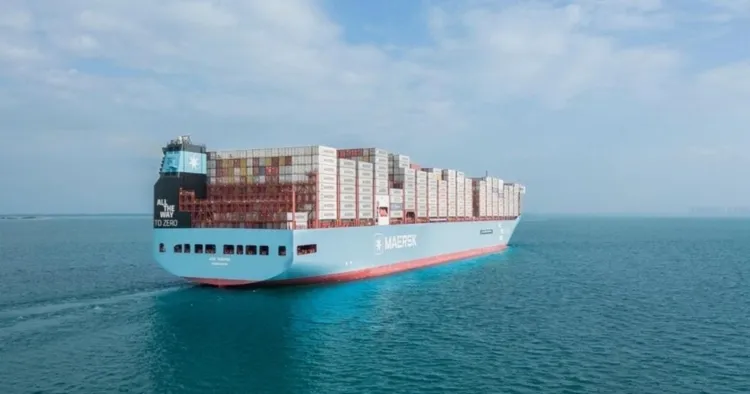
Maersk and Hapag-Lloyd are reintroducing three more services through the Red Sea and the Suez Canal, signaling a key move towards a shorter shipping route between Asia and Europe.
On Monday, the companies shared that their AE1, AE2, and AE3 services will switch from the longer route around Africa's Cape of Good Hope to use the Suez Canal. These changes will take place between December 2026 and January 2027.
This latest announcement is part of an ongoing trend where the partners systematically bring back Suez transits across their network.
According to Maersk’s advisory from November 16, the updates will start with the AE2 service on December 4, followed by AE3 on December 20, and AE1 on January 14, 2027.
The AE2 service, which links Asia, Europe, and the Middle East, will kick off its new route with the Mary Maersk leaving from Ningbo. The AE3 service will be next with the Alette Maersk departing from Shanghai, and the AE1 transition will start with the Damietta Express, also from Shanghai.
This decision is part of a wider trend of returning to the Suez corridor that has gained traction recently. Back in September, both companies announced changes to four other services — AE5, AE11, AE12, and ME2 — which joined two services already operating through the canal.
Earlier this month, Maersk and Hapag-Lloyd also confirmed the return of the ME1 service that connects India and Europe, with the first updated sailings planned for November 4 and November 13.
These recent adjustments expand the return to more key Asia-Europe services, reducing the need for the more extended route around southern Africa.
For shipping lines and their customers, using the Suez route means shorter voyages, less fuel consumption, and quicker transit times compared to the Cape of Good Hope route. Restarting services to the canal can also free up space on ships that have been occupied by longer journeys.
However, the companies emphasized that this return depends on the security situation in the region.
Maersk and Hapag-Lloyd mentioned that they will keep a close eye on events in the Middle East, and any further changes to the Gemini network will rely on the ongoing stability in the Red Sea.
This announcement highlights the industry’s increasing readiness to return to normal operations in the Suez Canal, but also indicates that security risks in the area have not completely disappeared.