
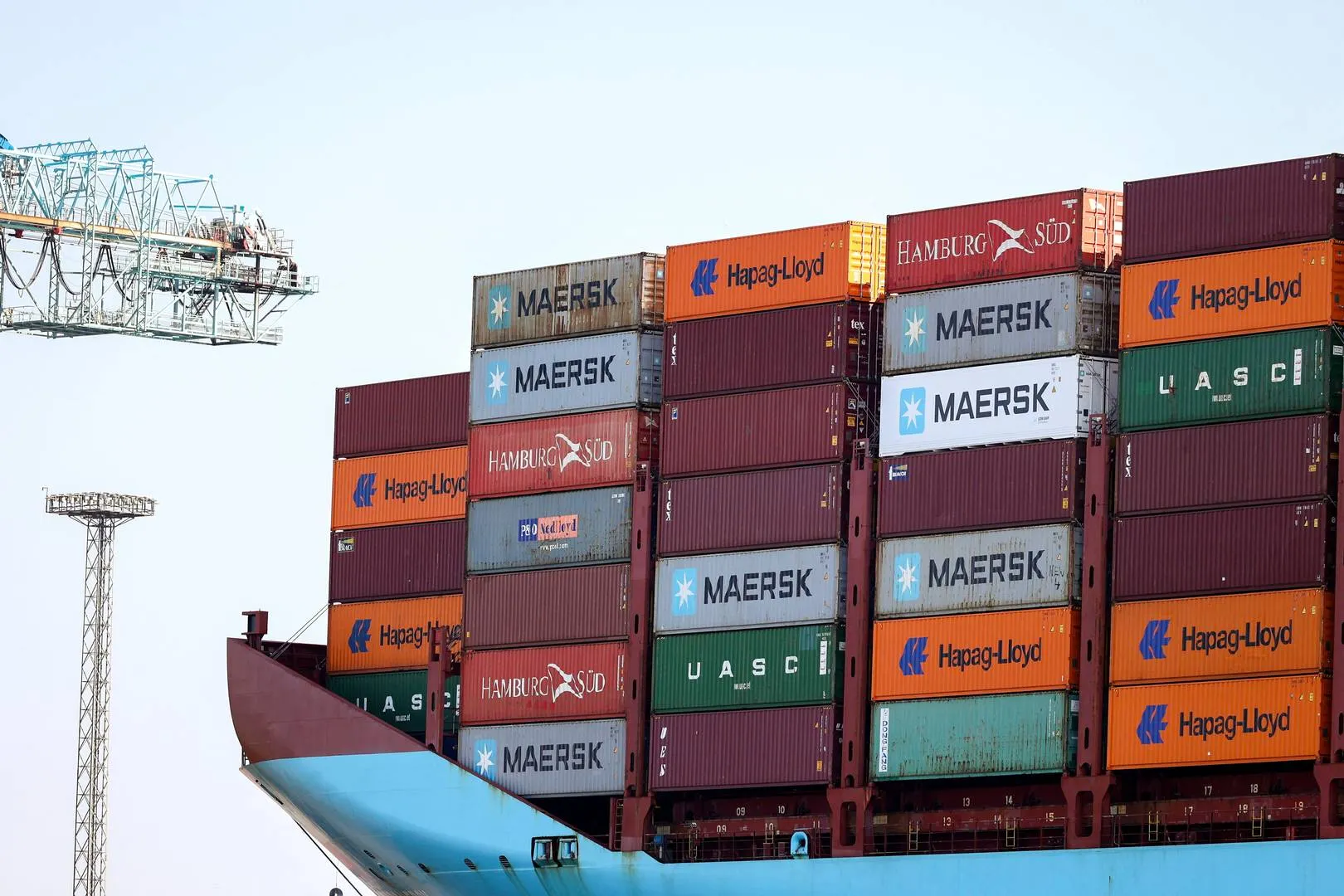
Maersk is gradually returning to the Suez Canal and has announced that its MECL service, which connects India, the Middle East, and the U.S. East Coast, will start using the Red Sea route again. This follows a similar decision to restore the AE15 service to the same path.
The company made the change after the successful passage of the Majestic Maersk through the Red Sea. This marks another step in restoring services in the area after nearly three years of detours around the Cape of Good Hope due to Houthi attacks on shipping.
This decision also brings the MECL service back to the Suez Canal after a previous attempt was cut short. Maersk had briefly restored the service in January following trial runs, but security issues led to rerouting back around the Cape of Good Hope.
The MECL service, which is exclusively run by Maersk, links the U.S. East Coast with India and the Middle East. With the return to the Suez route, westbound transit times will decrease by an average of seven days, while eastbound travel will be shortened by about 14 days compared to going around the Cape of Good Hope.
The first westbound journey via the Suez Canal will be on the Maersk Denver (voyage 627W), and the first eastbound trip will be on the Maersk Chicago (voyage 624E).
In addition to these changes, Maersk will introduce an eastbound stop at Jeddah starting in August. The updated eastbound route will be: Charleston – Savannah – Houston – Norfolk – Newark – Tangier – Jeddah – Salalah – Mundra – Pipavav – Nhava Sheva.
Maersk highlighted the importance of the Suez Canal as a crucial shipping route between the East and West, crucial for efficient global supply chains. They noted that this route provides the fastest and most efficient link between India, the Middle East, and the U.S. East Coast.
Similar to its previous announcements, Maersk emphasized that this move depends on the security situation in the region.
“The safety of our crew, vessels, and customers' cargo remains our top priority,” the company stated. “If the security situation changes… we have backup plans ready to revert to the Cape of Good Hope route.”
This announcement comes shortly after Maersk and Hapag-Lloyd revealed that their jointly operated AE15 service would also resume transiting through the Red Sea and Suez Canal.
Earlier this year, Maersk had to halt its ME11 and MECL services in March due to security worries that arose after an initial attempt to restore these routes failed.
These recent actions signal a cautious expansion of services in the corridor after nearly three years of disruption caused by attacks on commercial vessels. Since late 2023, Iran-backed Houthi militants have targeted over 100 merchant ships in and around the Red Sea and Gulf of Aden, leading to the sinking of four commercial vessels, the seizure of the Galaxy Leader, and fatalities among seafarers, prompting major container lines to reroute vessels around the Cape of Good Hope, significantly reducing traffic through the Suez Canal.
Although security conditions in the Red Sea have improved enough for some services to resume using the canal, carriers continue to monitor the broader conflict in the Strait of Hormuz closely, warning that route adjustments may be necessary if the security situation worsens.