
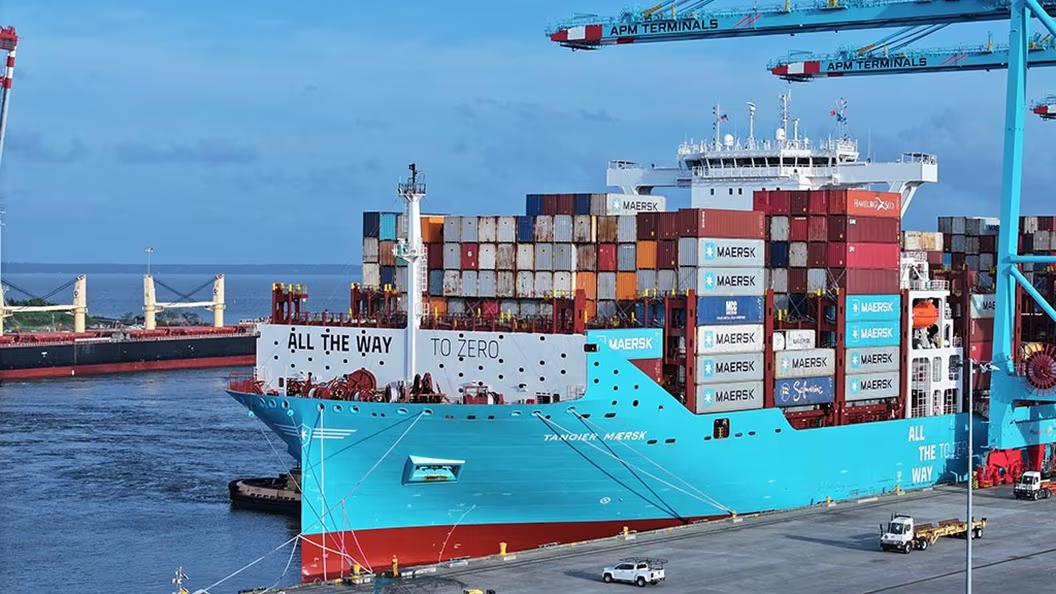
A.P. Moller-Maersk has successfully fueled one of its dual-fuel container ships using 100% U.S.-produced corn ethanol. This event is being labeled as the first commercial ethanol bunkering operation for a deep-sea container vessel in the United States.
The operation took place on the Tangier Maersk, a container ship with a capacity of 9,016 TEU that was delivered earlier this year. This vessel is equipped with an engine designed to run on alcohol.
Bioethanol producer POET was the supplier of the fuel, and the bunkering occurred in Houston. POET noted that this marks the first marine bunkering in the U.S. using 100% bioethanol.
For Maersk, this operation is not just about committing to ethanol as a fuel option but more about exploring alternatives for its growing fleet of alcohol-capable vessels.
Maersk highlighted that the bunkering experience helped them understand the infrastructure, sourcing, handling, and supply chain requirements involved in using ethanol at a commercial level. While ethanol has a substantial production base and an established distribution network, Maersk stated that broader adoption in shipping will depend on fuel availability, regulations, and operational readiness.
“To achieve lower-emission logistics, we need to turn new technologies into practical and scalable solutions,” said Ditlev Blicher, Maersk's regional president for North America. He mentioned that this operation would provide valuable insights into using alternative fuels in commercial shipping.
The Houston bunkering followed earlier trials by Maersk using ethanol on Laura Maersk and Antonia Maersk.
Maersk began testing ethanol on Laura Maersk back in 2025, initially with a blend of 10% ethanol and 90% e-methanol. The company later adjusted this to a 50-50 mix to see if engines designed for methanol could handle higher concentrations of ethanol.
Both fuel types are alcohols, allowing Maersk flexibility with vessels that were originally designed for methanol propulsion.
The Tangier Maersk, built in 2026, has a capacity of 9,016 TEU and is the first in a series of new mid-sized dual-fuel ships joining Maersk's fleet.
This ethanol trial indicates Maersk's broader focus on alternative marine fuels. After initially prioritizing methanol in its dual-fuel newbuilding program, the company is now considering a mix of fuels, including ethanol and biomethane, while also exploring other technologies such as ammonia.
Maersk has not indicated that the Houston operation represents a move away from methanol. Instead, the company emphasizes the importance of having multiple fuel options to address uncertainties around future fuel availability, costs, and global emissions regulations.