
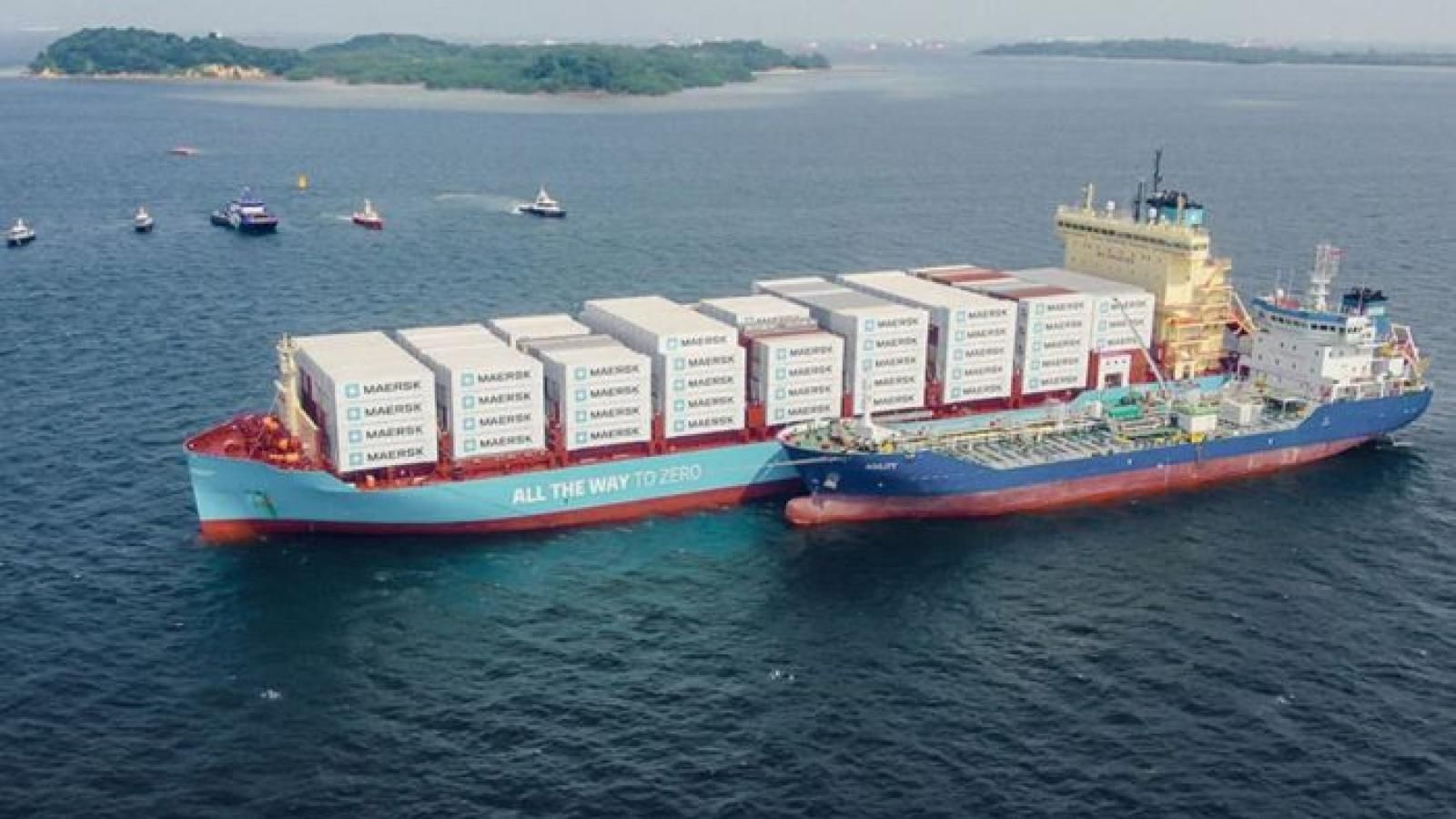
A.P. Moller – Maersk A/S has ordered eight large container ships from New Times Shipbuilding Co. Ltd. This decision aims to improve fleet flexibility as the container shipping market faces challenges like fluctuating freight rates and excess capacity.
This order includes eight ships, each capable of carrying 18,600 TEUs, with deliveries planned for 2029 and 2030. These vessels will be 366 meters long and 58.6 meters wide—smaller than today’s largest container ships, which can exceed 400 meters.
Anda Cristescu, Maersk’s Head of Chartering & Newbuilding, stated, “Deployment flexibility has been a key factor in our decision-making. While these vessels are large, they provide more flexibility than the biggest ships being built now, giving us more options for deployment in our existing and future networks.”
The new ships will be equipped with dual-fuel engines that can run on conventional bunker fuel or liquefied gas. This feature helps Maersk prepare for changes in the industry as it moves towards lower-emission fuels and decarbonization goals.
This order comes at a tough time for Maersk’s Ocean division, which reported a $153 million loss in EBIT for Q4 2025—its first quarterly loss in several years. This happened despite an 8% increase in shipping volumes, as freight rates are still affected by global overcapacity.
Maersk is forecasting a modest growth in global container demand of only 2–4% for 2026. They have provided a wide EBIT outlook, predicting anywhere from a $1.5 billion loss to a $1 billion profit, indicating uncertainty in fleet growth and the reopening of Red Sea trade routes.
With this latest order, Maersk now has 33 vessels on order. Four are expected to be delivered in late 2026, and the company has started receiving new ships, including the Tangier Mærsk, the first of six 9,000-TEU vessels designed to use methanol.
By choosing ships that are smaller than the largest megamax designs, Maersk shows its preference for operational flexibility rather than just size. This decision is influenced by changing trade patterns, geopolitical issues, and ongoing uncertainties in global shipping routes, especially through the Red Sea and Suez Canal.