
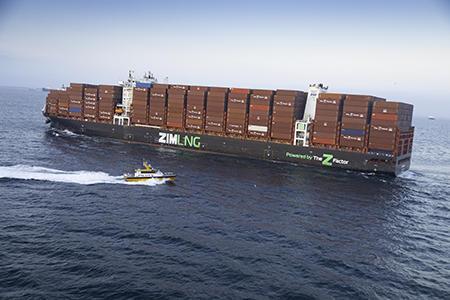
The ports of Los Angeles and Long Beach have identified liquefied natural gas (LNG) and methanol as the best alternative marine fuels for the near to medium term. A recent study outlines the potential demand and necessary infrastructure to support cleaner shipping at the busiest port complex in the country.
The joint Clean Marine Fuel Feasibility Assessment was done as part of the ports’ Green Shipping Corridor initiatives. It looked into which alternative fuels shipping companies are likely to use, anticipated demand through 2030, and the investments needed for fuel supply operations.
The study predicts that by 2030, annual LNG demand at the San Pedro Bay ports could range from 65,000 to 115,000 metric tons, while methanol demand may vary between 64,000 and 250,000 metric tons, depending on market trends and the introduction of alternative-fuel vessels.
These findings arrive as shipping companies are increasingly investing in dual-fuel vessels that can operate on alternatives to traditional marine fuels. However, the industry has not yet identified one long-term solution.
Around 4,000 ships visit the two Southern California ports each year. Emissions from ocean-going vessels are the largest source of pollution in the port complex, making cleaner marine fuels a key element in the ports’ efforts to achieve their Clean Air Action Plan targets.
“Strategic investments from this study will help create a growing market for green marine fuels, assisting ships in transitioning to a cleaner future,” said Port of Long Beach CEO Dr. Noel Hacegaba.
Instead of suggesting immediate large-scale infrastructure projects, the assessment recommends a phased approach that utilizes existing facilities while supporting early use of these alternative fuels.
For methanol, the study states that much of the required storage and distribution infrastructure is already in place or could be modified for marine fueling, which might lower initial costs.
The ports are encouraged to start pilot bunkering projects, provide incentives for early adoption of methanol, and collaborate with regulators to set clear safety and permitting guidelines.
Regarding LNG, the study advises focusing mainly on current ship-to-ship bunkering techniques instead of building new major storage facilities in the ports.
The report also points out that the environmental benefits of alternative marine fuels depend greatly on how they are produced. While LNG and methanol can reduce emissions, their overall climate impact varies based on the feedstocks, production methods, and supply chains.
Ultimately, fuel prices, regulatory standards, and commitments from shipping companies will influence how quickly demand develops.
“Reducing emissions from ships is one of the biggest challenges our industry faces,” said Port of Los Angeles Executive Director Gene Seroka. “This study gives us a clearer understanding of market trends and how we can collaborate with partners to make cleaner marine fuels more available.”
The assessment supports ongoing efforts to create green shipping corridors that connect major international trade hubs.
In April, the ports of Los Angeles and Long Beach renewed their Green and Digital Shipping Corridor agreement with Singapore, agreeing to promote alternative-fuel bunkering, demonstration projects, and digital connectivity.
Singapore has already carried out methanol bunkering trials and granted licenses to methanol fuel suppliers, while the Southern California ports have been working on their own demonstration projects.
The next step is a joint request for proposals, expected by the end of 2026, to seek projects that will demonstrate alternative-fuel bunkering capabilities in San Pedro Bay.
The ports stated that the study will also help guide future planning and coordination with shipping companies, fuel suppliers, terminal operators, and government agencies as the industry aims for lower-emission operations.
For now, the results indicate that LNG and methanol are likely to play key roles in the region's transition to cleaner marine fuels, with infrastructure development occurring in accordance with actual demand.