
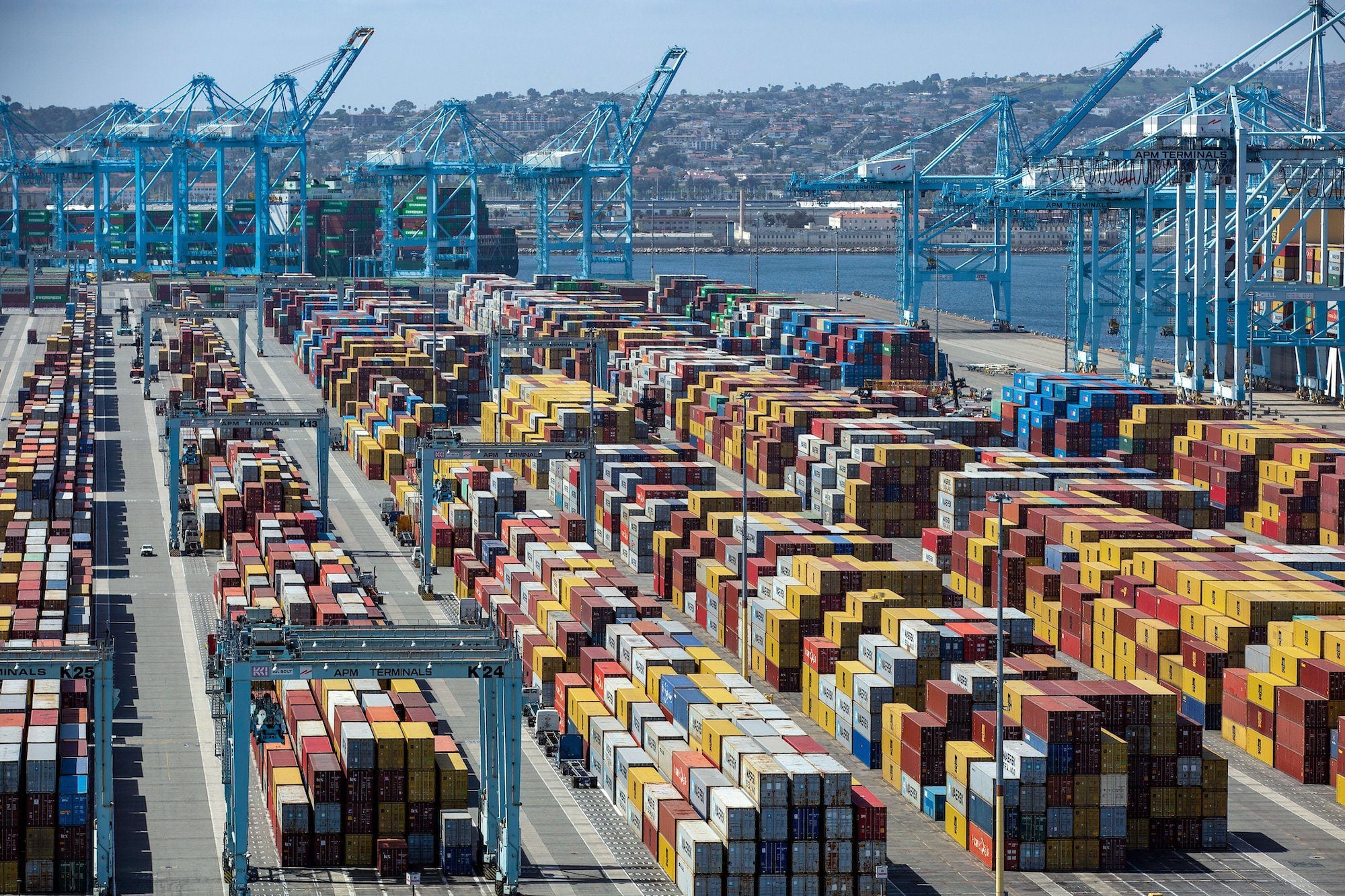
The two busiest container ports in the U.S. saw a surge in activity in June as importers rushed to bring goods into the country ahead of possible new tariffs. The Port of Los Angeles experienced its busiest June ever, while the Port of Long Beach also reported impressive growth.
In June, the Port of Los Angeles processed 1,002,734 twenty-foot equivalent units (TEUs), making it the busiest June in 118 years and only the third time it has handled over 1 million TEUs in a single month. This record sets it apart, as no other port in the Western Hemisphere has managed to exceed a million containers in a month.
Volume increased by 12% compared to last year, largely due to a 13% rise in imports, which totaled 530,558 TEUs. This makes it the port's third-highest month for imports. Exports remained stable at 126,365 TEUs, while the number of empty containers returning to Asia rose by 17% to 345,811 TEUs as shipping lines adjusted their operations to meet ongoing demand.
“Surpassing the 1 million container mark for the third time and ending our fiscal year with over 10.4 million TEUs is incredible,” stated Executive Director Gene Seroka.
Seroka pointed out that importers are moving away from traditional seasonal shipping patterns and are opting to ship goods whenever conditions permit.
“Many retailers are making strategic choices and avoiding standard seasonal shipping patterns, advancing their cargo whenever they find an opportunity,” he explained during the monthly cargo meeting at the port.
Meanwhile, the Port of Long Beach also enjoyed significant growth, handling 779,331 TEUs in June, an increase of 10.6% from the same month last year, making it the port's third-busiest June.
Imports rose by 11% to 387,025 TEUs, while exports saw a slight decline of 1.3% to 86,446 TEUs. The number of empty containers rose by 14.1% to 305,860 TEUs.
So far this year, Los Angeles has processed 5.12 million TEUs, reflecting a 3% increase compared to the first half of 2025. Long Beach recorded 4.83 million TEUs, a 1.7% rise that keeps it on track for another record year.
CEO of the Port of Long Beach, Noel Hacegaba, noted that the increase shows retailers are trying to stock up before expected changes in trade policy this summer.
“Companies are preparing for uncertainty, not stability,” Hacegaba added. “Retailers are focused on restocking while keeping prices low, which is driving this increased activity.”
These results align with predictions from the National Retail Federation and Hackett Associates, which expect U.S. container imports to reach a record 2.47 million TEUs in July as retailers ramp up shipments before potential tariff hikes in August.
The industry has noticed that the typical fall shipping surge is happening earlier as importers adjust their purchasing schedules to avoid issues related to labor disruptions, geopolitical tensions, and changes in U.S. trade policy, rather than strictly following the traditional retail calendar.
Jonathan Gold, vice president for supply chain and customs policy at the NRF, explained that retailers also face ongoing uncertainties due to tensions involving Iran and the potential for new tariffs.
“This early peak shipping season is likely to extend through July as retailers and other importers prepare for possible tariff increases set to begin in August along with other trade uncertainties,” Gold said.
A temporary 10% Section 122 tariff is set to end on July 24, and the Trump administration is anticipated to impose new tariffs connected to forced labor as early as August.
Ben Hackett, founder of Hackett Associates, predicted that import volumes would remain high through July before tapering off later in the year.
“A lot of this increase is due to preemptive shipping ahead of the expected tariff hikes,” Hackett explained.
Despite the surge in cargo volumes, both Southern California ports reported smooth operations, with no major backlogs or delays in cargo processing.